
Downtown Grants
1000 W. Santa Fe Avenue
at Gold Avenue
Route Shields of Grants-Milan and
surrounding areas on or connecting to
Historic US Route 66


1912-1926

1912-1926

1926-1948

1948-1961

1961-1971

1971-1985

1912-1927

1927-Present

1972-Present

1988-Present

1951-Present

1985-Present


1985-Present

1985-Present

1991-Present

1998-Present

1998-Present

2010-Present
Abe's Liquor Store Parcel
The 1100 block of West Santa Fe Avenue represents one of the earliest developed areas of Grants, tracing its origins back to the original settlement of Los Alamitos, established in 1872 prior to the arrival of the railroad. The corridor later expanded during the railroad era following the arrival of the Atlantic & Pacific Railroad in 1881, developing along a long-established travel route.
Santa Fe Avenue serves as the town’s primary main street and historic Route 66 corridor, reflecting Grants’ transition from early settlement into a regional service center. Over time, this route evolved from early regional trails into the National Old Trails Road, eventually becoming the central commercial artery of the community.
ABE'S LIQUOR STORE
xxxx - xxxx
Owner: Violetta Hoisington
The Yucca Hotel was developed beginning in 1909 through the partnership of George A. Ades and stonemason Joseph “Joe” Capelli, marking a major step in the transformation of the 1100 block of West Santa Fe Avenue into a structured commercial district. The project required the demolition of Latham’s Stockman’s Store, the original Latham location established on this site in 1882, which remained in operation here until 1910. The business later relocated within Grants before eventually returning to this original location in 1968.
Positioned directly across from the S. Bibo Brothers Mercantile (1105–1115 W), and within close proximity to the Atlantic & Pacific Railroad depot located behind the mercantile, the Yucca was strategically placed at the center of Grants’ early economic activity. This location allowed the hotel to serve railroad workers, traveling salesmen, and early automobile traffic moving through the corridor.
Working together, Ades and Capelli combined development and construction expertise to create a building that functioned as both a lodging establishment and a commercial hub. Their work reflects the shift from early settlement structures to more permanent business buildings, signaling the continued growth of Grants from its Los Alamitos origins into a functioning regional service center.
Abe's Liquor Store (Before and After)

COMING SOON
(No surviving pre‑Yucca block photo)

Earliest 1928–1929 horizontal sign photo
-
Same‑day bus photo
-
Horizontal sign installed
-
Pole removed
-
Lamp posts visible
-
Scaffold mount visible
YUCCA
1910–1927 Yucca Hotel Rooftop Sign (Recreation)
Artifact: Recreation of the 1910–1927 Yucca Hotel rooftop sign based on later photographic evidence
Source: Cibola County Historical Museum — earliest 1928–1929 Yucca Hotel horizontal sign photograph (lamp posts visible, pole removed, scaffold mount)
Retrieved from: Cibola County Historical Museum photo archives; 1928–1929 streetscape reference materials
Caption: Rooftop sign recreation informed by the 1928–1929 horizontal sign photo showing lamp posts, scaffold mount, and the earliest surviving evidence of the hotel’s signage evolution
Building Spec List for the LUX Theater
● Designed by: ○ George Ades (owner/developer) ○ Joseph “Joe” Capelli (stonemason / craftsman / installer)
● Built by: ○ George Ades (owner/builder) ○ Joseph “Joe” Capelli (stonemason / construction and fabrication)
● Building / Sign Style: ○ Two‑story Spanish‑style exterior ○ Frame and stucco construction
● Built: ○ Construction began 1909 ○ Building completed 1910
● Opened: ○ 1910 (hotel begins operation) ○ 1911 — Charles Katzung becomes first confirmed manager
○ Earlier employment possible but undocumented
● Units / Rooms / Dimensions:
○ 13 upstairs guest rooms
○ 7 downstairs business rooms ○ 20 rooms total
● Amenities: ○ Pool: ○ None ○ Playground: ○ None
● Materials: ○ Wood framing ○ Stucco exterior ○ Early storefront façade elements
● Colors: ○ Period‑appropriate neutral stucco tones ○ Dark trim (per early photos)
● Mounting / Construction: ○ Traditional early‑20th‑century frame‑and‑stucco build
○ Street‑facing façade with early signage mount
Era Covered: ○ 1909–1912 (construction through early operation)
Operational Notes: ○ Lodging and dining operation ○ Served railroad workers, early auto travelers, and locals ○ Stable early operation under Katzung (from 1911)
● Identification Method: ○ Painted horizontal sign mounted at roof edge
● Period Context: ○ Territorial‑to‑statehood transition (NM statehood 1912) ○ Early automobile travel era
● Regional / Community Role: ○ Early anchor business in the Grants commercial core ○ Provided meals and lodging for local workforce
● Years in Service: ○ 56 years (1910–1966)
● Demolished / Fate:
○ Demolished 1966
Sign Spec List for the Yucca Hotel
● Designed by: ○ George Ades (owner/developer) ○ Joseph “Joe” Capelli (stonemason / craftsman / installer)
● Built by: ○ George Ades (owner/builder) ○ Joseph “Joe” Capelli (stonemason / construction and fabrication)
● Built: ○ Construction began 1909 ○ Installed by 1910 at hotel opening
● Installation: ○ In use by 1910
○ Still in use under Katzung by 1911
○ Earlier employment possible but undocumented
● Dimensions / Physical Characteristics:
○ Exact panel dimensions undocumented
○ Mounted above the roofline for visibility
○ Supported by metal frame and guy wires
○ Slightly offset from center
● Materials: ○ Painted wood sign face
○ Metal rear bracing
○ Metal support frame
○ Brackets, bolts, fasteners
○ Raw metal components
● Colors:
○ Case Color:
○ Forest Green
○ Lettering:
○ Cream White
○ Border:
○ Black
○ Metal components:
○ Raw/unpainted
Era Covered:
○ 1909–1912 (construction through early operation)
Mounting / Construction:
○ Lodging and dining operation ○ Served railroad workers, early auto travelers, and locals ○ Stable early operation under Katzung (from 1911)
● Identification Method: ○ Painted horizontal sign mounted at roof edge
● Period Context: ○ Territorial‑to‑statehood transition (NM statehood 1912) ○ Early automobile travel era
● Regional / Community Role: ○ Early anchor business in the Grants commercial core ○ Provided meals and lodging for local workforce
● Years in Service: ○ 56 years (1910–1966)
● Demolished / Fate:
○ Removed and lost during demolition 1966
The 100 block of West Santa Fe Avenue represents the earliest phase of commercial development in Grants, established following the 1912 relocation of the Atchison, Topeka & Santa Fe Railway depot to 101 W. Santa Fe Avenue. Early businesses, including the Woodard Hotel, Grants Drug, and the Whiteside Hotel & Café at 114 W., served railroad workers, travelers, and the growing local population from wood-frame structures typical of the period. Construction within this block was part of the early development activity involving George A. Ades and stonemason Joseph “Joe” Capelli, whose work contributed to the formation of the town’s initial commercial core. This early district was largely destroyed in the Great Fire of 1936, marking a turning point in the corridor’s development. In the years surrounding this transition, infrastructure improvements played a critical role, as Carroll Gunderson established electrical service while George A. Ades controlled the water system, together enabling the expansion of more permanent, masonry-built commercial structures westward along Santa Fe Avenue.
Ades & Capelli Development Network
Santa Fe Avenue Commercial Corridor
🔷 1100 BLOCK
📍 1100 W. Santa Fe Ave
Yucca Hotel (1909–1911 | Rebuild 1916)
-
Dev: George A. Ades
-
Build: Joseph Capelli
-
Lot: Block 11, Lot 1
-
Prev: Latham’s Store (1882–1910)
-
Features: 2-story, stucco, basalt foundation
-
Systems: well, water tower, steam boiler
Interior / Ground Floor:
-
Yucca Café (Ades)
-
Cocktail Lounge
-
Western Union
-
Blue Bell Telephone
-
Grants Barber Shop (Art Baca)
-
Western Auto
-
City Bakery (Masons)
-
Graham’s Jewelers
-
Grants Review (J.M. Chapman)
-
Brown’s Shoes & Repair
-
Grants State Bank (temporary office)
-
Ticket Stand / Depot Counter
Second Floor — Professional Offices
Occupants:
-
Physician (Doctor’s Office)
-
Dentist Office
📍 1112 W
Grants Theater (1910 | c.1915–1920 structure phase)
-
Dev: Ades
📍 1114 W
White Arrow Garage (1913)
-
Dev: Ades
-
Masonry: Capelli
📍 1116 W
Ades Commercial Building (c.1920)
-
Tenants: Laundromat (Garcias), Radio Repair
📍 1120 W
Ades Liquor Store (1940s)
📍 1100 Block (Rear)
Service / Utility Structures (c.1912–1915)
-
Dev: Ades
-
Build: Capelli
🔷 1000 BLOCK
📍 1000 W. Santa Fe Avenue
Abe’s Liquor Store
-
Dev: George A. Ades
-
Build: Joesph "Joe" Capelli
📍 1014 W. Santa Fe Avenue
Violetta's Beauty Shop
-
Dev: Ades
-
Build: Capelli
📍 1018 W
Lux Theatre (1937)
-
Dev: George A. Ades
-
Owner: George A. Ades and Cyrus Souris
-
Build: Joseph "Joe" Capelli
-
Partner: Cyrus Souris
📍 1020 W
Grants State Bank (1947)
-
Dev: Ades
📍 1022 W
Carridine’s Drug Store (1944)
-
Dev: Ades
-
Owner: W.E. Carridine
-
Build: Capelli
-
Structure: masonry + frame
-
Facade: stucco + brick
🔷 900 BLOCK
📍 915 W
Ades Professional Building (c.1930s)
🔷 800 BLOCK
📍 800–810 W
Utility Annex / Rental Units (c.1930s)
🔷 700 BLOCK
📍 712 W
Variety Store Building (c.1928–1932)
🔷 600 BLOCK
📍 600–610 W. Santa Fe Ave
Structure: Commercial Building
Built: c.1925–1930
Developed By:
-
George A. Ades
Constructed By:
-
Joseph Capelli
Use:
-
Retail / commercial storefronts
🔷 500 BLOCK
📍 500 W. Santa Fe Ave
Structure: Chamber of Commerce Building
Built: 1940s
Developed By:
-
George A. Ades
📍 501 W. Santa Fe Ave
Structure: Modern Cleaners
Built: c.1935
Developed By:
-
George A. Ades
📍 508 W. Santa Fe Ave
Structure: Grants Hardware
Developed By:
-
George A. Ades
Constructed By:
-
Joseph Capelli
Operated By:
-
Walker Family
📍 512 W. Santa Fe Ave
Structure: Westerner Shop
Built: 1940s
Developed By:
-
George A. Ades
📍 515 W. Santa Fe Ave
Structure: Multi-Unit Retail Building
Built: 1940s
Developed By:
-
George A. Ades
🔷 400 BLOCK
📍 400 W. Santa Fe Ave
Structure: Grants Lumber & Sun Valley
Developed By:
-
George A. Ades
📍 408 W. Santa Fe Ave
Structure: Trade Shop Building
Built: 1940s
Developed By:
-
George A. Ades
Use:
-
Shoe repair
-
trade services
📍 421 W. Santa Fe Ave
Structure: Utility Warehouse
Built: 1940s
Developed By:
-
George A. Ades
🔷 300 BLOCK
📍 300–310 W. Santa Fe Ave
Structure: City Hall / Jail / Fire Department
Associated With:
-
George A. Ades
📍 312 W. Santa Fe Ave
Structure: Retail Units
Developed By:
-
George A. Ades
Use:
-
Tailor
-
Cobbler
📍 320 W. Santa Fe Ave
Structure: Post Office Lot
🔷 200 BLOCK
📍 200 W. Santa Fe Ave
Structure: Grants Garage / Chevrolet Garage
Built: c.1910 | Expanded 1918
Developed By:
-
George A. Ades
📍 204 W. Santa Fe Ave
Structure: Grants Mercantile
Built: c.1910
Developed By:
-
George A. Ades
📍 210 W. Santa Fe Ave
Structure: Orange Front Soda Shop
Built: c.1920
Developed By:
-
George A. Ades
Manager:
-
Claude Bowlin
📍 212–214 W. Santa Fe Ave
Structure: Grants Hall (formerly Valencia Hall)
Built: 1929
Developed By:
-
George A. Ades
Constructed By:
-
Joseph Capelli
📍 218 W. Santa Fe Ave
Structure: Red Ball Garage
Built: c.1930
Developed By:
-
George A. Ades
🔷 100 BLOCK
📍 100 Block W. Santa Fe Ave
Context:
-
Earliest commercial core of Grants
-
Developed following 1912 depot relocation to 101 W
-
Comprised of wood-frame structures prior to later masonry development
📍 c.1916 — Hotel Woodard
-
Wood-frame hotel
-
Railroad-era lodging
📍 c.1917 — Grants Drug
-
Pharmacy / retail
-
Served hotel corridor
📍 114 W. Santa Fe Ave — Whiteside Hotel & Café
Built: 1918
Owner / Operator:
-
Whiteside
Structure:
-
Wood-frame
Function:
-
Hotel + café
Construction Context:
-
Part of early builder/trade network preceding Ades–Capelli system
🔥 📍 1936 — THE GREAT FIRE OF 1936
Destroyed:
-
Woodard Hotel
-
Whiteside Hotel & Café
-
Grants Drug
-
Surrounding early commercial structures
🔍 IMPACT
-
Removed original downtown core
-
Transition to masonry + planned development
⚡💧 INFRASTRUCTURE (PLACE AT BOTTOM OR FULL WIDTH)
📍 1928 — POWER & WATER SYSTEMS
Power Provided By:
-
Carroll Gunderson
Water System Developed By:
-
George A. Ades
🔧 FUNCTION
-
Enabled modern commercial expansion
-
Supported theaters, hotels, utilities, and retail
🧠 SIGNIFICANCE
-
Marks transition to modern Grants infrastructure
-
Foundation for full corridor development
🪨 MALPAIS BASALT QUARRY
Owned By:
-
George A. Ades
-
Joseph Capelli
Purpose:
-
Structural material for corridor buildings

Founders & Builders (1909-1910)
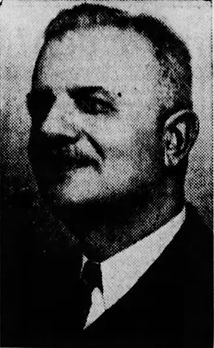
George A. Ades
1845 - 1922
🏗 George A. Ades George A. Ades, a Greek immigrant active in Grants by 1908, emerged as one of the most influential commercial and civic figures in the early development of the Grants–Milan region. Unlike many early settlers whose livelihoods were tied directly to the railroad, ranching, or mining industries, Ades established himself as a builder, merchant, and commercial strategist. Through property acquisition, construction, and infrastructure control, he positioned himself at the center of the town’s evolving business corridor along Santa Fe Avenue. His influence was not limited to a single structure or enterprise. Instead, Ades operated across multiple levels of development — land ownership, building construction, tenant placement, and utility control — forming what can best be understood as an interconnected commercial network spanning several blocks of the town. 🔷 Early Foundations & The Latham Connection Before the Yucca Hotel defined the corner of 1100 W. Santa Fe Avenue, the site was occupied by the Latham family’s Stockman’s Store, one of the earliest known commercial establishments in Grants. This establishes a direct and traceable lineage of development: Latham → Stockman’s Store → Parcel Transfer → Ades → Yucca Hotel The transfer of this property to Ades represents more than a simple land transaction. It reflects a shift in the structure of the local economy — from early, small-scale frontier commerce to more organized and strategically developed commercial space. Through this acquisition, Ades became directly tied to the earliest established business footprint on the block, anchoring his later developments in the town’s foundational history. 🔷 Construction of the Yucca Hotel (1909–1911) In 1909, Ades began construction of the Yucca Hotel, completing and opening it in 1910. At a time when much of Grants was still characterized by temporary wood-frame structures, the Yucca represented one of the first substantial and permanent commercial buildings in the town. By 1911, the first confirmed manager, Katzung, appears in the historical record — correcting a long-standing gap in documentation surrounding the hotel’s early operation. The Yucca was not simply a place of lodging. It functioned as a central hub of activity, combining hospitality, commerce, transportation services, and professional offices within a single structure. This type of multi-use design would become a defining characteristic of the corridor as it developed. 🔷 Effie Ades & The Yucca Café A critical yet often overlooked figure in the operation of the Yucca was Effie Ades, George’s wife, who managed the Yucca Café. Under her direction, the café became a central gathering place within the building and the broader community. The café served railroad workers, miners, travelers, and local residents, reinforcing the Yucca’s role as both a commercial and social center. Effie’s presence highlights the importance of family-operated enterprise in early Grants and places her at the core of the building’s daily life and identity. 🔷 The Yucca as a Multi-Use Structure The Yucca Hotel exemplified a fully integrated commercial building. Its ground floor housed a range of businesses and services, including retail shops, communication offices, and transportation functions such as ticketing and baggage handling. Above, the second floor contained professional offices, including a physician and dentist. This vertical integration of services reflects a practical and efficient use of space, allowing a single building to meet multiple needs within the growing town. It also demonstrates how early commercial structures in Grants were designed not just for occupancy, but for functionality within a larger system. 🔷 White Arrow Garage (1913) In 1913, Ades expanded his influence into the emerging automobile economy with the construction of the White Arrow Garage. As one of the earliest automobile service facilities in the region, it marked a clear transition from wagon-based transportation to motor vehicle use. This development demonstrates Ades’s ability to recognize and respond to technological and economic shifts. By investing in infrastructure that supported automobiles, he positioned his properties and businesses to remain relevant as transportation patterns changed. 🔷 Infrastructure & Civic Leadership Ades’s role in Grants extended beyond buildings into essential infrastructure. By 1928, he controlled the water system that supplied many of his properties and other buildings along Santa Fe Avenue. At the same time, Carroll Gunderson established electrical service within the town. Together, these privately controlled systems provided the foundation for modern commercial operations. Reliable water and electrical service made it possible to support theaters, hotels, retail businesses, and professional services at a scale that had not previously been possible. In addition to his commercial and infrastructural influence, Ades served as mayor, participating directly in the town’s early civic organization and development. 🔷 The Ades Commercial Network (1000–1100 W. Santa Fe) Ades’s developments along Santa Fe Avenue formed an interconnected network rather than a series of independent buildings. Concentrated primarily between the 1000 and 1100 blocks, this network included: Yucca Hotel (1909–1944) White Arrow Garage (1913) Grants Theater Lux Theatre (opened 1937) Carridine’s Drug Store Grants State Bank These properties functioned collectively as a commercial ecosystem, supporting one another through proximity, shared infrastructure, and overlapping clientele. This pattern of development represents one of the earliest examples of coordinated, multi-business planning in Grants. 🔷 Sale of the Yucca & Final Years In 1944, Ades sold the Yucca Hotel to Paul Drake, marking the end of his direct involvement with the building that had defined much of his early work. Two years later, on May 1, 1946, George A. Ades passed away. By the time of his death, the commercial corridor he helped establish had become a central feature of Grants, influencing both its economic activity and physical layout. 🔷 Demolition of the Yucca (1966) The Yucca Hotel was demolished in 1966 during a period when redevelopment trends often favored modernization over preservation. The removal of the building erased a key architectural anchor of the corridor, though its historical significance remains central to understanding the development of the area. 🔷 Legacy George A. Ades stands as a foundational figure in the development of modern Grants. His influence extends across multiple areas: Architectural development Commercial planning and business placement Civic leadership Infrastructure control (water systems) Multi-block commercial expansion More importantly, his work illustrates how the town developed not through isolated efforts, but through a network of interconnected people, properties, and services. This biography restores that network — a layered history that connects individuals, buildings, and infrastructure into a single, continuous story. Early Foundations & The Latham Connection Before the Yucca Hotel existed, the corner lot at 1100 W. Santa Fe Avenue was home to the Latham family’s Stockman’s Store. This establishes a direct lineage: Latham → Stockman’s Store → Parcel Transfer → Ades → Yucca Hotel Ades’s acquisition of Latham property represents a transfer of early commercial power and ties him to the earliest documented business footprint on the block. Construction of the Yucca Hotel (1909–1911) Ades began construction of the Yucca Hotel in 1909, completing and opening it in 1910. This was one of the first substantial, permanent commercial structures in Grants. The first confirmed manager, Katzung, appears in records by 1911, correcting decades of missing or misattributed history. The Yucca was not just a hotel — it was the first major architectural statement in downtown Grants, signaling a shift from frontier commerce to structured urban development. Effie Ades & The Yucca Café A nearly forgotten but critical fact: Effie Ades, George’s wife, managed the Yucca Café. Her work made the hotel a social hub for locals, travelers, railroad workers, and miners. This places Effie at the heart of the Yucca’s daily life and community identity. White Arrow Garage (1913) In 1913, Ades built the White Arrow Garage, one of the earliest automobile‑era service centers in the region. This marks Grants’ transition from wagon‑era commerce to the motor age and establishes Ades as a forward‑thinking builder aligned with technological change. Infrastructure & Civic Leadership Ades played a role in the 1928 power connection, helping bring modern electrical infrastructure to Grants. He also served as mayor, guiding the town through a period of early municipal development. The Ades Commercial Ecosystem (1000–1100 W. Santa Fe) Ades’s influence extended across multiple properties and businesses, forming a corridor‑wide commercial ecosystem that included: White Arrow Garage (1913) Carridine’s Drug Store Grants State Bank Grants Theater Lux Theatre (opened 1937) Yucca Hotel (1909–1944) This interconnected block represents one of the earliest multi‑business commercial clusters in Grants — and Ades was at its center. Sale of the Yucca & Final Years Ades sold the Yucca Hotel to Paul Drake in 1944. He passed away on May 1, 1946, leaving behind a legacy that shaped the architectural, commercial, and civic identity of Grants. Demolition of the Yucca (1966) The Yucca Hotel was demolished in 1966, a casualty of mid‑century redevelopment trends that favored parking lots and low‑rise structures over historic preservation. Its loss erased the physical anchor of the block — but not the history. Legacy George A. Ades stands as a founder of the modern commercial identity of Grants, with influence spanning: architecture business development civic leadership infrastructure modernization multi‑block commercial lineage This biography restores the full, interconnected story — much of which was never documented, never taught, and nearly lost.

Joesph "Joe" Cappelli
1880 - 1973
🏗 Joseph “Joe” Capelli Joseph “Joe” Capelli was an Italian-born stonemason and contractor who played a direct and physical role in shaping early Grants during its first major period of development. Working in close association with George A. Ades, Capelli was responsible for constructing some of the town’s earliest permanent commercial structures, helping transform Grants from a railroad siding into an established and functioning town. Capelli lived only a few blocks from the downtown corridor, placing him within the same environment he was actively building. His work took place during a critical period of transition, when early wood-frame structures were being replaced or supplemented by more durable construction methods capable of supporting long-term commercial growth. 🔷 Early Role in Grants & Construction Work Capelli emerged as one of the primary craftsmen during the early development of Santa Fe Avenue. While many early structures in Grants were temporary and quickly built to meet immediate needs, Capelli’s work reflects a shift toward permanence and structural stability. As a stonemason, his role went beyond simple construction. He provided the technical knowledge required to build foundations, walls, and structural elements that could withstand both time and environmental conditions. This was especially important in a town that would later experience destructive events such as the Great Fire of 1936, which exposed the weaknesses of earlier wood-frame construction. 🔷 Construction of the Yucca Hotel (1909–1911) Capelli is most closely associated with the construction of the Yucca Hotel, built for George A. Ades between 1909 and 1911 on the former site of Latham’s Stockman’s Store. This project represents one of the earliest substantial commercial builds in Grants and marked a turning point in how buildings were constructed within the town. The Yucca required coordinated effort between land acquisition, planning, and construction. Ades acted as the developer and organizer, while Capelli executed the physical construction. The result was a multi-use commercial structure that combined lodging, retail, transportation services, and professional offices within a single building. This project set a precedent for future development along Santa Fe Avenue, both in terms of function and construction quality. 🔷 Expansion Along Santa Fe Avenue Following the Yucca Hotel, Capelli continued to work on additional structures as development expanded westward along Santa Fe Avenue. His work became a consistent feature across multiple properties, particularly those associated with Ades’s growing commercial footprint. Buildings constructed during this period reflect: a shift toward masonry-supported construction more durable and permanent design increased investment in long-term commercial use Through repeated collaboration, Capelli and Ades contributed to the formation of a connected commercial corridor, rather than isolated individual buildings. 🔷 Construction Methods & Materials A defining aspect of Capelli’s work was the use of locally sourced materials, particularly malpais basalt. This material was widely used for foundations and structural elements, providing increased durability and resistance compared to earlier construction methods. Capelli’s masonry work helped establish a recognizable structural standard in Grants. Even as architectural styles varied, the underlying construction methods reflected a consistent approach to building that emphasized longevity. 🔷 Role Within the Development Network Within the broader development of Santa Fe Avenue, Capelli functioned as the primary builder responsible for turning plans into physical reality. His work was directly tied to the expansion of Ades’s properties and the growth of the commercial corridor. Their working relationship can be understood as a structured system: George A. Ades → land acquisition, development, infrastructure control Joseph Capelli → construction, masonry, structural execution This partnership allowed for coordinated growth across multiple blocks, creating a network of buildings that supported one another through shared location, function, and infrastructure. 🔷 Connection to Early Development (100 Block) Capelli’s work is also connected to the earlier development phase of the 100 block, where initial wood-frame buildings such as the Woodard Hotel, Grants Drug, and Whiteside Hotel & Café were constructed. While these structures represented an earlier stage of development, they formed the foundation upon which later, more permanent construction would expand. The transition from these early buildings to later masonry-supported structures reflects the broader evolution of Grants from a temporary railroad settlement into a more stable and organized commercial town. 🔷 Legacy Joseph “Joe” Capelli’s legacy is embedded in the physical construction of early Grants. His work represents the transition from temporary to permanent building practices and helped define the structural foundation of the town’s commercial corridor. Through his continued collaboration with George A. Ades, Capelli contributed to the development of a multi-block commercial system that supported businesses, services, and daily life for decades. While many of these structures have since been altered or removed, the impact of his craftsmanship remains central to understanding how Grants developed. More importantly, Capelli’s role illustrates that the growth of Grants was not driven by a single figure, but by a network of individuals whose combined efforts shaped the town. His work forms a critical part of that network, linking construction, commerce, and infrastructure into a unified historical narrative.



19XX
Grants — Carrot Capital of the World


Grants Cut and Mt. Taylor
Locomotive 2926 heading west through
Grants Cut

Elevation: 6,460 ft | Population: 2,280
ABE'S LIQUOR STORE
19xx - 1947
Owner:
Manager:
Phone: # 8-J
1927 — Yucca Hotel Expands Services
By 1927, the Yucca Hotel had become one of Grants’ most reliable lodging houses, offering meals, rooms, and traveler accommodations during the early years of Route 66. Local directory listings from this period show the hotel advertising steady service and dependable management, reflecting its growing role as a community anchor before the major highway boom of the 1930s.
A 1927 directory entry highlights the Yucca Hotel’s early reputation for consistent service and traveler accommodations.
19XX— Abe's Liquor Store
Grants, New Mexico
Source: Photographs courtesy of the Kiva Cafe and Elkins Family
Grants High School "Pirates Ahoy"
1969 sponsor ad section for the
Lux Theatre
Artifact: 1955 Grants High School "Pirates Ahoy" Sponsor Ad for the LUX Theatre
Source: Shawn Barringer | https://www.facebook.com/share/p/1BESHbmqfu/
Caption:
1947
Grants — Carrot Capital of the World
Grants Cut and Mt. Taylor
Locomotive 2926 heading west through
Grants Cut
Elevation: 6,460 ft | Population: 2,280
GABE'S CAFE
1947 - 19XX
Owner:
Manager:
Phone: 8-J
1947— Mr. J.C. West purchased the LUX Theatre
Grants, New Mexico
Source: Photographs courtesy of the Kiva Cafe and Elkins Family
1927 — Yucca Hotel Expands Services
By 1927, the Yucca Hotel had become one of Grants’ most reliable lodging houses, offering meals, rooms, and traveler accommodations during the early years of Route 66. Local directory listings from this period show the hotel advertising steady service and dependable management, reflecting its growing role as a community anchor before the major highway boom of the 1930s.
A 1927 directory entry highlights the Yucca Hotel’s early reputation for consistent service and traveler accommodations.

Grants High School "Pirates Ahoy"
1969 sponsor ad section for the
Lux Theatre
Artifact: 1955 Grants High School "Pirates Ahoy" Sponsor Ad for the LUX Theatre
Source: Shawn Barringer | https://www.facebook.com/share/p/1BESHbmqfu/
Caption:
1948
Grants — Carrot Capital of the World
Grants Cut and Mt. Taylor
Locomotive 2926 heading west through
Grants Cut
Elevation: 6,460 ft | Population: 2,280
GABE'S CAFE
1947 - 19XX
Owner:
Manager:
Phone: 8-J
1927 — Yucca Hotel Expands Services
By 1927, the Yucca Hotel had become one of Grants’ most reliable lodging houses, offering meals, rooms, and traveler accommodations during the early years of Route 66. Local directory listings from this period show the hotel advertising steady service and dependable management, reflecting its growing role as a community anchor before the major highway boom of the 1930s.
A 1927 directory entry highlights the Yucca Hotel’s early reputation for consistent service and traveler accommodations.
1948— Gabe's Cafe
Artifact and Visuals
Source: Photographs courtesy of the Kiva Cafe and Elkins Family
Grants High School "Pirates Ahoy"
1969 sponsor ad section for the
Lux Theatre
Artifact: 1955 Grants High School "Pirates Ahoy" Sponsor Ad for the LUX Theatre
Source: Shawn Barringer | https://www.facebook.com/share/p/1BESHbmqfu/
Caption:
1973
Grants — Carrot Capital of the World
Grants Cut and Mt. Taylor
Locomotive 2926 heading west through
Grants Cut
Elevation: 6,460 ft | Population: 9,620


POTPOURRI
1973 - 1947
Owner: Carolyn Hendrix
Manager:
Phone: 287-8434
1927 — Yucca Hotel Expands Services
By 1927, the Yucca Hotel had become one of Grants’ most reliable lodging houses, offering meals, rooms, and traveler accommodations during the early years of Route 66. Local directory listings from this period show the hotel advertising steady service and dependable management, reflecting its growing role as a community anchor before the major highway boom of the 1930s.
A 1927 directory entry highlights the Yucca Hotel’s early reputation for consistent service and traveler accommodations.
1973— Potpourri
Artifact and Visuals
Source: Photographs courtesy of the Kiva Cafe and Elkins Family

Grants High School "Pirates Ahoy"
1973 sponsor ad section for
Potpourri
Artifact: 1973 Grants High School "Pirates Ahoy" Sponsor Ad for the LUX Theatre
Source: Shawn Barringer | https://www.facebook.com/share/p/1BESHbmqfu/
Caption:
1975
Grants — Carrot Capital of the World
Grants Cut and Mt. Taylor
Locomotive 2926 heading west through
Grants Cut
Elevation: 6,460 ft | Population: 9,620
POTPOURRI
1973 - 1947
Owner: Carolyn Hendrix
Manager:
Phone: 287-8434
1927 — Yucca Hotel Expands Services
By 1927, the Yucca Hotel had become one of Grants’ most reliable lodging houses, offering meals, rooms, and traveler accommodations during the early years of Route 66. Local directory listings from this period show the hotel advertising steady service and dependable management, reflecting its growing role as a community anchor before the major highway boom of the 1930s.
A 1927 directory entry highlights the Yucca Hotel’s early reputation for consistent service and traveler accommodations.
1975— Potpourri
Grants, New Mexico
Source: Photographs courtesy of the Kiva Cafe and Elkins Family

Grants High School "Pirates Ahoy"
1975 sponsor ad section for
Potpourri
Artifact: 1955 Grants High School "Pirates Ahoy" Sponsor Ad for the LUX Theatre
Source: Shawn Barringer | https://www.facebook.com/share/p/1BESHbmqfu/
Caption:
1976
Grants — Carrot Capital of the World
Grants Cut and Mt. Taylor
Locomotive 2926 heading west through
Grants Cut
Elevation: 6,460 ft | Population: 9,620
POTPOURRI
1973 - 1947
Owner: Carolyn Hendrix
Manager:
Phone: 287-8434
1927 — Yucca Hotel Expands Services
By 1927, the Yucca Hotel had become one of Grants’ most reliable lodging houses, offering meals, rooms, and traveler accommodations during the early years of Route 66. Local directory listings from this period show the hotel advertising steady service and dependable management, reflecting its growing role as a community anchor before the major highway boom of the 1930s.
1976— Potpourri
Grants, New Mexico
Source: Photographs courtesy of the Kiva Cafe and Elkins Family

Grants High School "Pirates Ahoy"
1976 sponsor ad section for the
Lux Theatre
Artifact: 1955 Grants High School "Pirates Ahoy" Sponsor Ad for the LUX Theatre
Source: Grants High School - U.S. Yearbooks - MyHeritage
Caption:
A 1927 directory entry highlights the Yucca Hotel’s early reputation for consistent service and traveler accommodations.
Downtown Grants
1001 W. Santa Fe Avenue
at Gold Avenue
Route Shields of Grants-Milan and
surrounding areas on or connecting to
Historic US Route 66
1912-1926
1912-1926
1926-1948
1948-1961
1961-1971
1971-1985
1912-1927
1927-Present
1972-Present
1988-Present
1951-Present
1985-Present
1985-Present
1985-Present
1991-Present
1998-Present
1998-Present
2010-Present
Gene's Bakery & Restaurant Parcel
The 1100 block of West Santa Fe Avenue represents one of the earliest developed areas of Grants, tracing its origins back to the original settlement of Los Alamitos, established in 1872 prior to the arrival of the railroad. The corridor later expanded during the railroad era following the arrival of the Atlantic & Pacific Railroad in 1881, developing along a long-established travel route.
Santa Fe Avenue serves as the town’s primary main street and historic Route 66 corridor, reflecting Grants’ transition from early settlement into a regional service center. Over time, this route evolved from early regional trails into the National Old Trails Road, eventually becoming the central commercial artery of the community.
1956
Grants — Carrot Capital of the World
Grants Cut and Mt. Taylor
Locomotive 2926 heading west through
Grants Cut
Elevation: 6,460 ft | Population: 7,500
GENE'S BAKERY & RESTAURANT
1956 - 197x
Owner:
Manager:
Phone: AT 7-4701
1927 — Yucca Hotel Expands Services
By 1927, the Yucca Hotel had become one of Grants’ most reliable lodging houses, offering meals, rooms, and traveler accommodations during the early years of Route 66. Local directory listings from this period show the hotel advertising steady service and dependable management, reflecting its growing role as a community anchor before the major highway boom of the 1930s.
A 1927 directory entry highlights the Yucca Hotel’s early reputation for consistent service and traveler accommodations.
1956— Gene's Bakery & Restaurant
Artifacts and Visual
Source: Photographs courtesy of the Kiva Cafe and Elkins Family
Grants High School "Pirates Ahoy"
1969 sponsor ad section for the
Lux Theatre
Artifact: 1955 Grants High School "Pirates Ahoy" Sponsor Ad for the LUX Theatre
Source: Shawn Barringer | https://www.facebook.com/share/p/1BESHbmqfu/
Caption:
1964
Grants — Carrot Capital of the World
Grants Cut and Mt. Taylor
Locomotive 2926 heading west through
Grants Cut
Elevation: 6,460 ft | Population: 9,400
HUXFORD'S DEPARTMENT STORE
1964 - 197x
Owner: Bob & Elizabeth Huxford
Manager:
Phone: 287-4723
1927 — Yucca Hotel Expands Services
By 1927, the Yucca Hotel had become one of Grants’ most reliable lodging houses, offering meals, rooms, and traveler accommodations during the early years of Route 66. Local directory listings from this period show the hotel advertising steady service and dependable management, reflecting its growing role as a community anchor before the major highway boom of the 1930s.
A 1927 directory entry highlights the Yucca Hotel’s early reputation for consistent service and traveler accommodations.
1964— Huxford's Department Store
Artifacts and Visual
Source: Photographs courtesy of the Kiva Cafe and Elkins Family

Grants High School "Pirates Ahoy"
1964 sponsor ad section for
Huxford's Deptartment Store
Artifact: 1955 Grants High School "Pirates Ahoy" Sponsor Ad for the LUX Theatre
Source: Shawn Barringer | https://www.facebook.com/share/p/1BESHbmqfu/
Caption:
1966
Grants — Carrot Capital of the World
Grants Cut and Mt. Taylor
Locomotive 2926 heading west through
Grants Cut
Elevation: 6,460 ft | Population: 9,400
HUXFORD'S DEPARTMENT STORE
1964 - 197x
Owner: Bob & Elizabeth Huxford
Manager:
Phone: 287-4723
1927 — Yucca Hotel Expands Services
By 1927, the Yucca Hotel had become one of Grants’ most reliable lodging houses, offering meals, rooms, and traveler accommodations during the early years of Route 66. Local directory listings from this period show the hotel advertising steady service and dependable management, reflecting its growing role as a community anchor before the major highway boom of the 1930s.
A 1927 directory entry highlights the Yucca Hotel’s early reputation for consistent service and traveler accommodations.
1966— Huxford's Department Store
Artifacts and Visual
Source: Photographs courtesy of the Kiva Cafe and Elkins Family
Grants High School "Pirates Ahoy"
1969 sponsor ad section for the
Lux Theatre
Artifact: 1955 Grants High School "Pirates Ahoy" Sponsor Ad for the LUX Theatre
Source: Shawn Barringer | https://www.facebook.com/share/p/1BESHbmqfu/
Caption:
1968
Grants — Carrot Capital of the World
Grants Cut and Mt. Taylor
Locomotive 2926 heading west through
Grants Cut
Elevation: 6,460 ft | Population: 9,400
HUXFORD'S DEPARTMENT STORE
1956 - 197x
Owner: Bob & Elizabeth Huxford
Manager:
Phone: 287-4723
1927 — Yucca Hotel Expands Services
By 1927, the Yucca Hotel had become one of Grants’ most reliable lodging houses, offering meals, rooms, and traveler accommodations during the early years of Route 66. Local directory listings from this period show the hotel advertising steady service and dependable management, reflecting its growing role as a community anchor before the major highway boom of the 1930s.
A 1927 directory entry highlights the Yucca Hotel’s early reputation for consistent service and traveler accommodations.
1968— Huxford's Department Store
Artifacts and Visual
Source: Photographs courtesy of the Kiva Cafe and Elkins Family
Grants High School "Pirates Ahoy"
1969 sponsor ad section for the
Lux Theatre
Artifact: 1955 Grants High School "Pirates Ahoy" Sponsor Ad for the LUX Theatre
Source: Shawn Barringer | https://www.facebook.com/share/p/1BESHbmqfu/
Caption:
1976
Grants — Carrot Capital of the World
Grants Cut and Mt. Taylor
Locomotive 2926 heading west through
Grants Cut
Elevation: 6,460 ft | Population: 9,620
SERVICE PRINTING CO.
1976 - 197x
Owner:
Manager:
Phone: 287-8181
1927 — Yucca Hotel Expands Services
By 1927, the Yucca Hotel had become one of Grants’ most reliable lodging houses, offering meals, rooms, and traveler accommodations during the early years of Route 66. Local directory listings from this period show the hotel advertising steady service and dependable management, reflecting its growing role as a community anchor before the major highway boom of the 1930s.
A 1927 directory entry highlights the Yucca Hotel’s early reputation for consistent service and traveler accommodations.
1976— Service Printing Co.
Artifacts and Visual
Source: Photographs courtesy of the Kiva Cafe and Elkins Family

Grants High School "Pirates Ahoy"
1976 sponsor ad section for
Service Printing Co.
Artifact: 1955 Grants High School "Pirates Ahoy" Sponsor Ad for the LUX Theatre
Source: Shawn Barringer | https://www.facebook.com/share/p/1BESHbmqfu/
Caption:
1978
Grants — Carrot Capital of the World
Grants Cut and Mt. Taylor
Locomotive 2926 heading west through
Grants Cut
Elevation: 6,460 ft | Population: 9,620
SERVICE PRINTING CO.
1976 - 197x
Owner:
Manager:
Phone: 287-8181
1927 — Yucca Hotel Expands Services
By 1927, the Yucca Hotel had become one of Grants’ most reliable lodging houses, offering meals, rooms, and traveler accommodations during the early years of Route 66. Local directory listings from this period show the hotel advertising steady service and dependable management, reflecting its growing role as a community anchor before the major highway boom of the 1930s.
A 1927 directory entry highlights the Yucca Hotel’s early reputation for consistent service and traveler accommodations.
1978— Service Printing Co.
Artifacts and Visual
Source: Photographs courtesy of the Kiva Cafe and Elkins Family

Grants High School "Pirates Ahoy"
1978 sponsor ad section for
Service Printing & Office Supply
Artifact: 1955 Grants High School "Pirates Ahoy" Sponsor Ad for the LUX Theatre
Source: Shawn Barringer | https://www.facebook.com/share/p/1BESHbmqfu/
Caption:

1982
Grants — Carrot Capital of the World
Grants Cut and Mt. Taylor
Locomotive 2926 heading west through
Grants Cut
Elevation: 6,460 ft | Population: 11,050
SERVICE PRINTING CO.
1976 - 197x
Owner:
Manager:
Phone: 287-8878
1927 — Yucca Hotel Expands Services
By 1927, the Yucca Hotel had become one of Grants’ most reliable lodging houses, offering meals, rooms, and traveler accommodations during the early years of Route 66. Local directory listings from this period show the hotel advertising steady service and dependable management, reflecting its growing role as a community anchor before the major highway boom of the 1930s.
A 1927 directory entry highlights the Yucca Hotel’s early reputation for consistent service and traveler accommodations.
1980— Service Printing Co.
Artifacts and Visual
Source: Photographs courtesy of the Kiva Cafe and Elkins Family

APRIL 30, 1982
Grants Centennial Edition

Grants Daily Beacon
Centennial Edition
1982 ad section for
Service Printing & Office Supply
Artifact: Service Printing and Office Supply advertisement
Source: 1982 Grants Daily Beacon Centennial Edition,
Caption:
Downtown Grants
1006 W. Santa Fe Avenue
at Gold Avenue
1912-1926
1912-1926
1926-1948
1948-1961
1961-1971
1971-1985
1912-1927
1927-Present
1972-Present
1985-Present
1951-Present
1985-Present
1985-Present
1985-Present
1991-Present
1998-Present
1998-Present
2010-Present
Potpourri Parcel
The building at 110 W. Santa Fe Avenue was constructed in the late 1960s on the west end of the former Tropical Lounge/California Bar parcel. This subdivision occurred before the bar was demolished, and the new structure appears in late‑1960s photographs of the California Bar.
The first documented tenant was Pacific Finance, which relocated here by 1973 after previously operating at 807 W. Santa Fe Avenue in 1966, 1967, and 1968. Over the next five decades, the building housed a sequence of small professional, retail, and service businesses that reflect the changing needs of Grants residents as Santa Fe Avenue transitioned from a Route 66 travel corridor into a locally focused business district.
Route Shields of Grants-Milan and
surrounding areas on or connecting to
Historic US Route 66
The development of 110 W. Santa Fe reflects the final wave of mid‑century infill along the 100 block, providing new commercial space as Grants expanded and diversified.
1977
Grants — Carrot Capital of the World
Grants Cut and Mt. Taylor
Locomotive 2926 heading west through
Grants Cut
Elevation: 6,460 ft | Population: 9,620
POTPOURRI
1973 - 197x
Owner: Carolyn Hendrix
Manager:
Phone: 287-2434
1927 — Yucca Hotel Expands Services
By 1927, the Yucca Hotel had become one of Grants’ most reliable lodging houses, offering meals, rooms, and traveler accommodations during the early years of Route 66. Local directory listings from this period show the hotel advertising steady service and dependable management, reflecting its growing role as a community anchor before the major highway boom of the 1930s.
A 1927 directory entry highlights the Yucca Hotel’s early reputation for consistent service and traveler accommodations.
1977— Potpourri
Artifacts and Visual Record
Source: Photographs courtesy of the Kiva Cafe and Elkins Family

Grants High School "Pirates Ahoy"
1977 sponsor ad section for
Potpourri
Artifact: 1955 Grants High School "Pirates Ahoy" Sponsor Ad for Potpourri
Source: Grants High School - U.S. Yearbooks - MyHeritage
Caption:
1980
Grants — Carrot Capital of the World
Grants Cut and Mt. Taylor
Locomotive 2926 heading west through
Grants Cut
Elevation: 6,460 ft | Population: 11,415
POTPOURRI
1973 - 197x
Owner: Carolyn Hendrix
Manager:
Phone: 287-2434
1927 — Yucca Hotel Expands Services
By 1927, the Yucca Hotel had become one of Grants’ most reliable lodging houses, offering meals, rooms, and traveler accommodations during the early years of Route 66. Local directory listings from this period show the hotel advertising steady service and dependable management, reflecting its growing role as a community anchor before the major highway boom of the 1930s.
A 1927 directory entry highlights the Yucca Hotel’s early reputation for consistent service and traveler accommodations.
19XX— Abe's Liquor Store
Grants, New Mexico
Source: Photographs courtesy of the Kiva Cafe and Elkins Family
Grants High School "Pirates Ahoy"
1969 sponsor ad section for the
Lux Theatre
Artifact: 1955 Grants High School "Pirates Ahoy" Sponsor Ad for the LUX Theatre
Source: Shawn Barringer | https://www.facebook.com/share/p/1BESHbmqfu/
Caption:
Downtown Grants
1007 W. Santa Fe Avenue
at Gold Avenue
1912-1926
1912-1926
1926-1948
1948-1961
1961-1971
1971-1985
1912-1927
1927-Present
1972-Present
1985-Present
1951-Present
1985-Present
1985-Present
1985-Present
1991-Present
1998-Present
1998-Present
2010-Present
Route Shields of Grants-Milan and
surrounding areas on or connecting to
Historic US Route 66
Thrifty Drug Co. Parcel
The building at 110 W. Santa Fe Avenue was constructed in the late 1960s on the west end of the former Tropical Lounge/California Bar parcel. This subdivision occurred before the bar was demolished, and the new structure appears in late‑1960s photographs of the California Bar.
The first documented tenant was Pacific Finance, which relocated here by 1973 after previously operating at 807 W. Santa Fe Avenue in 1966, 1967, and 1968. Over the next five decades, the building housed a sequence of small professional, retail, and service businesses that reflect the changing needs of Grants residents as Santa Fe Avenue transitioned from a Route 66 travel corridor into a locally focused business district.
The development of 110 W. Santa Fe reflects the final wave of mid‑century infill along the 100 block, providing new commercial space as Grants expanded and diversified.
1946
Grants — Carrot Capital of the World
Grants Cut and Mt. Taylor
Locomotive 2926 heading west through
Grants Cut
Elevation: 6,460 ft | Population: 2,280
THRIFTY DRUG CO.
1946 - 197x
Owner: Carolyn Hendrix
Manager:
Phone: 287-8434
19XX— Abe's Liquor Store
Grants, New Mexico
Source: Photographs courtesy of the Kiva Cafe and Elkins Family
1927 — Yucca Hotel Expands Services
By 1927, the Yucca Hotel had become one of Grants’ most reliable lodging houses, offering meals, rooms, and traveler accommodations during the early years of Route 66. Local directory listings from this period show the hotel advertising steady service and dependable management, reflecting its growing role as a community anchor before the major highway boom of the 1930s.
A 1927 directory entry highlights the Yucca Hotel’s early reputation for consistent service and traveler accommodations.

Grants High School "Pirates Ahoy"
1969 sponsor ad section for the
Lux Theatre

Grants High School "Pirates Ahoy"
1969 sponsor ad section for the
Lux Theatre
Artifact: 1955 Grants High School "Pirates Ahoy" Sponsor Ad for the LUX Theatre
Source: Shawn Barringer | https://www.facebook.com/share/p/1BESHbmqfu/
Caption:
1947
Grants — Carrot Capital of the World
Grants Cut and Mt. Taylor
Locomotive 2926 heading west through
Grants Cut
Elevation: 6,460 ft | Population: 2,280
THRIFTY DRUG CO.
1946 - 197x
Owner: Carolyn Hendrix
Manager:
Phone: 287-8434
1927 — Yucca Hotel Expands Services
By 1927, the Yucca Hotel had become one of Grants’ most reliable lodging houses, offering meals, rooms, and traveler accommodations during the early years of Route 66. Local directory listings from this period show the hotel advertising steady service and dependable management, reflecting its growing role as a community anchor before the major highway boom of the 1930s.
A 1927 directory entry highlights the Yucca Hotel’s early reputation for consistent service and traveler accommodations.
19XX— Abe's Liquor Store
Grants, New Mexico
Source: Photographs courtesy of the Kiva Cafe and Elkins Family
Grants High School "Pirates Ahoy"
1969 sponsor ad section for the
Lux Theatre

Grants High School "Pirates Ahoy"
1969 sponsor ad section for the
Lux Theatre
Artifact: 1955 Grants High School "Pirates Ahoy" Sponsor Ad for the LUX Theatre
Source: Shawn Barringer | https://www.facebook.com/share/p/1BESHbmqfu/
Caption:
1956
Grants — Carrot Capital of the World
Grants Cut and Mt. Taylor
Locomotive 2926 heading west through
Grants Cut
Elevation: 6,460 ft | Population: 7,500
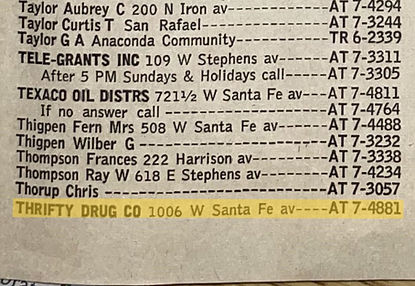
THRIFTY DRUG CO.
1946 - 197x
Proprietors: Bill and Maxine McKinley
Manager:
Phone: AT 7-4881

THRIFTY
1927 — Yucca Hotel Expands Services
By 1927, the Yucca Hotel had become one of Grants’ most reliable lodging houses, offering meals, rooms, and traveler accommodations during the early years of Route 66. Local directory listings from this period show the hotel advertising steady service and dependable management, reflecting its growing role as a community anchor before the major highway boom of the 1930s.
A 1927 directory entry highlights the Yucca Hotel’s early reputation for consistent service and traveler accommodations.
19XX— Abe's Liquor Store
Grants, New Mexico
Source: Photographs courtesy of the Kiva Cafe and Elkins Family

Grants High School "Pirates Ahoy"
1969 sponsor ad section for the
Lux Theatre
Grants High School "Pirates Ahoy"
1969 sponsor ad section for the
Lux Theatre
Artifact: 1955 Grants High School "Pirates Ahoy" Sponsor Ad for the LUX Theatre
Source: Shawn Barringer | https://www.facebook.com/share/p/1BESHbmqfu/
Caption:
1958
Grants — Carrot Capital of the World
Grants Cut and Mt. Taylor
Locomotive 2926 heading west through
Grants Cut
Elevation: 6,460 ft | Population: 7,500
THRIFTY DRUG CO.
1946 - 197x
Proprietors: Bill and Maxine McKinley
Pharmacist: Ira D. Cato
Phone: AT 7-4881
THRIFTY
1927 — Yucca Hotel Expands Services
By 1927, the Yucca Hotel had become one of Grants’ most reliable lodging houses, offering meals, rooms, and traveler accommodations during the early years of Route 66. Local directory listings from this period show the hotel advertising steady service and dependable management, reflecting its growing role as a community anchor before the major highway boom of the 1930s.
A 1927 directory entry highlights the Yucca Hotel’s early reputation for consistent service and traveler accommodations.
1958— Abe's Liquor Store
Grants, New Mexico
Source: Photographs courtesy of the Kiva Cafe and Elkins Family

This Is Grants
1958 brochure ad for
Thrifty Drug Co.
Artifact: 1955 Grants High School "Pirates Ahoy" Sponsor Ad for the LUX Theatre
Source: Patricia McClure | https://www.facebook.com/share/p/1BESHbmqfu/
Caption:
1963
Grants — Carrot Capital of the World
Grants Cut and Mt. Taylor
Locomotive 2926 heading west through
Grants Cut
Elevation: 6,460 ft | Population: 9,400
THRIFTY DRUG CO.
1946 - 197x
Proprietors: Bill and Maxine McKinley
Pharmacist: Ira D. Cato
Phone: AT 7-4881
THRIFTY
1927 — Yucca Hotel Expands Services
By 1927, the Yucca Hotel had become one of Grants’ most reliable lodging houses, offering meals, rooms, and traveler accommodations during the early years of Route 66. Local directory listings from this period show the hotel advertising steady service and dependable management, reflecting its growing role as a community anchor before the major highway boom of the 1930s.
A 1927 directory entry highlights the Yucca Hotel’s early reputation for consistent service and traveler accommodations.
19XX— Abe's Liquor Store
Grants, New Mexico
Source: Photographs courtesy of the Kiva Cafe and Elkins Family

Grants High School "Pirates Ahoy"
1969 sponsor ad section for the
Lux Theatre
Artifact: 1955 Grants High School "Pirates Ahoy" Sponsor Ad for the LUX Theatre
Source: Patricia McClure | https://www.facebook.com/share/p/1BESHbmqfu/
Caption:
1964
Grants — Carrot Capital of the World
Grants Cut and Mt. Taylor
Locomotive 2926 heading west through
Grants Cut
Elevation: 6,460 ft | Population: 9,400
THRIFTY DRUG CO.
1946 - 197x
Proprietors: Bill and Maxine McKinley
Pharmacist: Ira D. Cato
Phone: AT 7-4881
THRIFTY
1927 — Yucca Hotel Expands Services
By 1927, the Yucca Hotel had become one of Grants’ most reliable lodging houses, offering meals, rooms, and traveler accommodations during the early years of Route 66. Local directory listings from this period show the hotel advertising steady service and dependable management, reflecting its growing role as a community anchor before the major highway boom of the 1930s.
A 1927 directory entry highlights the Yucca Hotel’s early reputation for consistent service and traveler accommodations.
19XX— Abe's Liquor Store
Grants, New Mexico
Source: Photographs courtesy of the Kiva Cafe and Elkins Family

Grants High School "Pirates Ahoy"
1969 sponsor ad section for the
Lux Theatre
Artifact: 1955 Grants High School "Pirates Ahoy" Sponsor Ad for the LUX Theatre
Source: Patricia McClure | https://www.facebook.com/share/p/1BESHbmqfu/
Caption:
1966
Grants — Carrot Capital of the World
Grants Cut and Mt. Taylor
Locomotive 2926 heading west through
Grants Cut
Elevation: 6,460 ft | Population: 9,400
THRIFTY DRUG CO.
1946 - 197x
Proprietors: Bill and Maxine McKinley
Pharmacist: Ira D. Cato
Phone: AT 7-4881
THRIFTY
1927 — Yucca Hotel Expands Services
By 1927, the Yucca Hotel had become one of Grants’ most reliable lodging houses, offering meals, rooms, and traveler accommodations during the early years of Route 66. Local directory listings from this period show the hotel advertising steady service and dependable management, reflecting its growing role as a community anchor before the major highway boom of the 1930s.
A 1927 directory entry highlights the Yucca Hotel’s early reputation for consistent service and traveler accommodations.
19XX— Abe's Liquor Store
Grants, New Mexico
Source: Photographs courtesy of the Kiva Cafe and Elkins Family

Grants High School "Pirates Ahoy"
1969 sponsor ad section for the
Lux Theatre
Artifact: 1955 Grants High School "Pirates Ahoy" Sponsor Ad for the LUX Theatre
Source: Patricia McClure | https://www.facebook.com/share/p/1BESHbmqfu/
Caption:
1968
Grants — Carrot Capital of the World
Grants Cut and Mt. Taylor
Locomotive 2926 heading west through
Grants Cut
Elevation: 6,460 ft | Population: 9,400
THRIFTY DRUG CO.
1946 - 197x
Proprietors: Bill and Maxine McKinley
Pharmacist: Ira D. Cato
Phone: AT 7-4881
THRIFTY
1927 — Yucca Hotel Expands Services
By 1927, the Yucca Hotel had become one of Grants’ most reliable lodging houses, offering meals, rooms, and traveler accommodations during the early years of Route 66. Local directory listings from this period show the hotel advertising steady service and dependable management, reflecting its growing role as a community anchor before the major highway boom of the 1930s.
A 1927 directory entry highlights the Yucca Hotel’s early reputation for consistent service and traveler accommodations.
19XX— Abe's Liquor Store
Grants, New Mexico
Source: Photographs courtesy of the Kiva Cafe and Elkins Family

Grants High School "Pirates Ahoy"
1969 sponsor ad section for the
Lux Theatre
Artifact: 1955 Grants High School "Pirates Ahoy" Sponsor Ad for the LUX Theatre
Source: Patricia McClure | https://www.facebook.com/share/p/1BESHbmqfu/
Caption:
1977
Grants — Carrot Capital of the World
Grants Cut and Mt. Taylor
Locomotive 2926 heading west through
Grants Cut
Elevation: 6,460 ft | Population: 10,830
HAYES FURNITURE
1946 - 197x
Proprietors: Rudy Gick
Pharmacist: Ira D. Cato
Phone: 287-8773
1927 — Yucca Hotel Expands Services
By 1927, the Yucca Hotel had become one of Grants’ most reliable lodging houses, offering meals, rooms, and traveler accommodations during the early years of Route 66. Local directory listings from this period show the hotel advertising steady service and dependable management, reflecting its growing role as a community anchor before the major highway boom of the 1930s.
A 1927 directory entry highlights the Yucca Hotel’s early reputation for consistent service and traveler accommodations.
19XX— Abe's Liquor Store
Grants, New Mexico
Source: Photographs courtesy of the Kiva Cafe and Elkins Family

Grants High School "Pirates Ahoy"
1969 sponsor ad section for the
Lux Theatre
Artifact: 1955 Grants High School "Pirates Ahoy" Sponsor Ad for the LUX Theatre
Source: Patricia McClure | https://www.facebook.com/share/p/1BESHbmqfu/
Caption:
Downtown Grants
1009 W. Santa Fe Avenue
at Gold Avenue
1912-1926
1912-1926
1926-1948
1948-1961
1961-1971
1971-1985
1912-1927
1927-Present
1972-Present
1985-Present
1951-Present
1985-Present
1985-Present
1985-Present
1991-Present
1998-Present
1998-Present
2010-Present
Route Shields of Grants-Milan and
surrounding areas on or connecting to
Historic US Route 66
Grants Plumbing & Appliances Parcel
The building at 110 W. Santa Fe Avenue was constructed in the late 1960s on the west end of the former Tropical Lounge/California Bar parcel. This subdivision occurred before the bar was demolished, and the new structure appears in late‑1960s photographs of the California Bar.
The first documented tenant was Pacific Finance, which relocated here by 1973 after previously operating at 807 W. Santa Fe Avenue in 1966, 1967, and 1968. Over the next five decades, the building housed a sequence of small professional, retail, and service businesses that reflect the changing needs of Grants residents as Santa Fe Avenue transitioned from a Route 66 travel corridor into a locally focused business district.
The development of 110 W. Santa Fe reflects the final wave of mid‑century infill along the 100 block, providing new commercial space as Grants expanded and diversified.
1956
Grants — Carrot Capital of the World
Grants Cut and Mt. Taylor
Locomotive 2926 heading west through
Grants Cut
Elevation: 6,460 ft | Population: 7,500
GRANTS PLUMBING & APPLIANCE
1956 - 197x
Owner: Carolyn Hendrix
Manager:
Phone: 287-8434
1927 — Yucca Hotel Expands Services
By 1927, the Yucca Hotel had become one of Grants’ most reliable lodging houses, offering meals, rooms, and traveler accommodations during the early years of Route 66. Local directory listings from this period show the hotel advertising steady service and dependable management, reflecting its growing role as a community anchor before the major highway boom of the 1930s.
A 1927 directory entry highlights the Yucca Hotel’s early reputation for consistent service and traveler accommodations.
19XX— Abe's Liquor Store
Grants, New Mexico
Source: Photographs courtesy of the Kiva Cafe and Elkins Family
Grants High School "Pirates Ahoy"
1969 sponsor ad section for the
Lux Theatre
Grants High School "Pirates Ahoy"
1969 sponsor ad section for the
Lux Theatre
Artifact: 1955 Grants High School "Pirates Ahoy" Sponsor Ad for the LUX Theatre
Source: Shawn Barringer | https://www.facebook.com/share/p/1BESHbmqfu/
Caption:
1964
Grants — Carrot Capital of the World
Grants Cut and Mt. Taylor
Locomotive 2926 heading west through
Grants Cut
Elevation: 6,460 ft | Population: 9,400
BROUSE AROUND
1964 - 197x
Owner: The Spencers
Manager:
Phone: 287-2390
19XX— Abe's Liquor Store
Grants, New Mexico
Source: Photographs courtesy of the Kiva Cafe and Elkins Family
1927 — Yucca Hotel Expands Services
By 1927, the Yucca Hotel had become one of Grants’ most reliable lodging houses, offering meals, rooms, and traveler accommodations during the early years of Route 66. Local directory listings from this period show the hotel advertising steady service and dependable management, reflecting its growing role as a community anchor before the major highway boom of the 1930s.
A 1927 directory entry highlights the Yucca Hotel’s early reputation for consistent service and traveler accommodations.

Grants High School "Pirates Ahoy"
1969 sponsor ad section for the
Lux Theatre
Grants High School "Pirates Ahoy"
1969 sponsor ad section for the
Lux Theatre
Artifact: 1955 Grants High School "Pirates Ahoy" Sponsor Ad for the LUX Theatre
Source: Shawn Barringer | https://www.facebook.com/share/p/1BESHbmqfu/
Caption:
1964
Grants — Carrot Capital of the World
Grants Cut and Mt. Taylor
Locomotive 2926 heading west through
Grants Cut
Elevation: 6,460 ft | Population: 9,400
VIGIL'S UPOLSTRY & BROUSE A-ROUND
1966 - 197x
Owner:
Manager:
Phone: 287-2390
19XX— Abe's Liquor Store
Grants, New Mexico
Source: Photographs courtesy of the Kiva Cafe and Elkins Family
1927 — Yucca Hotel Expands Services
By 1927, the Yucca Hotel had become one of Grants’ most reliable lodging houses, offering meals, rooms, and traveler accommodations during the early years of Route 66. Local directory listings from this period show the hotel advertising steady service and dependable management, reflecting its growing role as a community anchor before the major highway boom of the 1930s.
A 1927 directory entry highlights the Yucca Hotel’s early reputation for consistent service and traveler accommodations.
Grants High School "Pirates Ahoy"
1969 sponsor ad section for the
Lux Theatre
Grants High School "Pirates Ahoy"
1969 sponsor ad section for the
Lux Theatre
Artifact: 1955 Grants High School "Pirates Ahoy" Sponsor Ad for the LUX Theatre
Source: Shawn Barringer | https://www.facebook.com/share/p/1BESHbmqfu/
Caption:
Downtown Grants
1010 W. Santa Fe Avenue
1912-1926
1912-1926
1926-1948
1948-1961
1961-1971
1971-1985
1912-1927
1927-Present
1972-Present
1985-Present
1951-Present
1985-Present
1985-Present
1985-Present
1991-Present
1998-Present
1998-Present
2010-Present
Route Shields of Grants-Milan and
surrounding areas on or connecting to
Historic US Route 66
Huxford's Dry Goods Parcel
The building at 110 W. Santa Fe Avenue was constructed in the late 1960s on the west end of the former Tropical Lounge/California Bar parcel. This subdivision occurred before the bar was demolished, and the new structure appears in late‑1960s photographs of the California Bar.
The first documented tenant was Pacific Finance, which relocated here by 1973 after previously operating at 807 W. Santa Fe Avenue in 1966, 1967, and 1968. Over the next five decades, the building housed a sequence of small professional, retail, and service businesses that reflect the changing needs of Grants residents as Santa Fe Avenue transitioned from a Route 66 travel corridor into a locally focused business district.
The development of 110 W. Santa Fe reflects the final wave of mid‑century infill along the 100 block, providing new commercial space as Grants expanded and diversified.
HUXFORD'S DRY GOODS
1936 - 1980
Owner: Huxford
Manager:
Phone: 22W
The Yucca Hotel was developed beginning in 1909 through the partnership of George A. Ades and stonemason Joseph “Joe” Capelli, marking a major step in the transformation of the 1100 block of West Santa Fe Avenue into a structured commercial district. The project required the demolition of Latham’s Stockman’s Store, the original Latham location established on this site in 1882, which remained in operation here until 1910. The business later relocated within Grants before eventually returning to this original location in 1968.
Positioned directly across from the S. Bibo Brothers Mercantile (1105–1115 W), and within close proximity to the Atlantic & Pacific Railroad depot located behind the mercantile, the Yucca was strategically placed at the center of Grants’ early economic activity. This location allowed the hotel to serve railroad workers, traveling salesmen, and early automobile traffic moving through the corridor.
Working together, Ades and Capelli combined development and construction expertise to create a building that functioned as both a lodging establishment and a commercial hub. Their work reflects the shift from early settlement structures to more permanent business buildings, signaling the continued growth of Grants from its Los Alamitos origins into a functioning regional service center.
Huxford's Dry Goods (Before and After)
COMING SOON
(No surviving pre‑Yucca block photo)
Earliest 1928–1929 horizontal sign photo
-
Same‑day bus photo
-
Horizontal sign installed
-
Pole removed
-
Lamp posts visible
-
Scaffold mount visible
YUCCA
1910–1927 Yucca Hotel Rooftop Sign (Recreation)
Artifact: Recreation of the 1910–1927 Yucca Hotel rooftop sign based on later photographic evidence
Source: Cibola County Historical Museum — earliest 1928–1929 Yucca Hotel horizontal sign photograph (lamp posts visible, pole removed, scaffold mount)
Retrieved from: Cibola County Historical Museum photo archives; 1928–1929 streetscape reference materials
Caption: Rooftop sign recreation informed by the 1928–1929 horizontal sign photo showing lamp posts, scaffold mount, and the earliest surviving evidence of the hotel’s signage evolution
Building Spec List for the LUX Theater
● Designed by: ○ George Ades (owner/developer) ○ Joseph “Joe” Capelli (stonemason / craftsman / installer)
● Built by: ○ George Ades (owner/builder) ○ Joseph “Joe” Capelli (stonemason / construction and fabrication)
● Building / Sign Style: ○ Two‑story Spanish‑style exterior ○ Frame and stucco construction
● Built: ○ Construction began 1909 ○ Building completed 1910
● Opened: ○ 1910 (hotel begins operation) ○ 1911 — Charles Katzung becomes first confirmed manager
○ Earlier employment possible but undocumented
● Units / Rooms / Dimensions:
○ 13 upstairs guest rooms
○ 7 downstairs business rooms ○ 20 rooms total
● Amenities: ○ Pool: ○ None ○ Playground: ○ None
● Materials: ○ Wood framing ○ Stucco exterior ○ Early storefront façade elements
● Colors: ○ Period‑appropriate neutral stucco tones ○ Dark trim (per early photos)
● Mounting / Construction: ○ Traditional early‑20th‑century frame‑and‑stucco build
○ Street‑facing façade with early signage mount
Era Covered: ○ 1909–1912 (construction through early operation)
Operational Notes: ○ Lodging and dining operation ○ Served railroad workers, early auto travelers, and locals ○ Stable early operation under Katzung (from 1911)
● Identification Method: ○ Painted horizontal sign mounted at roof edge
● Period Context: ○ Territorial‑to‑statehood transition (NM statehood 1912) ○ Early automobile travel era
● Regional / Community Role: ○ Early anchor business in the Grants commercial core ○ Provided meals and lodging for local workforce
● Years in Service: ○ 56 years (1910–1966)
● Demolished / Fate:
○ Demolished 1966
Sign Spec List for the Yucca Hotel
● Designed by: ○ George Ades (owner/developer) ○ Joseph “Joe” Capelli (stonemason / craftsman / installer)
● Built by: ○ George Ades (owner/builder) ○ Joseph “Joe” Capelli (stonemason / construction and fabrication)
● Built: ○ Construction began 1909 ○ Installed by 1910 at hotel opening
● Installation: ○ In use by 1910
○ Still in use under Katzung by 1911
○ Earlier employment possible but undocumented
● Dimensions / Physical Characteristics:
○ Exact panel dimensions undocumented
○ Mounted above the roofline for visibility
○ Supported by metal frame and guy wires
○ Slightly offset from center
● Materials: ○ Painted wood sign face
○ Metal rear bracing
○ Metal support frame
○ Brackets, bolts, fasteners
○ Raw metal components
● Colors:
○ Case Color:
○ Forest Green
○ Lettering:
○ Cream White
○ Border:
○ Black
○ Metal components:
○ Raw/unpainted
Era Covered:
○ 1909–1912 (construction through early operation)
Mounting / Construction:
○ Lodging and dining operation ○ Served railroad workers, early auto travelers, and locals ○ Stable early operation under Katzung (from 1911)
● Identification Method: ○ Painted horizontal sign mounted at roof edge
● Period Context: ○ Territorial‑to‑statehood transition (NM statehood 1912) ○ Early automobile travel era
● Regional / Community Role: ○ Early anchor business in the Grants commercial core ○ Provided meals and lodging for local workforce
● Years in Service: ○ 56 years (1910–1966)
● Demolished / Fate:
○ Removed and lost during demolition 1966
The 100 block of West Santa Fe Avenue represents the earliest phase of commercial development in Grants, established following the 1912 relocation of the Atchison, Topeka & Santa Fe Railway depot to 101 W. Santa Fe Avenue. Early businesses, including the Woodard Hotel, Grants Drug, and the Whiteside Hotel & Café at 114 W., served railroad workers, travelers, and the growing local population from wood-frame structures typical of the period. Construction within this block was part of the early development activity involving George A. Ades and stonemason Joseph “Joe” Capelli, whose work contributed to the formation of the town’s initial commercial core. This early district was largely destroyed in the Great Fire of 1936, marking a turning point in the corridor’s development. In the years surrounding this transition, infrastructure improvements played a critical role, as Carroll Gunderson established electrical service while George A. Ades controlled the water system, together enabling the expansion of more permanent, masonry-built commercial structures westward along Santa Fe Avenue.
Ades & Capelli Development Network
Santa Fe Avenue Commercial Corridor
🔷 1100 BLOCK
📍 1100 W. Santa Fe Ave
Yucca Hotel (1909–1911 | Rebuild 1916)
-
Dev: George A. Ades
-
Build: Joseph Capelli
-
Lot: Block 11, Lot 1
-
Prev: Latham’s Store (1882–1910)
-
Features: 2-story, stucco, basalt foundation
-
Systems: well, water tower, steam boiler
Interior / Ground Floor:
-
Yucca Café (Ades)
-
Cocktail Lounge
-
Western Union
-
Blue Bell Telephone
-
Grants Barber Shop (Art Baca)
-
Western Auto
-
City Bakery (Masons)
-
Graham’s Jewelers
-
Grants Review (J.M. Chapman)
-
Brown’s Shoes & Repair
-
Grants State Bank (temporary office)
-
Ticket Stand / Depot Counter
Second Floor — Professional Offices
Occupants:
-
Physician (Doctor’s Office)
-
Dentist Office
📍 1112 W
Grants Theater (1910 | c.1915–1920 structure phase)
-
Dev: Ades
📍 1114 W
White Arrow Garage (1913)
-
Dev: Ades
-
Masonry: Capelli
📍 1116 W
Ades Commercial Building (c.1920)
-
Tenants: Laundromat (Garcias), Radio Repair
📍 1120 W
Ades Liquor Store (1940s)
📍 1100 Block (Rear)
Service / Utility Structures (c.1912–1915)
-
Dev: Ades
-
Build: Capelli
🔷 1000 BLOCK
📍 1000 W. Santa Fe Avenue
Abe’s Liquor Store
-
Build: Joesph "Joe" Capelli
-
Dev: George A. Ades
📍 1001 W. Santa Fe Avenue (Rt 66)
Huxford's Dry Goods (19xx-19xx)
-
Dev: Ades
📍 1012 W. Santa Fe Avenue (Rt 66)
Huxford's Dry Goods (19xx-19xx)
-
Dev: Ades
📍 1013 W. Santa Fe Avenue (Rt 66)
The Mint Cafe & Bar (1936-19xx)
-
Dev: Bibo
-
Build: Joesph "Joe" Capelli
📍 1014 W. Santa Fe Avenue
Violetta's Beauty Shop
-
Dev: Ades
-
Build: Capelli
📍 1016 W. Santa Fe Avenue
Ades Building (The Commerce Building)
-
Dev: Ades
-
Build: Capelli
📍 1018 W
Lux Theatre (1937)
-
Dev: George A. Ades
-
Owner: George A. Ades and Cyrus Souris
-
Build: Joseph "Joe" Capelli
-
Partner: Cyrus Souris
📍 1020 W
Grants State Bank (1947)
-
Dev: Ades
📍 1022 W
Carridine’s Drug Store (1944)
-
Dev: Ades
-
Owner: W.E. Carridine
-
Build: Capelli
-
Structure: masonry + frame
-
Facade: stucco + brick
🔷 900 BLOCK
📍 915 W
Ades Professional Building (c.1930s)
🔷 800 BLOCK
📍 800–810 W
Utility Annex / Rental Units (c.1930s)
🔷 700 BLOCK
📍 712 W
Variety Store Building (c.1928–1932)
🔷 600 BLOCK
📍 600–610 W. Santa Fe Ave
Structure: Commercial Building
Built: c.1925–1930
Developed By:
-
George A. Ades
Constructed By:
-
Joseph Capelli
Use:
-
Retail / commercial storefronts
🔷 500 BLOCK
📍 500 W. Santa Fe Ave
Structure: Chamber of Commerce Building
Built: 1940s
Developed By:
-
George A. Ades
📍 501 W. Santa Fe Ave
Structure: Modern Cleaners
Built: c.1935
Developed By:
-
George A. Ades
📍 508 W. Santa Fe Ave
Structure: Grants Hardware
Developed By:
-
George A. Ades
Constructed By:
-
Joseph Capelli
Operated By:
-
Walker Family
📍 512 W. Santa Fe Ave
Structure: Westerner Shop
Built: 1940s
Developed By:
-
George A. Ades
📍 515 W. Santa Fe Ave
Structure: Multi-Unit Retail Building
Built: 1940s
Developed By:
-
George A. Ades
🔷 400 BLOCK
📍 400 W. Santa Fe Ave
Structure: Grants Lumber & Sun Valley
Developed By:
-
George A. Ades
📍 408 W. Santa Fe Ave
Structure: Trade Shop Building
Built: 1940s
Developed By:
-
George A. Ades
Use:
-
Shoe repair
-
trade services
📍 421 W. Santa Fe Ave
Structure: Utility Warehouse
Built: 1940s
Developed By:
-
George A. Ades
🔷 300 BLOCK
📍 300–310 W. Santa Fe Ave
Structure: City Hall / Jail / Fire Department
Associated With:
-
George A. Ades
📍 312 W. Santa Fe Ave
Structure: Retail Units
Developed By:
-
George A. Ades
Use:
-
Tailor
-
Cobbler
📍 320 W. Santa Fe Ave
Structure: Post Office Lot
🔷 200 BLOCK
📍 200 W. Santa Fe Ave
Structure: Grants Garage / Chevrolet Garage
Built: c.1910 | Expanded 1918
Developed By:
-
George A. Ades
📍 204 W. Santa Fe Ave
Structure: Grants Mercantile
Built: c.1910
Developed By:
-
George A. Ades
📍 210 W. Santa Fe Ave
Structure: Orange Front Soda Shop
Built: c.1920
Developed By:
-
George A. Ades
Manager:
-
Claude Bowlin
📍 212–214 W. Santa Fe Ave
Structure: Grants Hall (formerly Valencia Hall)
Built: 1929
Developed By:
-
George A. Ades
Constructed By:
-
Joseph Capelli
📍 218 W. Santa Fe Ave
Structure: Red Ball Garage
Built: c.1930
Developed By:
-
George A. Ades
🔷 100 BLOCK
📍 100 Block W. Santa Fe Ave
Context:
-
Earliest commercial core of Grants
-
Developed following 1912 depot relocation to 101 W
-
Comprised of wood-frame structures prior to later masonry development
📍 c.1916 — Hotel Woodard
-
Wood-frame hotel
-
Railroad-era lodging
📍 c.1917 — Grants Drug
-
Pharmacy / retail
-
Served hotel corridor
📍 114 W. Santa Fe Ave — Whiteside Hotel & Café
Built: 1918
Owner / Operator:
-
Whiteside
Structure:
-
Wood-frame
Function:
-
Hotel + café
Construction Context:
-
Part of early builder/trade network preceding Ades–Capelli system
🔥 📍 1936 — THE GREAT FIRE OF 1936
Destroyed:
-
Woodard Hotel
-
Whiteside Hotel & Café
-
Grants Drug
-
Surrounding early commercial structures
🔍 IMPACT
-
Removed original downtown core
-
Transition to masonry + planned development
⚡💧 INFRASTRUCTURE (PLACE AT BOTTOM OR FULL WIDTH)
📍 1928 — POWER & WATER SYSTEMS
Power Provided By:
-
Carroll Gunderson
Water System Developed By:
-
George A. Ades
🔧 FUNCTION
-
Enabled modern commercial expansion
-
Supported theaters, hotels, utilities, and retail
🧠 SIGNIFICANCE
-
Marks transition to modern Grants infrastructure
-
Foundation for full corridor development
🪨 MALPAIS BASALT QUARRY
Owned By:
-
George A. Ades
-
Joseph Capelli
Purpose:
-
Structural material for corridor buildings
1937
Grants — Carrot Capital of the World
Grants Cut and Mt. Taylor
Locomotive 2926 heading west through
Grants Cut
Elevation: 6,460 ft | Population: 2,010
HUXFORD'S DRY GOODS
1936 - 1980
Owner: Bob & Elizabeth Huxford
Manager:
Phone: At 7- 4223
1927 — Yucca Hotel Expands Services
By 1927, the Yucca Hotel had become one of Grants’ most reliable lodging houses, offering meals, rooms, and traveler accommodations during the early years of Route 66. Local directory listings from this period show the hotel advertising steady service and dependable management, reflecting its growing role as a community anchor before the major highway boom of the 1930s.
A 1927 directory entry highlights the Yucca Hotel’s early reputation for consistent service and traveler accommodations.
1936 — Huxford's Dry Goods
Artifacts and Visuals
Source: Photographs courtesy of the Kiva Cafe and Elkins Family
Grants High School "Pirates Ahoy"
1969 sponsor ad section for the
Lux Theatre
Artifact: 1955 Grants High School "Pirates Ahoy" Sponsor Ad for the LUX Theatre
Source: Shawn Barringer | https://www.facebook.com/share/p/1BESHbmqfu/
Caption:
1953
Grants — Carrot Capital of the World
Grants Cut and Mt. Taylor
Locomotive 2926 heading west through
Grants Cut
Elevation: 6,460 ft | Population: 6,400
HUXFORD'S DRY GOODS
1936 - 19xx
Owner: Bob & Elizabeth Huxford
Manager: Eddie McCannn
Manager: Alice Bibo
Phone: 61-M
1927 — Yucca Hotel Expands Services
By 1927, the Yucca Hotel had become one of Grants’ most reliable lodging houses, offering meals, rooms, and traveler accommodations during the early years of Route 66. Local directory listings from this period show the hotel advertising steady service and dependable management, reflecting its growing role as a community anchor before the major highway boom of the 1930s.
A 1927 directory entry highlights the Yucca Hotel’s early reputation for consistent service and traveler accommodations.
1939 — Huxford's Dry Goods
Artifacts and Visuals
Source: Photographs courtesy of the Kiva Cafe and Elkins Family
The Gallup Independent
January 16, 1953

Grants High School "Pirates Ahoy"
1969 sponsor ad section for the
Lux Theatre
The Gallup Independent
January 16, 1953

Grants High School "Pirates Ahoy"
1969 sponsor ad section for the
Lux Theatre
Artifact: 1955 Grants High School "Pirates Ahoy" Sponsor Ad for the LUX Theatre
Source: Shawn Barringer | https://www.facebook.com/share/p/1BESHbmqfu/
Caption:
1956
Grants — Carrot Capital of the World
Grants Cut and Mt. Taylor
Locomotive 2926 heading west through
Grants Cut
Elevation: 6,460 ft | Population: 6,400
HUXFORD'S DRY GOODS
1936 - 19xx
Owner: Bob & Elizabeth Huxford
Manager: Alice Bibo
Phone: AT 7-4723
1927 — Yucca Hotel Expands Services
By 1927, the Yucca Hotel had become one of Grants’ most reliable lodging houses, offering meals, rooms, and traveler accommodations during the early years of Route 66. Local directory listings from this period show the hotel advertising steady service and dependable management, reflecting its growing role as a community anchor before the major highway boom of the 1930s.
A 1927 directory entry highlights the Yucca Hotel’s early reputation for consistent service and traveler accommodations.
1956 — Huxford's Dry Goods
Artifacts and Visuals
Source: Photographs courtesy of the Kiva Cafe and Elkins Family

APRIL 19, 1956

Grants High School "Pirates Ahoy"
1969 sponsor ad section for the
Lux Theatre
Artifact: 1955 Grants High School "Pirates Ahoy" Sponsor Ad for the LUX Theatre
Source: Shawn Barringer | https://www.facebook.com/share/p/1BESHbmqfu/
Caption:
1964
Grants — Carrot Capital of the World
Grants Cut and Mt. Taylor
Locomotive 2926 heading west through
Grants Cut
Elevation: 6,460 ft | Population: 9,110
DOMKE'S FINE JEWELRY
194x - 19xx
Owner:
Manager:
Phone: AT 7-3323
1927 — Yucca Hotel Expands Services
By 1927, the Yucca Hotel had become one of Grants’ most reliable lodging houses, offering meals, rooms, and traveler accommodations during the early years of Route 66. Local directory listings from this period show the hotel advertising steady service and dependable management, reflecting its growing role as a community anchor before the major highway boom of the 1930s.
1964— Domke's Fine Jewelers
Artifacts and Visuals
Source: Photographs courtesy of the Kiva Cafe and Elkins Family

Grants High School "Pirates Ahoy"
1973 sponsor ad section for the
Lux Theatre
Artifact: 1971 Grants High School "Pirates Ahoy" Sponsor Ad for the LUX Theatre pg. 206
Source: Grants High School - U.S. Yearbooks - MyHeritage
Caption: Scenes from the 1941 Fourth of July Parade showing downtown Grants, including the Yucca Café, Cabot Drugs, and early Route 66 streetscape.
A 1927 directory entry highlights the Yucca Hotel’s early reputation for consistent service and traveler accommodations.
1968
Grants — Carrot Capital of the World
Grants Cut and Mt. Taylor
Locomotive 2926 heading west through
Grants Cut
Elevation: 6,460 ft | Population: 9,110
ADVANCED GRANTS TICKET
194x - 19xx
Owner:
Manager:
Phone: 287-2809
1968— Street view of Route 66 and
the LUX Theatres Construction
Grants, New Mexico
Source: Photographs courtesy of the Kiva Cafe and Elkins Family
1927 — Yucca Hotel Expands Services
By 1927, the Yucca Hotel had become one of Grants’ most reliable lodging houses, offering meals, rooms, and traveler accommodations during the early years of Route 66. Local directory listings from this period show the hotel advertising steady service and dependable management, reflecting its growing role as a community anchor before the major highway boom of the 1930s.
A 1927 directory entry highlights the Yucca Hotel’s early reputation for consistent service and traveler accommodations.
Grants High School "Pirates Ahoy"
1964 sponsor ad section for
Domke's Fine Jewlery
Artifact: 1971 Grants High School "Pirates Ahoy" Sponsor Ad for the LUX Theatre pg. 206
Source: Grants High School - U.S. Yearbooks - MyHeritage
Caption: Scenes from the 1941 Fourth of July Parade showing downtown Grants, including the Yucca Café, Cabot Drugs, and early Route 66 streetscape.
Downtown Grants
1013 W. Santa Fe Avenue
1912-1926
1912-1926
1926-1948
1948-1961
1961-1971
1971-1985
1912-1927
1927-Present
1972-Present
1985-Present
1951-Present
1985-Present
1985-Present
1985-Present
1991-Present
1998-Present
1998-Present
2010-Present
The Mint Cafe and Bar Parcel
The building at 110 W. Santa Fe Avenue was constructed in the late 1960s on the west end of the former Tropical Lounge/California Bar parcel. This subdivision occurred before the bar was demolished, and the new structure appears in late‑1960s photographs of the California Bar.
The first documented tenant was Pacific Finance, which relocated here by 1973 after previously operating at 807 W. Santa Fe Avenue in 1966, 1967, and 1968. Over the next five decades, the building housed a sequence of small professional, retail, and service businesses that reflect the changing needs of Grants residents as Santa Fe Avenue transitioned from a Route 66 travel corridor into a locally focused business district.
The development of 110 W. Santa Fe reflects the final wave of mid‑century infill along the 100 block, providing new commercial space as Grants expanded and diversified.
ADVANCED GRANTS TICKET
194x - 19xx
Owner:
Manager:
Phone: 287-2809
1968— Street view of Route 66 and
the LUX Theatres Construction
Grants, New Mexico
Source: Photographs courtesy of the Kiva Cafe and Elkins Family
1927 — Yucca Hotel Expands Services
By 1927, the Yucca Hotel had become one of Grants’ most reliable lodging houses, offering meals, rooms, and traveler accommodations during the early years of Route 66. Local directory listings from this period show the hotel advertising steady service and dependable management, reflecting its growing role as a community anchor before the major highway boom of the 1930s.
A 1927 directory entry highlights the Yucca Hotel’s early reputation for consistent service and traveler accommodations.
Grants High School "Pirates Ahoy"
1964 sponsor ad section for
Domke's Fine Jewlery
Artifact: 1971 Grants High School "Pirates Ahoy" Sponsor Ad for the LUX Theatre pg. 206
Source: Grants High School - U.S. Yearbooks - MyHeritage
Caption: Scenes from the 1941 Fourth of July Parade showing downtown Grants, including the Yucca Café, Cabot Drugs, and early Route 66 streetscape.
1955
Grants — Carrot Capital of the World
Grants Cut and Mt. Taylor
Locomotive 2926 heading west through
Grants Cut
Elevation: 6,460 ft | Population: 6,400
URANIUM CITY NEWS
1955 - 19xx
Owner: George Dannenbaum
Manager:
Phone:
1927 — Yucca Hotel Expands Services
By 1927, the Yucca Hotel had become one of Grants’ most reliable lodging houses, offering meals, rooms, and traveler accommodations during the early years of Route 66. Local directory listings from this period show the hotel advertising steady service and dependable management, reflecting its growing role as a community anchor before the major highway boom of the 1930s.
1955 — Uranium City News
Artifacts and Visuals
Source: Photographs courtesy of the Kiva Cafe and Elkins Family
Grants High School "Pirates Ahoy"
1964 sponsor ad section for
Domke's Fine Jewlery
Artifact: 1971 Grants High School "Pirates Ahoy" Sponsor Ad for the LUX Theatre pg. 206
Source: Grants High School - U.S. Yearbooks - MyHeritage
Caption: Scenes from the 1941 Fourth of July Parade showing downtown Grants, including the Yucca Café, Cabot Drugs, and early Route 66 streetscape.
A 1927 directory entry highlights the Yucca Hotel’s early reputation for consistent service and traveler accommodations.
Downtown Grants
1011 W. Santa Fe Avenue
1912-1926
1912-1926
1926-1948
1948-1961
1961-1971
1971-1985
1912-1927
1927-Present
1972-Present
1985-Present
1951-Present
1985-Present
1985-Present
1985-Present
1991-Present
1998-Present
1998-Present
2010-Present
Uranium City News Parcel
The building at 110 W. Santa Fe Avenue was constructed in the late 1960s on the west end of the former Tropical Lounge/California Bar parcel. This subdivision occurred before the bar was demolished, and the new structure appears in late‑1960s photographs of the California Bar.
The first documented tenant was Pacific Finance, which relocated here by 1973 after previously operating at 807 W. Santa Fe Avenue in 1966, 1967, and 1968. Over the next five decades, the building housed a sequence of small professional, retail, and service businesses that reflect the changing needs of Grants residents as Santa Fe Avenue transitioned from a Route 66 travel corridor into a locally focused business district.
The development of 110 W. Santa Fe reflects the final wave of mid‑century infill along the 100 block, providing new commercial space as Grants expanded and diversified.
1955
Grants — Carrot Capital of the World
Grants Cut and Mt. Taylor
Locomotive 2926 heading west through
Grants Cut
Elevation: 6,460 ft | Population: 6,400
URANIUM CITY NEWS
1955 - 1957
Owner: George Dannenbaum
Manager:
Phone:
1927 — Yucca Hotel Expands Services
By 1927, the Yucca Hotel had become one of Grants’ most reliable lodging houses, offering meals, rooms, and traveler accommodations during the early years of Route 66. Local directory listings from this period show the hotel advertising steady service and dependable management, reflecting its growing role as a community anchor before the major highway boom of the 1930s.
1955 — Uranium City News
Artifacts and Visuals
Source: Photographs courtesy of the Kiva Cafe and Elkins Family
Grants High School "Pirates Ahoy"
1964 sponsor ad section for
Domke's Fine Jewlery
Artifact: 1971 Grants High School "Pirates Ahoy" Sponsor Ad for the LUX Theatre pg. 206
Source: Grants High School - U.S. Yearbooks - MyHeritage
Caption: Scenes from the 1941 Fourth of July Parade showing downtown Grants, including the Yucca Café, Cabot Drugs, and early Route 66 streetscape.
A 1927 directory entry highlights the Yucca Hotel’s early reputation for consistent service and traveler accommodations.
1956
Grants — Carrot Capital of the World
Grants Cut and Mt. Taylor
Locomotive 2926 heading west through
Grants Cut
Elevation: 6,460 ft | Population: 6,400
URANIUM CITY NEWS
1955 - 1957
Owner: George Dannenbaum
Manager:
Phone: AT 7-3141
1927 — Yucca Hotel Expands Services
By 1927, the Yucca Hotel had become one of Grants’ most reliable lodging houses, offering meals, rooms, and traveler accommodations during the early years of Route 66. Local directory listings from this period show the hotel advertising steady service and dependable management, reflecting its growing role as a community anchor before the major highway boom of the 1930s.
1956 — Uranium City News
Artifacts and Visuals
Source: Photographs courtesy of the Kiva Cafe and Elkins Family
Grants High School "Pirates Ahoy"
1964 sponsor ad section for
Domke's Fine Jewlery
Artifact: 1971 Grants High School "Pirates Ahoy" Sponsor Ad for the LUX Theatre pg. 206
Source: Grants High School - U.S. Yearbooks - MyHeritage
Caption: Scenes from the 1941 Fourth of July Parade showing downtown Grants, including the Yucca Café, Cabot Drugs, and early Route 66 streetscape.
A 1927 directory entry highlights the Yucca Hotel’s early reputation for consistent service and traveler accommodations.
1957
Grants — Carrot Capital of the World
Grants Cut and Mt. Taylor
Locomotive 2926 heading west through
Grants Cut
Elevation: 6,460 ft | Population: 6,400
URANIUM CITY NEWS
1955 - 1957
Owner: George Dannenbaum
Manager:
Phone: AT 7-3141
1927 — Yucca Hotel Expands Services
By 1927, the Yucca Hotel had become one of Grants’ most reliable lodging houses, offering meals, rooms, and traveler accommodations during the early years of Route 66. Local directory listings from this period show the hotel advertising steady service and dependable management, reflecting its growing role as a community anchor before the major highway boom of the 1930s.
1957 — Uranium City News
Artifacts and Visuals
Source: Photographs courtesy of the Kiva Cafe and Elkins Family
Grants High School "Pirates Ahoy"
1964 sponsor ad section for
Domke's Fine Jewlery
Artifact: 1971 Grants High School "Pirates Ahoy" Sponsor Ad for the LUX Theatre pg. 206
Source: Grants High School - U.S. Yearbooks - MyHeritage
Caption: Scenes from the 1941 Fourth of July Parade showing downtown Grants, including the Yucca Café, Cabot Drugs, and early Route 66 streetscape.
A 1927 directory entry highlights the Yucca Hotel’s early reputation for consistent service and traveler accommodations.
1973
Grants — Carrot Capital of the World
Grants Cut and Mt. Taylor
Locomotive 2926 heading west through
Grants Cut
Elevation: 6,460 ft | Population: 9,620
FASHIONETTS BEAUTY SALON
1973 - 19xx
Owner:
Manager:
Phone: 287-8155
1968— Street view of Route 66 and
the LUX Theatres Construction
Grants, New Mexico
Source: Photographs courtesy of the Kiva Cafe and Elkins Family
1927 — Yucca Hotel Expands Services
By 1927, the Yucca Hotel had become one of Grants’ most reliable lodging houses, offering meals, rooms, and traveler accommodations during the early years of Route 66. Local directory listings from this period show the hotel advertising steady service and dependable management, reflecting its growing role as a community anchor before the major highway boom of the 1930s.
A 1927 directory entry highlights the Yucca Hotel’s early reputation for consistent service and traveler accommodations.

Grants High School "Pirates Ahoy"
1964 sponsor ad section for
Domke's Fine Jewlery
Artifact: 1971 Grants High School "Pirates Ahoy" Sponsor Ad for the LUX Theatre pg. 206
Source: Grants High School - U.S. Yearbooks - MyHeritage
Caption: Scenes from the 1941 Fourth of July Parade showing downtown Grants, including the Yucca Café, Cabot Drugs, and early Route 66 streetscape.
1976
Grants — Carrot Capital of the World
Grants Cut and Mt. Taylor
Locomotive 2926 heading west through
Grants Cut
Elevation: 6,460 ft | Population: 9,620
FASHIONETTS BEAUTY SALON
1973 - 19xx
Owner:
Manager:
Phone: 287-8155
1968— Street view of Route 66 and
the LUX Theatres Construction
Grants, New Mexico
Source: Photographs courtesy of the Kiva Cafe and Elkins Family
1927 — Yucca Hotel Expands Services
By 1927, the Yucca Hotel had become one of Grants’ most reliable lodging houses, offering meals, rooms, and traveler accommodations during the early years of Route 66. Local directory listings from this period show the hotel advertising steady service and dependable management, reflecting its growing role as a community anchor before the major highway boom of the 1930s.
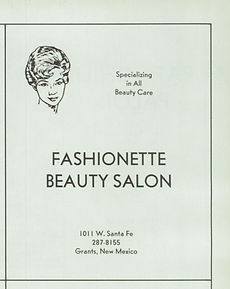
Grants High School "Pirates Ahoy"
1964 sponsor ad section for
Domke's Fine Jewlery
Artifact: 1971 Grants High School "Pirates Ahoy" Sponsor Ad for the LUX Theatre pg. 206
Source: Grants High School - U.S. Yearbooks - MyHeritage
Caption: Scenes from the 1941 Fourth of July Parade showing downtown Grants, including the Yucca Café, Cabot Drugs, and early Route 66 streetscape.
A 1927 directory entry highlights the Yucca Hotel’s early reputation for consistent service and traveler accommodations.
1977
Grants — Carrot Capital of the World
Grants Cut and Mt. Taylor
Locomotive 2926 heading west through
Grants Cut
Elevation: 6,460 ft | Population: 9,620
FASHIONETTS BEAUTY SALON
1973 - 19xx
Owner:
Manager:
Phone: 287-8155
1968— Street view of Route 66 and
the LUX Theatres Construction
Grants, New Mexico
Source: Photographs courtesy of the Kiva Cafe and Elkins Family
1927 — Yucca Hotel Expands Services
By 1927, the Yucca Hotel had become one of Grants’ most reliable lodging houses, offering meals, rooms, and traveler accommodations during the early years of Route 66. Local directory listings from this period show the hotel advertising steady service and dependable management, reflecting its growing role as a community anchor before the major highway boom of the 1930s.

Grants High School "Pirates Ahoy"
1964 sponsor ad section for
Domke's Fine Jewlery
Artifact: 1971 Grants High School "Pirates Ahoy" Sponsor Ad for the LUX Theatre pg. 206
Source: Grants High School - U.S. Yearbooks - MyHeritage
Caption: Scenes from the 1941 Fourth of July Parade showing downtown Grants, including the Yucca Café, Cabot Drugs, and early Route 66 streetscape.
A 1927 directory entry highlights the Yucca Hotel’s early reputation for consistent service and traveler accommodations.
Downtown Grants
1012 W. Santa Fe Avenue
1912-1926
1912-1926
1926-1948
1948-1961
1961-1971
1971-1985
1912-1927
1927-Present
1972-Present
1985-Present
1951-Present
1985-Present
1985-Present
1985-Present
1991-Present
1998-Present
1998-Present
2010-Present
Uranium City News Parcel
The building at 110 W. Santa Fe Avenue was constructed in the late 1960s on the west end of the former Tropical Lounge/California Bar parcel. This subdivision occurred before the bar was demolished, and the new structure appears in late‑1960s photographs of the California Bar.
The first documented tenant was Pacific Finance, which relocated here by 1973 after previously operating at 807 W. Santa Fe Avenue in 1966, 1967, and 1968. Over the next five decades, the building housed a sequence of small professional, retail, and service businesses that reflect the changing needs of Grants residents as Santa Fe Avenue transitioned from a Route 66 travel corridor into a locally focused business district.
The development of 110 W. Santa Fe reflects the final wave of mid‑century infill along the 100 block, providing new commercial space as Grants expanded and diversified.
FASHIONETTS BEAUTY SALON
1973 - 19xx
Owner:
Manager:
Phone: 287-8155
1968— Street view of Route 66 and
the LUX Theatres Construction
Grants, New Mexico
Source: Photographs courtesy of the Kiva Cafe and Elkins Family
1927 — Yucca Hotel Expands Services
By 1927, the Yucca Hotel had become one of Grants’ most reliable lodging houses, offering meals, rooms, and traveler accommodations during the early years of Route 66. Local directory listings from this period show the hotel advertising steady service and dependable management, reflecting its growing role as a community anchor before the major highway boom of the 1930s.
Grants High School "Pirates Ahoy"
1964 sponsor ad section for
Domke's Fine Jewlery
Artifact: 1971 Grants High School "Pirates Ahoy" Sponsor Ad for the LUX Theatre pg. 206
Source: Grants High School - U.S. Yearbooks - MyHeritage
Caption: Scenes from the 1941 Fourth of July Parade showing downtown Grants, including the Yucca Café, Cabot Drugs, and early Route 66 streetscape.
A 1927 directory entry highlights the Yucca Hotel’s early reputation for consistent service and traveler accommodations.
Downtown Grants
1013 W. Santa Fe Avenue
1912-1926
1912-1926
1926-1948
1948-1961
1961-1971
1971-1985
1912-1927
1927-Present
1972-Present
1985-Present
1951-Present
1985-Present
1985-Present
1985-Present
1991-Present
1998-Present
1998-Present
2010-Present
Uranium City News Parcel
The building at 110 W. Santa Fe Avenue was constructed in the late 1960s on the west end of the former Tropical Lounge/California Bar parcel. This subdivision occurred before the bar was demolished, and the new structure appears in late‑1960s photographs of the California Bar.
The first documented tenant was Pacific Finance, which relocated here by 1973 after previously operating at 807 W. Santa Fe Avenue in 1966, 1967, and 1968. Over the next five decades, the building housed a sequence of small professional, retail, and service businesses that reflect the changing needs of Grants residents as Santa Fe Avenue transitioned from a Route 66 travel corridor into a locally focused business district.
The development of 110 W. Santa Fe reflects the final wave of mid‑century infill along the 100 block, providing new commercial space as Grants expanded and diversified.
1933
Grants — Carrot Capital of the World
Grants Cut and Mt. Taylor
Locomotive 2926 heading west through
Grants Cut
Elevation: 6,460 ft | Population: 2,010
THE MINT CAFE AND BAR
1933 - 1947
Owner: Spero "Pete" Michelis (Pete Michaels)
Manager:
Phone:
1933 — Grand Opening of The Mint Cafe and Bar
In September 1933, the The Mint Cafe and Bar had become one of Grants’ most reliable lodging houses, offering meals, rooms, and traveler accommodations during the early years of Route 66. Local directory listings from this period show the hotel advertising steady service and dependable management, reflecting its growing role as a community anchor before the major highway boom of the 1930s.
1934 — The Mint Cafe and Bar
Artifacts and Visuals
Source: Photographs courtesy of the Kiva Cafe and Elkins Family
Grants High School "Pirates Ahoy"
1964 sponsor ad section for
Domke's Fine Jewlery
Artifact: 1971 Grants High School "Pirates Ahoy" Sponsor Ad for the LUX Theatre pg. 206
Source: Grants High School - U.S. Yearbooks - MyHeritage
Caption: Scenes from the 1941 Fourth of July Parade showing downtown Grants, including the Yucca Café, Cabot Drugs, and early Route 66 streetscape.
A 1927 directory entry highlights the Yucca Hotel’s early reputation for consistent service and traveler accommodations.
1937
Grants — Carrot Capital of the World
Grants Cut and Mt. Taylor
Locomotive 2926 heading west through
Grants Cut
Elevation: 6,460 ft | Population: 2,010
THE MINT CAFE AND BAR
1933 - 1947
Owner: Tony Mace and Max Knight
Manager:
Phone: 287-2809
1927 — Yucca Hotel Expands Services
In September of , the Yucca Hotel had become one of Grants’ most reliable lodging houses, offering meals, rooms, and traveler accommodations during the early years of Route 66. Local directory listings from this period show the hotel advertising steady service and dependable management, reflecting its growing role as a community anchor before the major highway boom of the 1930s.
1937 — The Mint Cafe and Bar
Artifacts and Visuals
Source: Photographs courtesy of the Kiva Cafe and Elkins Family

Grants High School "Pirates Ahoy"
1964 sponsor ad section for
Domke's Fine Jewlery
Artifact: 1971 Grants High School "Pirates Ahoy" Sponsor Ad for the LUX Theatre pg. 206
Source: Grants High School - U.S. Yearbooks - MyHeritage
Caption: Scenes from the 1941 Fourth of July Parade showing downtown Grants, including the Yucca Café, Cabot Drugs, and early Route 66 streetscape.
A 1927 directory entry highlights the Yucca Hotel’s early reputation for consistent service and traveler accommodations.
1939
Grants — Carrot Capital of the World
Grants Cut and Mt. Taylor
Locomotive 2926 heading west through
Grants Cut
Elevation: 6,460 ft | Population: 2,310
THE MINT CAFE AND BAR
1933 - 1947
Owner: Tony Mace and Max Knight
Manager:
Phone: 287-2809
1939 — The Mint Cafe and Bar
Artifacts and Visuals
Source: Photographs courtesy of the Cibola County History Museum.
1927 — Yucca Hotel Expands Services
By 1927, the Yucca Hotel had become one of Grants’ most reliable lodging houses, offering meals, rooms, and traveler accommodations during the early years of Route 66. Local directory listings from this period show the hotel advertising steady service and dependable management, reflecting its growing role as a community anchor before the major highway boom of the 1930s.
A 1927 directory entry highlights the Yucca Hotel’s early reputation for consistent service and traveler accommodations.
APRIL 1, 1939

COMING SOON
No Artifact
APRIL 21, 1939
Artifact:
Source:
Caption:

COMING SOON
No Artifact
1952
Grants — Carrot Capital of the World
Grants Cut and Mt. Taylor
Locomotive 2926 heading west through
Grants Cut
Elevation: 6,460 ft | Population: 6,400
THE AMERICAN BAR & RESTAURANT
1947 - 1952
Owner: Louis Saavadra
Manager:
Phone: 287-2809
1927 — Yucca Hotel Expands Services
By 1927, the Yucca Hotel had become one of Grants’ most reliable lodging houses, offering meals, rooms, and traveler accommodations during the early years of Route 66. Local directory listings from this period show the hotel advertising steady service and dependable management, reflecting its growing role as a community anchor before the major highway boom of the 1930s.
A 1927 directory entry highlights the Yucca Hotel’s early reputation for consistent service and traveler accommodations.
1952 — The American Bar
Artifacts and Visuals
Source: Photographs courtesy of the Cibola County History Museum.

FEBRUARY 28, 1952

COMING SOON
No Artifact
Artifact: The Grants Beacon front page of The American Bar and Restaurant and Eddies Pool Hall Fire.
Source: The Grants Beacon Volume 12, Number 52
Caption: "GRANTS WORST FIRE IN SEVERAL YEARS"
Downtown Grants
1014 W. Santa Fe Avenue
1912-1926
1912-1926
1926-1948
1948-1961
1961-1971
1971-1985
1912-1927
1927-Present
1972-Present
1985-Present
1951-Present
1985-Present
1985-Present
1985-Present
1991-Present
1998-Present
1998-Present
2010-Present
Violetta's Beauty Shop Parcel
The building at 110 W. Santa Fe Avenue was constructed in the late 1960s on the west end of the former Tropical Lounge/California Bar parcel. This subdivision occurred before the bar was demolished, and the new structure appears in late‑1960s photographs of the California Bar.
The first documented tenant was Pacific Finance, which relocated here by 1973 after previously operating at 807 W. Santa Fe Avenue in 1966, 1967, and 1968. Over the next five decades, the building housed a sequence of small professional, retail, and service businesses that reflect the changing needs of Grants residents as Santa Fe Avenue transitioned from a Route 66 travel corridor into a locally focused business district.
The development of 110 W. Santa Fe reflects the final wave of mid‑century infill along the 100 block, providing new commercial space as Grants expanded and diversified.
VIOLETTA'S BEAUTY SHOP
&
ED'S WAGON WHEEL MALT SHOP
1936 - 1980
Owner: Violetta Hoisington
Manager:
Phone: 22W
The Yucca Hotel was developed beginning in 1909 through the partnership of George A. Ades and stonemason Joseph “Joe” Capelli, marking a major step in the transformation of the 1100 block of West Santa Fe Avenue into a structured commercial district. The project required the demolition of Latham’s Stockman’s Store, the original Latham location established on this site in 1882, which remained in operation here until 1910. The business later relocated within Grants before eventually returning to this original location in 1968.
Positioned directly across from the S. Bibo Brothers Mercantile (1105–1115 W), and within close proximity to the Atlantic & Pacific Railroad depot located behind the mercantile, the Yucca was strategically placed at the center of Grants’ early economic activity. This location allowed the hotel to serve railroad workers, traveling salesmen, and early automobile traffic moving through the corridor.
Working together, Ades and Capelli combined development and construction expertise to create a building that functioned as both a lodging establishment and a commercial hub. Their work reflects the shift from early settlement structures to more permanent business buildings, signaling the continued growth of Grants from its Los Alamitos origins into a functioning regional service center.
Building Spec List for the LUX Theater
● Designed by: ○ George Ades (owner/developer) ○ Joseph “Joe” Capelli (stonemason / craftsman / installer)
● Built by: ○ George Ades (owner/builder) ○ Joseph “Joe” Capelli (stonemason / construction and fabrication)
● Building / Sign Style: ○ Two‑story Spanish‑style exterior ○ Frame and stucco construction
● Built: ○ Construction began 1909 ○ Building completed 1910
● Opened: ○ 1910 (hotel begins operation) ○ 1911 — Charles Katzung becomes first confirmed manager
○ Earlier employment possible but undocumented
● Units / Rooms / Dimensions:
○ 13 upstairs guest rooms
○ 7 downstairs business rooms ○ 20 rooms total
● Amenities: ○ Pool: ○ None ○ Playground: ○ None
● Materials: ○ Wood framing ○ Stucco exterior ○ Early storefront façade elements
● Colors: ○ Period‑appropriate neutral stucco tones ○ Dark trim (per early photos)
● Mounting / Construction: ○ Traditional early‑20th‑century frame‑and‑stucco build
○ Street‑facing façade with early signage mount
Era Covered: ○ 1909–1912 (construction through early operation)
Operational Notes: ○ Lodging and dining operation ○ Served railroad workers, early auto travelers, and locals ○ Stable early operation under Katzung (from 1911)
● Identification Method: ○ Painted horizontal sign mounted at roof edge
● Period Context: ○ Territorial‑to‑statehood transition (NM statehood 1912) ○ Early automobile travel era
● Regional / Community Role: ○ Early anchor business in the Grants commercial core ○ Provided meals and lodging for local workforce
● Years in Service: ○ 56 years (1910–1966)
● Demolished / Fate:
○ Demolished 1966
Sign Spec List for the Yucca Hotel
● Designed by: ○ George Ades (owner/developer) ○ Joseph “Joe” Capelli (stonemason / craftsman / installer)
● Built by: ○ George Ades (owner/builder) ○ Joseph “Joe” Capelli (stonemason / construction and fabrication)
● Built: ○ Construction began 1909 ○ Installed by 1910 at hotel opening
● Installation: ○ In use by 1910
○ Still in use under Katzung by 1911
○ Earlier employment possible but undocumented
● Dimensions / Physical Characteristics:
○ Exact panel dimensions undocumented
○ Mounted above the roofline for visibility
○ Supported by metal frame and guy wires
○ Slightly offset from center
● Materials: ○ Painted wood sign face
○ Metal rear bracing
○ Metal support frame
○ Brackets, bolts, fasteners
○ Raw metal components
● Colors:
○ Case Color:
○ Forest Green
○ Lettering:
○ Cream White
○ Border:
○ Black
○ Metal components:
○ Raw/unpainted
Era Covered:
○ 1909–1912 (construction through early operation)
Mounting / Construction:
○ Lodging and dining operation ○ Served railroad workers, early auto travelers, and locals ○ Stable early operation under Katzung (from 1911)
● Identification Method: ○ Painted horizontal sign mounted at roof edge
● Period Context: ○ Territorial‑to‑statehood transition (NM statehood 1912) ○ Early automobile travel era
● Regional / Community Role: ○ Early anchor business in the Grants commercial core ○ Provided meals and lodging for local workforce
● Years in Service: ○ 56 years (1910–1966)
● Demolished / Fate:
○ Removed and lost during demolition 1966
The 100 block of West Santa Fe Avenue represents the earliest phase of commercial development in Grants, established following the 1912 relocation of the Atchison, Topeka & Santa Fe Railway depot to 101 W. Santa Fe Avenue. Early businesses, including the Woodard Hotel, Grants Drug, and the Whiteside Hotel & Café at 114 W., served railroad workers, travelers, and the growing local population from wood-frame structures typical of the period. Construction within this block was part of the early development activity involving George A. Ades and stonemason Joseph “Joe” Capelli, whose work contributed to the formation of the town’s initial commercial core. This early district was largely destroyed in the Great Fire of 1936, marking a turning point in the corridor’s development. In the years surrounding this transition, infrastructure improvements played a critical role, as Carroll Gunderson established electrical service while George A. Ades controlled the water system, together enabling the expansion of more permanent, masonry-built commercial structures westward along Santa Fe Avenue.
Violetta's Beauty Shop (Before and After)
COMING SOON
(No surviving pre‑Yucca block photo)
Earliest 1928–1929 horizontal sign photo
-
Same‑day bus photo
-
Horizontal sign installed
-
Pole removed
-
Lamp posts visible
-
Scaffold mount visible
YUCCA
1910–1927 Yucca Hotel Rooftop Sign (Recreation)
Artifact: Recreation of the 1910–1927 Yucca Hotel rooftop sign based on later photographic evidence
Source: Cibola County Historical Museum — earliest 1928–1929 Yucca Hotel horizontal sign photograph (lamp posts visible, pole removed, scaffold mount)
Retrieved from: Cibola County Historical Museum photo archives; 1928–1929 streetscape reference materials
Caption: Rooftop sign recreation informed by the 1928–1929 horizontal sign photo showing lamp posts, scaffold mount, and the earliest surviving evidence of the hotel’s signage evolution
Ades & Capelli Development Network
Santa Fe Avenue Commercial Corridor
🔷 1100 BLOCK
📍 1100 W. Santa Fe Ave
Yucca Hotel (1909–1911 | Rebuild 1916)
-
Dev: George A. Ades
-
Build: Joseph Capelli
-
Lot: Block 11, Lot 1
-
Prev: Latham’s Store (1882–1910)
-
Features: 2-story, stucco, basalt foundation
-
Systems: well, water tower, steam boiler
Interior / Ground Floor:
-
Yucca Café (Ades)
-
Cocktail Lounge
-
Western Union
-
Blue Bell Telephone
-
Grants Barber Shop (Art Baca)
-
Western Auto
-
City Bakery (Masons)
-
Graham’s Jewelers
-
Grants Review (J.M. Chapman)
-
Brown’s Shoes & Repair
-
Grants State Bank (temporary office)
-
Ticket Stand / Depot Counter
Second Floor — Professional Offices
Occupants:
-
Physician (Doctor’s Office)
-
Dentist Office
📍 1112 W
Grants Theater (1910 | c.1915–1920 structure phase)
-
Dev: Ades
📍 1114 W
White Arrow Garage (1913)
-
Dev: Ades
-
Masonry: Capelli
📍 1116 W
Ades Commercial Building (c.1920)
-
Tenants: Laundromat (Garcias), Radio Repair
📍 1120 W
Ades Liquor Store (1940s)
📍 1100 Block (Rear)
Service / Utility Structures (c.1912–1915)
-
Dev: Ades
-
Build: Capelli
🔷 1000 BLOCK
📍 1000 W
Abe’s Liquor Store
-
Dev: Ades
📍 1014 W. Santa Fe Avenue (RT 66)
Violetta's Beauty Shop
-
Dev: Ades
-
Build: Capelli
📍 1018 W
Lux Theatre (1937)
-
Dev: Ades
-
Build: Capelli
-
Partner: Souris
📍 1020 W
Grants State Bank (1947)
-
Dev: Ades
📍 1022 W
Carridine’s Drug Store (1944)
-
Dev: Ades
-
Owner: W.E. Carridine
-
Build: Capelli
-
Structure: masonry + frame
-
Facade: stucco + brick
🔷 900 BLOCK
📍 915 W
Ades Professional Building (c.1930s)
🔷 800 BLOCK
📍 800–810 W
Utility Annex / Rental Units (c.1930s)
🔷 700 BLOCK
📍 712 W
Variety Store Building (c.1928–1932)
🔷 600 BLOCK
📍 600–610 W. Santa Fe Ave
Structure: Commercial Building
Built: c.1925–1930
Developed By:
-
George A. Ades
Constructed By:
-
Joseph Capelli
Use:
-
Retail / commercial storefronts
🔷 500 BLOCK
📍 500 W. Santa Fe Ave
Structure: Chamber of Commerce Building
Built: 1940s
Developed By:
-
George A. Ades
📍 501 W. Santa Fe Ave
Structure: Modern Cleaners
Built: c.1935
Developed By:
-
George A. Ades
📍 508 W. Santa Fe Ave
Structure: Grants Hardware
Developed By:
-
George A. Ades
Constructed By:
-
Joseph Capelli
Operated By:
-
Walker Family
📍 512 W. Santa Fe Ave
Structure: Westerner Shop
Built: 1940s
Developed By:
-
George A. Ades
📍 515 W. Santa Fe Ave
Structure: Multi-Unit Retail Building
Built: 1940s
Developed By:
-
George A. Ades
🔷 400 BLOCK
📍 400 W. Santa Fe Ave
Structure: Grants Lumber & Sun Valley
Developed By:
-
George A. Ades
📍 408 W. Santa Fe Ave
Structure: Trade Shop Building
Built: 1940s
Developed By:
-
George A. Ades
Use:
-
Shoe repair
-
trade services
📍 421 W. Santa Fe Ave
Structure: Utility Warehouse
Built: 1940s
Developed By:
-
George A. Ades
🔷 300 BLOCK
📍 300–310 W. Santa Fe Ave
Structure: City Hall / Jail / Fire Department
Associated With:
-
George A. Ades
📍 312 W. Santa Fe Ave
Structure: Retail Units
Developed By:
-
George A. Ades
Use:
-
Tailor
-
Cobbler
📍 320 W. Santa Fe Ave
Structure: Post Office Lot
🔷 200 BLOCK
📍 200 W. Santa Fe Ave
Structure: Grants Garage / Chevrolet Garage
Built: c.1910 | Expanded 1918
Developed By:
-
George A. Ades
📍 204 W. Santa Fe Ave
Structure: Grants Mercantile
Built: c.1910
Developed By:
-
George A. Ades
📍 210 W. Santa Fe Ave
Structure: Orange Front Soda Shop
Built: c.1920
Developed By:
-
George A. Ades
Manager:
-
Claude Bowlin
📍 212–214 W. Santa Fe Ave
Structure: Grants Hall (formerly Valencia Hall)
Built: 1929
Developed By:
-
George A. Ades
Constructed By:
-
Joseph Capelli
📍 218 W. Santa Fe Ave
Structure: Red Ball Garage
Built: c.1930
Developed By:
-
George A. Ades
🔷 100 BLOCK
📍 100 Block W. Santa Fe Ave
Context:
-
Earliest commercial core of Grants
-
Developed following 1912 depot relocation to 101 W
-
Comprised of wood-frame structures prior to later masonry development
📍 c.1916 — Hotel Woodard
-
Wood-frame hotel
-
Railroad-era lodging
📍 c.1917 — Grants Drug
-
Pharmacy / retail
-
Served hotel corridor
📍 114 W. Santa Fe Ave — Whiteside Hotel & Café
Built: 1918
Owner / Operator:
-
Whiteside
Structure:
-
Wood-frame
Function:
-
Hotel + café
Construction Context:
-
Part of early builder/trade network preceding Ades–Capelli system
🔥 📍 1936 — THE GREAT FIRE OF 1936
Destroyed:
-
Woodard Hotel
-
Whiteside Hotel & Café
-
Grants Drug
-
Surrounding early commercial structures
🔍 IMPACT
-
Removed original downtown core
-
Transition to masonry + planned development
⚡💧 INFRASTRUCTURE (PLACE AT BOTTOM OR FULL WIDTH)
📍 1928 — POWER & WATER SYSTEMS
Power Provided By:
-
Carroll Gunderson
Water System Developed By:
-
George A. Ades
🔧 FUNCTION
-
Enabled modern commercial expansion
-
Supported theaters, hotels, utilities, and retail
🧠 SIGNIFICANCE
-
Marks transition to modern Grants infrastructure
-
Foundation for full corridor development
🪨 MALPAIS BASALT QUARRY
Owned By:
-
George A. Ades
-
Joseph Capelli
Purpose:
-
Structural material for corridor buildings
1947
Grants — Carrot Capital of the World
Grants Cut and Mt. Taylor
Locomotive 2926 heading west through
Grants Cut
Elevation: 6,460 ft | Population: 2,280
VIOLETTA'S BEAUTY SHOP
&
ED'S WAGON WHEEL MALT SHOP
1936 - 1980
Owner: Violetta Hoisington
Manager:
Phone: 22W
1927 — Yucca Hotel Expands Services
By 1927, the Yucca Hotel had become one of Grants’ most reliable lodging houses, offering meals, rooms, and traveler accommodations during the early years of Route 66. Local directory listings from this period show the hotel advertising steady service and dependable management, reflecting its growing role as a community anchor before the major highway boom of the 1930s.
A 1927 directory entry highlights the Yucca Hotel’s early reputation for consistent service and traveler accommodations.
1947— Mr. J.C. West purchased the LUX Theatre
Grants, New Mexico
Source: Photographs courtesy of the Kiva Cafe and Elkins Family
Grants High School "Pirates Ahoy"
1969 sponsor ad section for the
Lux Theatre
Artifact: 1955 Grants High School "Pirates Ahoy" Sponsor Ad for the LUX Theatre
Source: Shawn Barringer | https://www.facebook.com/share/p/1BESHbmqfu/
Caption:
1956
Grants — Carrot Capital of the World
Grants Cut and Mt. Taylor
Locomotive 2926 heading west through
Grants Cut
Elevation: 6,460 ft | Population: 6,400
VIOLETTA'S BEAUTY SHOP
1936 - 1980
Owner: Violetta Hoisington
Manager:
Phone: At 7- 4223
1927 — Yucca Hotel Expands Services
By 1927, the Yucca Hotel had become one of Grants’ most reliable lodging houses, offering meals, rooms, and traveler accommodations during the early years of Route 66. Local directory listings from this period show the hotel advertising steady service and dependable management, reflecting its growing role as a community anchor before the major highway boom of the 1930s.
A 1927 directory entry highlights the Yucca Hotel’s early reputation for consistent service and traveler accommodations.
1956 — Mr. J.C. West purchased the LUX Theatre
Grants, New Mexico
Source: Photographs courtesy of the Kiva Cafe and Elkins Family
APRIL 19, 1956
Grants High School "Pirates Ahoy"
1969 sponsor ad section for the
Lux Theatre
Artifact: 1955 Grants High School "Pirates Ahoy" Sponsor Ad for the LUX Theatre
Source: Shawn Barringer | https://www.facebook.com/share/p/1BESHbmqfu/
Caption:
1966
Grants — Carrot Capital of the World
Grants Cut and Mt. Taylor
Locomotive 2926 heading west through
Grants Cut
Elevation: 6,460 ft | Population: 9,110
VIOLETTA'S BEAUTY SHOPPE
1936 - 1980
Owner: Violetta Hoisington
Manager:
Phone: At 7- 4223
1927 — Yucca Hotel Expands Services
By 1927, the Yucca Hotel had become one of Grants’ most reliable lodging houses, offering meals, rooms, and traveler accommodations during the early years of Route 66. Local directory listings from this period show the hotel advertising steady service and dependable management, reflecting its growing role as a community anchor before the major highway boom of the 1930s.
A 1927 directory entry highlights the Yucca Hotel’s early reputation for consistent service and traveler accommodations.
1966 — Violetta's Beauty Shoppe
Artifacts and Visuals
Source: Photographs courtesy of the Kiva Cafe and Elkins Family
APRIL 19, 1956
Grants High School "Pirates Ahoy"
1969 sponsor ad section for the
Lux Theatre
Artifact: 1955 Grants High School "Pirates Ahoy" Sponsor Ad for the LUX Theatre
Source: Shawn Barringer | https://www.facebook.com/share/p/1BESHbmqfu/
Caption:
1115 W. Santa Fe Avenue
Downtown Grants
S. Bibo Bros. Mercantile Parcel


The building at 110 W. Santa Fe Avenue was constructed in the late 1960s on the west end of the former Tropical Lounge/California Bar parcel. This subdivision occurred before the bar was demolished, and the new structure appears in late‑1960s photographs of the California Bar.
The first documented tenant was Pacific Finance, which relocated here by 1973 after previously operating at 807 W. Santa Fe Avenue in 1966, 1967, and 1968. Over the next five decades, the building housed a sequence of small professional, retail, and service businesses that reflect the changing needs of Grants residents as Santa Fe Avenue transitioned from a Route 66 travel corridor into a locally focused business district.
The development of 110 W. Santa Fe reflects the final wave of mid‑century infill along the 100 block, providing new commercial space as Grants expanded and diversified.


1968

Valencia County
Grants — New Mexico

Founders & Builders (1909-1910)

Simon Bibo
1845 - 1922
Simon Bibo was one of the most influential merchants and community leaders in early New Mexico, part of a pioneering family whose commercial and political reach extended across the entire state. By the time he became involved in the Grants region, Bibo had already established himself as a respected trader, landholder, and civic figure with deep ties to Laguna, Acoma, and the surrounding pueblos. His presence in the early commercial development of Grants reflects the broader impact of the Bibo family on New Mexico’s territorial and early‑statehood economy. Early Life & Immigration Simon Bibo was born in 1845 in Prussia (modern‑day Germany), part of a Jewish family that would become one of the most influential mercantile dynasties in New Mexico. Simon and his brothers — including Solomon, Nathan, and Louis — immigrated to the United States in the mid‑19th century during a period of widespread European migration. Drawn by opportunity and the expanding frontier economy, the Bibo brothers made their way west, eventually settling in the New Mexico Territory. Arrival in New Mexico & Early Mercantile Work By the 1860s and 1870s, the Bibo brothers had established trading posts throughout the region, including at Laguna Pueblo, Acoma Pueblo, and other key points along early transportation routes. Their operations were known for fairness, reliability, and strong relationships with Native communities — a rarity in the era. Simon, like his brothers, became fluent in local languages and customs, earning trust and building long‑term partnerships. Role in Laguna, Acoma, and Regional Trade The Bibo family became deeply integrated into the cultural and economic life of the pueblos. Their trading posts supplied: food tools cloth livestock building materials credit and financial services Simon’s work helped establish a stable commercial network that connected remote communities to the broader territorial economy. Expansion Toward Grants & the Railroad Era When the Atlantic & Pacific Railroad pushed through the region in the 1880s, the Bibo family expanded their operations westward. Simon became involved in land transactions, supply contracts, and commercial development tied to the new rail corridor. By the early 1900s, as Grants began to form around the railroad siding, Simon’s influence extended into: land leasing supply chains early commercial partnerships support for new businesses His presence helped shape the economic foundation of the emerging town. Ties to Early Grants Businesses Although Simon did not own the Yucca or Lux, his mercantile network supplied many early businesses in the region. His connections linked him to: early hotel operators ranching families railroad crews construction contractors territorial‑era merchants The Bibo family’s reach meant that nearly every early business in Grants had some connection — direct or indirect — to their trade network. Political & Civic Influence The Bibo family held numerous civic roles across New Mexico, including: postmasters mayors county officials community negotiators advocates for Native communities Simon himself was known for diplomacy, fairness, and long‑standing relationships with tribal leaders. Later Life & Legacy Simon Bibo died in 1922, leaving behind a legacy that stretched far beyond any single town. His family’s mercantile empire shaped the economic development of western New Mexico for decades, and their influence is still recognized in historical records, community memory, and regional heritage. In Grants, Simon’s legacy is tied to the earliest commercial foundations of the town — a reminder that the community was shaped not only by local builders and business owners, but by regional figures whose work connected the area to the wider world.
Joesph "Joe" Cappelli
1880 - 1973
Joseph “Joe” Cappelli was an Italian‑born stonemason and contractor who helped shape early Grants during its first major boom. Best known for building the Yucca Hotel for George Ade on the former site of Latham’s Stockman’s Store, Cappelli lived only a few blocks from downtown and worked during the years when Grants transformed from a railroad siding into a true town. His craftsmanship produced one of the earliest and most important commercial buildings in Grants — a structure that later became a featured landmark on early Route 66 and the Will Rogers Highway. Early Life & Immigration Simon Bibo was born in 1845 in Prussia (modern‑day Germany), part of a Jewish family that would become one of the most influential mercantile dynasties in New Mexico. Simon and his brothers — including Solomon, Nathan, and Louis — immigrated to the United States in the mid‑19th century during a period of widespread European migration. Drawn by opportunity and the expanding frontier economy, the Bibo brothers made their way west, eventually settling in the New Mexico Territory. Arrival in New Mexico & Early Mercantile Work By the 1860s and 1870s, the Bibo brothers had established trading posts throughout the region, including at Laguna Pueblo, Acoma Pueblo, and other key points along early transportation routes. Their operations were known for fairness, reliability, and strong relationships with Native communities — a rarity in the era. Simon, like his brothers, became fluent in local languages and customs, earning trust and building long‑term partnerships. Role in Laguna, Acoma, and Regional Trade The Bibo family became deeply integrated into the cultural and economic life of the pueblos. Their trading posts supplied: food tools cloth livestock building materials credit and financial services Simon’s work helped establish a stable commercial network that connected remote communities to the broader territorial economy. Expansion Toward Grants & the Railroad Era When the Atlantic & Pacific Railroad pushed through the region in the 1880s, the Bibo family expanded their operations westward. Simon became involved in land transactions, supply contracts, and commercial development tied to the new rail corridor. By the early 1900s, as Grants began to form around the railroad siding, Simon’s influence extended into: land leasing supply chains early commercial partnerships support for new businesses His presence helped shape the economic foundation of the emerging town. Ties to Early Grants Businesses Although Simon did not own the Yucca or Lux, his mercantile network supplied many early businesses in the region. His connections linked him to: early hotel operators ranching families railroad crews construction contractors territorial‑era merchants The Bibo family’s reach meant that nearly every early business in Grants had some connection — direct or indirect — to their trade network. Political & Civic Influence The Bibo family held numerous civic roles across New Mexico, including: postmasters mayors county officials community negotiators advocates for Native communities Simon himself was known for diplomacy, fairness, and long‑standing relationships with tribal leaders. Later Life & Legacy Simon Bibo died in 1922, leaving behind a legacy that stretched far beyond any single town. His family’s mercantile empire shaped the economic development of western New Mexico for decades, and their influence is still recognized in historical records, community memory, and regional heritage. In Grants, Simon’s legacy is tied to the earliest commercial foundations of the town — a reminder that the community was shaped not only by local builders and business owners, but by regional figures whose work connected the area to the wider world.
Downtown Grants
1016 W. Santa Fe Avenue
1912-1926
1912-1926
1926-1948
1948-1961
1961-1971
1971-1985
1912-1927
1927-Present
1972-Present
1985-Present
1951-Present
1985-Present
1985-Present
1985-Present
1991-Present
1998-Present
1998-Present
2010-Present
"The Commerce Building" Parcel
The building at 110 W. Santa Fe Avenue was constructed in the late 1960s on the west end of the former Tropical Lounge/California Bar parcel. This subdivision occurred before the bar was demolished, and the new structure appears in late‑1960s photographs of the California Bar.
The first documented tenant was Pacific Finance, which relocated here by 1973 after previously operating at 807 W. Santa Fe Avenue in 1966, 1967, and 1968. Over the next five decades, the building housed a sequence of small professional, retail, and service businesses that reflect the changing needs of Grants residents as Santa Fe Avenue transitioned from a Route 66 travel corridor into a locally focused business district.
The development of 110 W. Santa Fe reflects the final wave of mid‑century infill along the 100 block, providing new commercial space as Grants expanded and diversified.
THE COMMERCE BUILDING
1936 - 1980
Owner: George Ades
Manager:
The Yucca Hotel was developed beginning in 1909 through the partnership of George A. Ades and stonemason Joseph “Joe” Capelli, marking a major step in the transformation of the 1100 block of West Santa Fe Avenue into a structured commercial district. The project required the demolition of Latham’s Stockman’s Store, the original Latham location established on this site in 1882, which remained in operation here until 1910. The business later relocated within Grants before eventually returning to this original location in 1968.
Positioned directly across from the S. Bibo Brothers Mercantile (1105–1115 W), and within close proximity to the Atlantic & Pacific Railroad depot located behind the mercantile, the Yucca was strategically placed at the center of Grants’ early economic activity. This location allowed the hotel to serve railroad workers, traveling salesmen, and early automobile traffic moving through the corridor.
Working together, Ades and Capelli combined development and construction expertise to create a building that functioned as both a lodging establishment and a commercial hub. Their work reflects the shift from early settlement structures to more permanent business buildings, signaling the continued growth of Grants from its Los Alamitos origins into a functioning regional service center.
Building Spec List for the LUX Theater
● Designed by: ○ George Ades (owner/developer) ○ Joseph “Joe” Capelli (stonemason / craftsman / installer)
● Built by: ○ George Ades (owner/builder) ○ Joseph “Joe” Capelli (stonemason / construction and fabrication)
● Building / Sign Style: ○ Two‑story Spanish‑style exterior ○ Frame and stucco construction
● Built: ○ Construction began 1909 ○ Building completed 1910
● Opened: ○ 1910 (hotel begins operation) ○ 1911 — Charles Katzung becomes first confirmed manager
○ Earlier employment possible but undocumented
● Units / Rooms / Dimensions:
○ 13 upstairs guest rooms
○ 7 downstairs business rooms ○ 20 rooms total
● Amenities: ○ Pool: ○ None ○ Playground: ○ None
● Materials: ○ Wood framing ○ Stucco exterior ○ Early storefront façade elements
● Colors: ○ Period‑appropriate neutral stucco tones ○ Dark trim (per early photos)
● Mounting / Construction: ○ Traditional early‑20th‑century frame‑and‑stucco build
○ Street‑facing façade with early signage mount
Era Covered: ○ 1909–1912 (construction through early operation)
Operational Notes: ○ Lodging and dining operation ○ Served railroad workers, early auto travelers, and locals ○ Stable early operation under Katzung (from 1911)
● Identification Method: ○ Painted horizontal sign mounted at roof edge
● Period Context: ○ Territorial‑to‑statehood transition (NM statehood 1912) ○ Early automobile travel era
● Regional / Community Role: ○ Early anchor business in the Grants commercial core ○ Provided meals and lodging for local workforce
● Years in Service: ○ 56 years (1910–1966)
● Demolished / Fate:
○ Demolished 1966
Sign Spec List for the Yucca Hotel
● Designed by: ○ George Ades (owner/developer) ○ Joseph “Joe” Capelli (stonemason / craftsman / installer)
● Built by: ○ George Ades (owner/builder) ○ Joseph “Joe” Capelli (stonemason / construction and fabrication)
● Built: ○ Construction began 1909 ○ Installed by 1910 at hotel opening
● Installation: ○ In use by 1910
○ Still in use under Katzung by 1911
○ Earlier employment possible but undocumented
● Dimensions / Physical Characteristics:
○ Exact panel dimensions undocumented
○ Mounted above the roofline for visibility
○ Supported by metal frame and guy wires
○ Slightly offset from center
● Materials: ○ Painted wood sign face
○ Metal rear bracing
○ Metal support frame
○ Brackets, bolts, fasteners
○ Raw metal components
● Colors:
○ Case Color:
○ Forest Green
○ Lettering:
○ Cream White
○ Border:
○ Black
○ Metal components:
○ Raw/unpainted
Era Covered:
○ 1909–1912 (construction through early operation)
Mounting / Construction:
○ Lodging and dining operation ○ Served railroad workers, early auto travelers, and locals ○ Stable early operation under Katzung (from 1911)
● Identification Method: ○ Painted horizontal sign mounted at roof edge
● Period Context: ○ Territorial‑to‑statehood transition (NM statehood 1912) ○ Early automobile travel era
● Regional / Community Role: ○ Early anchor business in the Grants commercial core ○ Provided meals and lodging for local workforce
● Years in Service: ○ 56 years (1910–1966)
● Demolished / Fate:
○ Removed and lost during demolition 1966
The Commerce Building (Before and After)
COMING SOON
(No surviving pre‑Yucca block photo)
Earliest 1928–1929 horizontal sign photo
-
Same‑day bus photo
-
Horizontal sign installed
-
Pole removed
-
Lamp posts visible
-
Scaffold mount visible
YUCCA
1910–1927 Yucca Hotel Rooftop Sign (Recreation)
Artifact: Recreation of the 1910–1927 Yucca Hotel rooftop sign based on later photographic evidence
Source: Cibola County Historical Museum — earliest 1928–1929 Yucca Hotel horizontal sign photograph (lamp posts visible, pole removed, scaffold mount)
Retrieved from: Cibola County Historical Museum photo archives; 1928–1929 streetscape reference materials
Caption: Rooftop sign recreation informed by the 1928–1929 horizontal sign photo showing lamp posts, scaffold mount, and the earliest surviving evidence of the hotel’s signage evolution
Ades & Capelli Development Network
Santa Fe Avenue Commercial Corridor
The 100 block of West Santa Fe Avenue represents the earliest phase of commercial development in Grants, established following the 1912 relocation of the Atchison, Topeka & Santa Fe Railway depot to 101 W. Santa Fe Avenue. Early businesses, including the Woodard Hotel, Grants Drug, and the Whiteside Hotel & Café at 114 W., served railroad workers, travelers, and the growing local population from wood-frame structures typical of the period. Construction within this block was part of the early development activity involving George A. Ades and stonemason Joseph “Joe” Capelli, whose work contributed to the formation of the town’s initial commercial core. This early district was largely destroyed in the Great Fire of 1936, marking a turning point in the corridor’s development. In the years surrounding this transition, infrastructure improvements played a critical role, as Carroll Gunderson established electrical service while George A. Ades controlled the water system, together enabling the expansion of more permanent, masonry-built commercial structures westward along Santa Fe Avenue.
🔷 1100 BLOCK
📍 1100 W. Santa Fe Ave
Yucca Hotel (1909–1911 | Rebuild 1916)
-
Dev: George A. Ades
-
Build: Joseph Capelli
-
Lot: Block 11, Lot 1
-
Prev: Latham’s Store (1882–1910)
-
Features: 2-story, stucco, basalt foundation
-
Systems: well, water tower, steam boiler
Interior / Ground Floor:
-
Yucca Café (Ades)
-
Cocktail Lounge
-
Western Union
-
Blue Bell Telephone
-
Grants Barber Shop (Art Baca)
-
Western Auto
-
City Bakery (Masons)
-
Graham’s Jewelers
-
Grants Review (J.M. Chapman)
-
Brown’s Shoes & Repair
-
Grants State Bank (temporary office)
-
Ticket Stand / Depot Counter
Second Floor — Professional Offices
Occupants:
-
Physician (Doctor’s Office)
-
Dentist Office
📍 1112 W
Grants Theater (1910 | c.1915–1920 structure phase)
-
Dev: Ades
📍 1114 W
White Arrow Garage (1913)
-
Dev: Ades
-
Masonry: Capelli
📍 1116 W
Ades Commercial Building (c.1920)
-
Tenants: Laundromat (Garcias), Radio Repair
📍 1120 W
Ades Liquor Store (1940s)
📍 1100 Block (Rear)
Service / Utility Structures (c.1912–1915)
-
Dev: Ades
-
Build: Capelli
🔷 1000 BLOCK
📍 1000 W. Santa Fe Avenue
Abe’s Liquor Store
-
Dev: George A. Ades
-
Build: Joesph "Joe" Capelli
📍 1001 W
Huxford's Dry Goods (1937)
-
Dev: George A. Ades
-
Owner: George A. Ades and Cyrus Souris
-
Build: Joseph "Joe" Capelli
-
Partner: Cyrus Souris
📍 1012 W
Huxford's Dry Goods (1937)
-
Dev: George A. Ades
-
Owner: George A. Ades and Cyrus Souris
-
Build: Joseph "Joe" Capelli
-
Partner: Cyrus Souris
📍 1012 W
Huxford's Dry Goods (1937)
-
Dev: George A. Ades
-
Owner: George A. Ades and Cyrus Souris
-
Build: Joseph "Joe" Capelli
-
Partner: Cyrus Souris
📍 1014 W. Santa Fe Avenue
Violetta's Beauty Shop
-
Dev: Ades
-
Build: Capelli
📍 1016 W. Santa Fe Avenue
The Commerce Building (1937)
-
Dev: George A. Ades
-
Owner: George A. Ades and Cyrus Souris
-
Build: Joseph "Joe" Capelli
-
Partner: Cyrus Souris
📍 1017 W
Lux Theatre (1937)
-
Dev: George A. Ades
-
Owner: George A. Ades and Cyrus Souris
-
Build: Joseph "Joe" Capelli
-
Partner: Cyrus Souris
📍 1018 W. Santa Fe Avenue
Lux Theatre (1937)
-
Dev: George A. Ades
-
Owner: George A. Ades and Cyrus Souris
-
Build: Joseph "Joe" Capelli
-
Partner: Cyrus Souris
📍 1020 W
Grants State Bank (1947)
-
Dev: Ades
📍 1022 W. Santa Fe Ave at Central Ave
Carridine’s Drug Store (1944)
-
Dev: Ades
-
Owner: W.E. Carridine
-
Build: Capelli
-
Structure: masonry + frame
-
Facade: stucco + brick
🔷 900 BLOCK
📍 915 W
Ades Professional Building (c.1930s)
🔷 800 BLOCK
📍 800–810 W
Utility Annex / Rental Units (c.1930s)
🔷 700 BLOCK
📍 712 W
Variety Store Building (c.1928–1932)
🔷 600 BLOCK
📍 600–610 W. Santa Fe Ave
Structure: Commercial Building
Built: c.1925–1930
Developed By:
-
George A. Ades
Constructed By:
-
Joseph Capelli
Use:
-
Retail / commercial storefronts
🔷 500 BLOCK
📍 500 W. Santa Fe Ave
Structure: Chamber of Commerce Building
Built: 1940s
Developed By:
-
George A. Ades
📍 501 W. Santa Fe Ave
Structure: Modern Cleaners
Built: c.1935
Developed By:
-
George A. Ades
📍 508 W. Santa Fe Ave
Structure: Grants Hardware
Developed By:
-
George A. Ades
Constructed By:
-
Joseph Capelli
Operated By:
-
Walker Family
📍 512 W. Santa Fe Ave
Structure: Westerner Shop
Built: 1940s
Developed By:
-
George A. Ades
📍 515 W. Santa Fe Ave
Structure: Multi-Unit Retail Building
Built: 1940s
Developed By:
-
George A. Ades
🔷 400 BLOCK
📍 400 W. Santa Fe Ave
Structure: Grants Lumber & Sun Valley
Developed By:
-
George A. Ades
📍 408 W. Santa Fe Ave
Structure: Trade Shop Building
Built: 1940s
Developed By:
-
George A. Ades
Use:
-
Shoe repair
-
trade services
📍 421 W. Santa Fe Ave
Structure: Utility Warehouse
Built: 1940s
Developed By:
-
George A. Ades
🔷 300 BLOCK
📍 300–310 W. Santa Fe Ave
Structure: City Hall / Jail / Fire Department
Associated With:
-
George A. Ades
📍 312 W. Santa Fe Ave
Structure: Retail Units
Developed By:
-
George A. Ades
Use:
-
Tailor
-
Cobbler
📍 320 W. Santa Fe Ave
Structure: Post Office Lot
🔷 200 BLOCK
📍 200 W. Santa Fe Ave
Structure: Grants Garage / Chevrolet Garage
Built: c.1910 | Expanded 1918
Developed By:
-
George A. Ades
📍 204 W. Santa Fe Ave
Structure: Grants Mercantile
Built: c.1910
Developed By:
-
George A. Ades
📍 210 W. Santa Fe Ave
Structure: Orange Front Soda Shop
Built: c.1920
Developed By:
-
George A. Ades
Manager:
-
Claude Bowlin
📍 212–214 W. Santa Fe Ave
Structure: Grants Hall (formerly Valencia Hall)
Built: 1929
Developed By:
-
George A. Ades
Constructed By:
-
Joseph Capelli
📍 218 W. Santa Fe Ave
Structure: Red Ball Garage
Built: c.1930
Developed By:
-
George A. Ades
🔷 100 BLOCK
📍 100 Block W. Santa Fe Ave
Context:
-
Earliest commercial core of Grants
-
Developed following 1912 depot relocation to 101 W
-
Comprised of wood-frame structures prior to later masonry development
📍 c.1916 — Hotel Woodard
-
Wood-frame hotel
-
Railroad-era lodging
📍 c.1917 — Grants Drug
-
Pharmacy / retail
-
Served hotel corridor
📍 114 W. Santa Fe Ave — Whiteside Hotel & Café
Built: 1918
Owner / Operator:
-
Whiteside
Structure:
-
Wood-frame
Function:
-
Hotel + café
Construction Context:
-
Part of early builder/trade network preceding Ades–Capelli system
🔥 📍 1936 — THE GREAT FIRE OF 1936
Destroyed:
-
Woodard Hotel
-
Whiteside Hotel & Café
-
Grants Drug
-
Surrounding early commercial structures
🔍 IMPACT
-
Removed original downtown core
-
Transition to masonry + planned development
⚡💧 INFRASTRUCTURE (PLACE AT BOTTOM OR FULL WIDTH)
📍 1928 — POWER & WATER SYSTEMS
Power Provided By:
-
Carroll Gunderson
Water System Developed By:
-
George A. Ades
🔧 FUNCTION
-
Enabled modern commercial expansion
-
Supported theaters, hotels, utilities, and retail
🧠 SIGNIFICANCE
-
Marks transition to modern Grants infrastructure
-
Foundation for full corridor development
🪨 MALPAIS BASALT QUARRY
Owned By:
-
George A. Ades
-
Joseph Capelli
Purpose:
-
Structural material for corridor buildings
Founders & Builders (1909-1910)
George A. Ades
1845 - 1922
🏗 George A. Ades George A. Ades, a Greek immigrant active in Grants by 1908, emerged as one of the most influential commercial and civic figures in the early development of the Grants–Milan region. Unlike many early settlers whose livelihoods were tied directly to the railroad, ranching, or mining industries, Ades established himself as a builder, merchant, and commercial strategist. Through property acquisition, construction, and infrastructure control, he positioned himself at the center of the town’s evolving business corridor along Santa Fe Avenue. His influence was not limited to a single structure or enterprise. Instead, Ades operated across multiple levels of development — land ownership, building construction, tenant placement, and utility control — forming what can best be understood as an interconnected commercial network spanning several blocks of the town. 🔷 Early Foundations & The Latham Connection Before the Yucca Hotel defined the corner of 1100 W. Santa Fe Avenue, the site was occupied by the Latham family’s Stockman’s Store, one of the earliest known commercial establishments in Grants. This establishes a direct and traceable lineage of development: Latham → Stockman’s Store → Parcel Transfer → Ades → Yucca Hotel The transfer of this property to Ades represents more than a simple land transaction. It reflects a shift in the structure of the local economy — from early, small-scale frontier commerce to more organized and strategically developed commercial space. Through this acquisition, Ades became directly tied to the earliest established business footprint on the block, anchoring his later developments in the town’s foundational history. 🔷 Construction of the Yucca Hotel (1909–1911) In 1909, Ades began construction of the Yucca Hotel, completing and opening it in 1910. At a time when much of Grants was still characterized by temporary wood-frame structures, the Yucca represented one of the first substantial and permanent commercial buildings in the town. By 1911, the first confirmed manager, Katzung, appears in the historical record — correcting a long-standing gap in documentation surrounding the hotel’s early operation. The Yucca was not simply a place of lodging. It functioned as a central hub of activity, combining hospitality, commerce, transportation services, and professional offices within a single structure. This type of multi-use design would become a defining characteristic of the corridor as it developed. 🔷 Effie Ades & The Yucca Café A critical yet often overlooked figure in the operation of the Yucca was Effie Ades, George’s wife, who managed the Yucca Café. Under her direction, the café became a central gathering place within the building and the broader community. The café served railroad workers, miners, travelers, and local residents, reinforcing the Yucca’s role as both a commercial and social center. Effie’s presence highlights the importance of family-operated enterprise in early Grants and places her at the core of the building’s daily life and identity. 🔷 The Yucca as a Multi-Use Structure The Yucca Hotel exemplified a fully integrated commercial building. Its ground floor housed a range of businesses and services, including retail shops, communication offices, and transportation functions such as ticketing and baggage handling. Above, the second floor contained professional offices, including a physician and dentist. This vertical integration of services reflects a practical and efficient use of space, allowing a single building to meet multiple needs within the growing town. It also demonstrates how early commercial structures in Grants were designed not just for occupancy, but for functionality within a larger system. 🔷 White Arrow Garage (1913) In 1913, Ades expanded his influence into the emerging automobile economy with the construction of the White Arrow Garage. As one of the earliest automobile service facilities in the region, it marked a clear transition from wagon-based transportation to motor vehicle use. This development demonstrates Ades’s ability to recognize and respond to technological and economic shifts. By investing in infrastructure that supported automobiles, he positioned his properties and businesses to remain relevant as transportation patterns changed. 🔷 Infrastructure & Civic Leadership Ades’s role in Grants extended beyond buildings into essential infrastructure. By 1928, he controlled the water system that supplied many of his properties and other buildings along Santa Fe Avenue. At the same time, Carroll Gunderson established electrical service within the town. Together, these privately controlled systems provided the foundation for modern commercial operations. Reliable water and electrical service made it possible to support theaters, hotels, retail businesses, and professional services at a scale that had not previously been possible. In addition to his commercial and infrastructural influence, Ades served as mayor, participating directly in the town’s early civic organization and development. 🔷 The Ades Commercial Network (1000–1100 W. Santa Fe) Ades’s developments along Santa Fe Avenue formed an interconnected network rather than a series of independent buildings. Concentrated primarily between the 1000 and 1100 blocks, this network included: Yucca Hotel (1909–1944) White Arrow Garage (1913) Grants Theater Lux Theatre (opened 1937) Carridine’s Drug Store Grants State Bank These properties functioned collectively as a commercial ecosystem, supporting one another through proximity, shared infrastructure, and overlapping clientele. This pattern of development represents one of the earliest examples of coordinated, multi-business planning in Grants. 🔷 Sale of the Yucca & Final Years In 1944, Ades sold the Yucca Hotel to Paul Drake, marking the end of his direct involvement with the building that had defined much of his early work. Two years later, on May 1, 1946, George A. Ades passed away. By the time of his death, the commercial corridor he helped establish had become a central feature of Grants, influencing both its economic activity and physical layout. 🔷 Demolition of the Yucca (1966) The Yucca Hotel was demolished in 1966 during a period when redevelopment trends often favored modernization over preservation. The removal of the building erased a key architectural anchor of the corridor, though its historical significance remains central to understanding the development of the area. 🔷 Legacy George A. Ades stands as a foundational figure in the development of modern Grants. His influence extends across multiple areas: Architectural development Commercial planning and business placement Civic leadership Infrastructure control (water systems) Multi-block commercial expansion More importantly, his work illustrates how the town developed not through isolated efforts, but through a network of interconnected people, properties, and services. This biography restores that network — a layered history that connects individuals, buildings, and infrastructure into a single, continuous story. Early Foundations & The Latham Connection Before the Yucca Hotel existed, the corner lot at 1100 W. Santa Fe Avenue was home to the Latham family’s Stockman’s Store. This establishes a direct lineage: Latham → Stockman’s Store → Parcel Transfer → Ades → Yucca Hotel Ades’s acquisition of Latham property represents a transfer of early commercial power and ties him to the earliest documented business footprint on the block. Construction of the Yucca Hotel (1909–1911) Ades began construction of the Yucca Hotel in 1909, completing and opening it in 1910. This was one of the first substantial, permanent commercial structures in Grants. The first confirmed manager, Katzung, appears in records by 1911, correcting decades of missing or misattributed history. The Yucca was not just a hotel — it was the first major architectural statement in downtown Grants, signaling a shift from frontier commerce to structured urban development. Effie Ades & The Yucca Café A nearly forgotten but critical fact: Effie Ades, George’s wife, managed the Yucca Café. Her work made the hotel a social hub for locals, travelers, railroad workers, and miners. This places Effie at the heart of the Yucca’s daily life and community identity. White Arrow Garage (1913) In 1913, Ades built the White Arrow Garage, one of the earliest automobile‑era service centers in the region. This marks Grants’ transition from wagon‑era commerce to the motor age and establishes Ades as a forward‑thinking builder aligned with technological change. Infrastructure & Civic Leadership Ades played a role in the 1928 power connection, helping bring modern electrical infrastructure to Grants. He also served as mayor, guiding the town through a period of early municipal development. The Ades Commercial Ecosystem (1000–1100 W. Santa Fe) Ades’s influence extended across multiple properties and businesses, forming a corridor‑wide commercial ecosystem that included: White Arrow Garage (1913) Carridine’s Drug Store Grants State Bank Grants Theater Lux Theatre (opened 1937) Yucca Hotel (1909–1944) This interconnected block represents one of the earliest multi‑business commercial clusters in Grants — and Ades was at its center. Sale of the Yucca & Final Years Ades sold the Yucca Hotel to Paul Drake in 1944. He passed away on May 1, 1946, leaving behind a legacy that shaped the architectural, commercial, and civic identity of Grants. Demolition of the Yucca (1966) The Yucca Hotel was demolished in 1966, a casualty of mid‑century redevelopment trends that favored parking lots and low‑rise structures over historic preservation. Its loss erased the physical anchor of the block — but not the history. Legacy George A. Ades stands as a founder of the modern commercial identity of Grants, with influence spanning: architecture business development civic leadership infrastructure modernization multi‑block commercial lineage This biography restores the full, interconnected story — much of which was never documented, never taught, and nearly lost.

Joesph "Joe" Capelli
1880 - 1973
Joseph “Joe” Cappelli was an Italian‑born stonemason and contractor who helped shape early Grants during its first major boom. Best known for building the Yucca Hotel for George Ade on the former site of Latham’s Stockman’s Store, Cappelli lived only a few blocks from downtown and worked during the years when Grants transformed from a railroad siding into a true town. His craftsmanship produced one of the earliest and most important commercial buildings in Grants — a structure that later became a featured landmark on early Route 66 and the Will Rogers Highway. Early Life & Immigration Simon Bibo was born in 1845 in Prussia (modern‑day Germany), part of a Jewish family that would become one of the most influential mercantile dynasties in New Mexico. Simon and his brothers — including Solomon, Nathan, and Louis — immigrated to the United States in the mid‑19th century during a period of widespread European migration. Drawn by opportunity and the expanding frontier economy, the Bibo brothers made their way west, eventually settling in the New Mexico Territory. Arrival in New Mexico & Early Mercantile Work By the 1860s and 1870s, the Bibo brothers had established trading posts throughout the region, including at Laguna Pueblo, Acoma Pueblo, and other key points along early transportation routes. Their operations were known for fairness, reliability, and strong relationships with Native communities — a rarity in the era. Simon, like his brothers, became fluent in local languages and customs, earning trust and building long‑term partnerships. Role in Laguna, Acoma, and Regional Trade The Bibo family became deeply integrated into the cultural and economic life of the pueblos. Their trading posts supplied: food tools cloth livestock building materials credit and financial services Simon’s work helped establish a stable commercial network that connected remote communities to the broader territorial economy. Expansion Toward Grants & the Railroad Era When the Atlantic & Pacific Railroad pushed through the region in the 1880s, the Bibo family expanded their operations westward. Simon became involved in land transactions, supply contracts, and commercial development tied to the new rail corridor. By the early 1900s, as Grants began to form around the railroad siding, Simon’s influence extended into: land leasing supply chains early commercial partnerships support for new businesses His presence helped shape the economic foundation of the emerging town. Ties to Early Grants Businesses Although Simon did not own the Yucca or Lux, his mercantile network supplied many early businesses in the region. His connections linked him to: early hotel operators ranching families railroad crews construction contractors territorial‑era merchants The Bibo family’s reach meant that nearly every early business in Grants had some connection — direct or indirect — to their trade network. Political & Civic Influence The Bibo family held numerous civic roles across New Mexico, including: postmasters mayors county officials community negotiators advocates for Native communities Simon himself was known for diplomacy, fairness, and long‑standing relationships with tribal leaders. Later Life & Legacy Simon Bibo died in 1922, leaving behind a legacy that stretched far beyond any single town. His family’s mercantile empire shaped the economic development of western New Mexico for decades, and their influence is still recognized in historical records, community memory, and regional heritage. In Grants, Simon’s legacy is tied to the earliest commercial foundations of the town — a reminder that the community was shaped not only by local builders and business owners, but by regional figures whose work connected the area to the wider world.
Cyrus Souris
1845 - 1922
🏗 George A. Ades George A. Ades, a Greek immigrant active in Grants by 1908, emerged as one of the most influential commercial and civic figures in the early development of the Grants–Milan region. Unlike many early settlers whose livelihoods were tied directly to the railroad, ranching, or mining industries, Ades established himself as a builder, merchant, and commercial strategist. Through property acquisition, construction, and infrastructure control, he positioned himself at the center of the town’s evolving business corridor along Santa Fe Avenue. His influence was not limited to a single structure or enterprise. Instead, Ades operated across multiple levels of development — land ownership, building construction, tenant placement, and utility control — forming what can best be understood as an interconnected commercial network spanning several blocks of the town. 🔷 Early Foundations & The Latham Connection Before the Yucca Hotel defined the corner of 1100 W. Santa Fe Avenue, the site was occupied by the Latham family’s Stockman’s Store, one of the earliest known commercial establishments in Grants. This establishes a direct and traceable lineage of development: Latham → Stockman’s Store → Parcel Transfer → Ades → Yucca Hotel The transfer of this property to Ades represents more than a simple land transaction. It reflects a shift in the structure of the local economy — from early, small-scale frontier commerce to more organized and strategically developed commercial space. Through this acquisition, Ades became directly tied to the earliest established business footprint on the block, anchoring his later developments in the town’s foundational history. 🔷 Construction of the Yucca Hotel (1909–1911) In 1909, Ades began construction of the Yucca Hotel, completing and opening it in 1910. At a time when much of Grants was still characterized by temporary wood-frame structures, the Yucca represented one of the first substantial and permanent commercial buildings in the town. By 1911, the first confirmed manager, Katzung, appears in the historical record — correcting a long-standing gap in documentation surrounding the hotel’s early operation. The Yucca was not simply a place of lodging. It functioned as a central hub of activity, combining hospitality, commerce, transportation services, and professional offices within a single structure. This type of multi-use design would become a defining characteristic of the corridor as it developed. 🔷 Effie Ades & The Yucca Café A critical yet often overlooked figure in the operation of the Yucca was Effie Ades, George’s wife, who managed the Yucca Café. Under her direction, the café became a central gathering place within the building and the broader community. The café served railroad workers, miners, travelers, and local residents, reinforcing the Yucca’s role as both a commercial and social center. Effie’s presence highlights the importance of family-operated enterprise in early Grants and places her at the core of the building’s daily life and identity. 🔷 The Yucca as a Multi-Use Structure The Yucca Hotel exemplified a fully integrated commercial building. Its ground floor housed a range of businesses and services, including retail shops, communication offices, and transportation functions such as ticketing and baggage handling. Above, the second floor contained professional offices, including a physician and dentist. This vertical integration of services reflects a practical and efficient use of space, allowing a single building to meet multiple needs within the growing town. It also demonstrates how early commercial structures in Grants were designed not just for occupancy, but for functionality within a larger system. 🔷 White Arrow Garage (1913) In 1913, Ades expanded his influence into the emerging automobile economy with the construction of the White Arrow Garage. As one of the earliest automobile service facilities in the region, it marked a clear transition from wagon-based transportation to motor vehicle use. This development demonstrates Ades’s ability to recognize and respond to technological and economic shifts. By investing in infrastructure that supported automobiles, he positioned his properties and businesses to remain relevant as transportation patterns changed. 🔷 Infrastructure & Civic Leadership Ades’s role in Grants extended beyond buildings into essential infrastructure. By 1928, he controlled the water system that supplied many of his properties and other buildings along Santa Fe Avenue. At the same time, Carroll Gunderson established electrical service within the town. Together, these privately controlled systems provided the foundation for modern commercial operations. Reliable water and electrical service made it possible to support theaters, hotels, retail businesses, and professional services at a scale that had not previously been possible. In addition to his commercial and infrastructural influence, Ades served as mayor, participating directly in the town’s early civic organization and development. 🔷 The Ades Commercial Network (1000–1100 W. Santa Fe) Ades’s developments along Santa Fe Avenue formed an interconnected network rather than a series of independent buildings. Concentrated primarily between the 1000 and 1100 blocks, this network included: Yucca Hotel (1909–1944) White Arrow Garage (1913) Grants Theater Lux Theatre (opened 1937) Carridine’s Drug Store Grants State Bank These properties functioned collectively as a commercial ecosystem, supporting one another through proximity, shared infrastructure, and overlapping clientele. This pattern of development represents one of the earliest examples of coordinated, multi-business planning in Grants. 🔷 Sale of the Yucca & Final Years In 1944, Ades sold the Yucca Hotel to Paul Drake, marking the end of his direct involvement with the building that had defined much of his early work. Two years later, on May 1, 1946, George A. Ades passed away. By the time of his death, the commercial corridor he helped establish had become a central feature of Grants, influencing both its economic activity and physical layout. 🔷 Demolition of the Yucca (1966) The Yucca Hotel was demolished in 1966 during a period when redevelopment trends often favored modernization over preservation. The removal of the building erased a key architectural anchor of the corridor, though its historical significance remains central to understanding the development of the area. 🔷 Legacy George A. Ades stands as a foundational figure in the development of modern Grants. His influence extends across multiple areas: Architectural development Commercial planning and business placement Civic leadership Infrastructure control (water systems) Multi-block commercial expansion More importantly, his work illustrates how the town developed not through isolated efforts, but through a network of interconnected people, properties, and services. This biography restores that network — a layered history that connects individuals, buildings, and infrastructure into a single, continuous story. Early Foundations & The Latham Connection Before the Yucca Hotel existed, the corner lot at 1100 W. Santa Fe Avenue was home to the Latham family’s Stockman’s Store. This establishes a direct lineage: Latham → Stockman’s Store → Parcel Transfer → Ades → Yucca Hotel Ades’s acquisition of Latham property represents a transfer of early commercial power and ties him to the earliest documented business footprint on the block. Construction of the Yucca Hotel (1909–1911) Ades began construction of the Yucca Hotel in 1909, completing and opening it in 1910. This was one of the first substantial, permanent commercial structures in Grants. The first confirmed manager, Katzung, appears in records by 1911, correcting decades of missing or misattributed history. The Yucca was not just a hotel — it was the first major architectural statement in downtown Grants, signaling a shift from frontier commerce to structured urban development. Effie Ades & The Yucca Café A nearly forgotten but critical fact: Effie Ades, George’s wife, managed the Yucca Café. Her work made the hotel a social hub for locals, travelers, railroad workers, and miners. This places Effie at the heart of the Yucca’s daily life and community identity. White Arrow Garage (1913) In 1913, Ades built the White Arrow Garage, one of the earliest automobile‑era service centers in the region. This marks Grants’ transition from wagon‑era commerce to the motor age and establishes Ades as a forward‑thinking builder aligned with technological change. Infrastructure & Civic Leadership Ades played a role in the 1928 power connection, helping bring modern electrical infrastructure to Grants. He also served as mayor, guiding the town through a period of early municipal development. The Ades Commercial Ecosystem (1000–1100 W. Santa Fe) Ades’s influence extended across multiple properties and businesses, forming a corridor‑wide commercial ecosystem that included: White Arrow Garage (1913) Carridine’s Drug Store Grants State Bank Grants Theater Lux Theatre (opened 1937) Yucca Hotel (1909–1944) This interconnected block represents one of the earliest multi‑business commercial clusters in Grants — and Ades was at its center. Sale of the Yucca & Final Years Ades sold the Yucca Hotel to Paul Drake in 1944. He passed away on May 1, 1946, leaving behind a legacy that shaped the architectural, commercial, and civic identity of Grants. Demolition of the Yucca (1966) The Yucca Hotel was demolished in 1966, a casualty of mid‑century redevelopment trends that favored parking lots and low‑rise structures over historic preservation. Its loss erased the physical anchor of the block — but not the history. Legacy George A. Ades stands as a founder of the modern commercial identity of Grants, with influence spanning: architecture business development civic leadership infrastructure modernization multi‑block commercial lineage This biography restores the full, interconnected story — much of which was never documented, never taught, and nearly lost.
C. E. Means
1845 - 1922
🏗 George A. Ades George A. Ades, a Greek immigrant active in Grants by 1908, emerged as one of the most influential commercial and civic figures in the early development of the Grants–Milan region. Unlike many early settlers whose livelihoods were tied directly to the railroad, ranching, or mining industries, Ades established himself as a builder, merchant, and commercial strategist. Through property acquisition, construction, and infrastructure control, he positioned himself at the center of the town’s evolving business corridor along Santa Fe Avenue. His influence was not limited to a single structure or enterprise. Instead, Ades operated across multiple levels of development — land ownership, building construction, tenant placement, and utility control — forming what can best be understood as an interconnected commercial network spanning several blocks of the town. 🔷 Early Foundations & The Latham Connection Before the Yucca Hotel defined the corner of 1100 W. Santa Fe Avenue, the site was occupied by the Latham family’s Stockman’s Store, one of the earliest known commercial establishments in Grants. This establishes a direct and traceable lineage of development: Latham → Stockman’s Store → Parcel Transfer → Ades → Yucca Hotel The transfer of this property to Ades represents more than a simple land transaction. It reflects a shift in the structure of the local economy — from early, small-scale frontier commerce to more organized and strategically developed commercial space. Through this acquisition, Ades became directly tied to the earliest established business footprint on the block, anchoring his later developments in the town’s foundational history. 🔷 Construction of the Yucca Hotel (1909–1911) In 1909, Ades began construction of the Yucca Hotel, completing and opening it in 1910. At a time when much of Grants was still characterized by temporary wood-frame structures, the Yucca represented one of the first substantial and permanent commercial buildings in the town. By 1911, the first confirmed manager, Katzung, appears in the historical record — correcting a long-standing gap in documentation surrounding the hotel’s early operation. The Yucca was not simply a place of lodging. It functioned as a central hub of activity, combining hospitality, commerce, transportation services, and professional offices within a single structure. This type of multi-use design would become a defining characteristic of the corridor as it developed. 🔷 Effie Ades & The Yucca Café A critical yet often overlooked figure in the operation of the Yucca was Effie Ades, George’s wife, who managed the Yucca Café. Under her direction, the café became a central gathering place within the building and the broader community. The café served railroad workers, miners, travelers, and local residents, reinforcing the Yucca’s role as both a commercial and social center. Effie’s presence highlights the importance of family-operated enterprise in early Grants and places her at the core of the building’s daily life and identity. 🔷 The Yucca as a Multi-Use Structure The Yucca Hotel exemplified a fully integrated commercial building. Its ground floor housed a range of businesses and services, including retail shops, communication offices, and transportation functions such as ticketing and baggage handling. Above, the second floor contained professional offices, including a physician and dentist. This vertical integration of services reflects a practical and efficient use of space, allowing a single building to meet multiple needs within the growing town. It also demonstrates how early commercial structures in Grants were designed not just for occupancy, but for functionality within a larger system. 🔷 White Arrow Garage (1913) In 1913, Ades expanded his influence into the emerging automobile economy with the construction of the White Arrow Garage. As one of the earliest automobile service facilities in the region, it marked a clear transition from wagon-based transportation to motor vehicle use. This development demonstrates Ades’s ability to recognize and respond to technological and economic shifts. By investing in infrastructure that supported automobiles, he positioned his properties and businesses to remain relevant as transportation patterns changed. 🔷 Infrastructure & Civic Leadership Ades’s role in Grants extended beyond buildings into essential infrastructure. By 1928, he controlled the water system that supplied many of his properties and other buildings along Santa Fe Avenue. At the same time, Carroll Gunderson established electrical service within the town. Together, these privately controlled systems provided the foundation for modern commercial operations. Reliable water and electrical service made it possible to support theaters, hotels, retail businesses, and professional services at a scale that had not previously been possible. In addition to his commercial and infrastructural influence, Ades served as mayor, participating directly in the town’s early civic organization and development. 🔷 The Ades Commercial Network (1000–1100 W. Santa Fe) Ades’s developments along Santa Fe Avenue formed an interconnected network rather than a series of independent buildings. Concentrated primarily between the 1000 and 1100 blocks, this network included: Yucca Hotel (1909–1944) White Arrow Garage (1913) Grants Theater Lux Theatre (opened 1937) Carridine’s Drug Store Grants State Bank These properties functioned collectively as a commercial ecosystem, supporting one another through proximity, shared infrastructure, and overlapping clientele. This pattern of development represents one of the earliest examples of coordinated, multi-business planning in Grants. 🔷 Sale of the Yucca & Final Years In 1944, Ades sold the Yucca Hotel to Paul Drake, marking the end of his direct involvement with the building that had defined much of his early work. Two years later, on May 1, 1946, George A. Ades passed away. By the time of his death, the commercial corridor he helped establish had become a central feature of Grants, influencing both its economic activity and physical layout. 🔷 Demolition of the Yucca (1966) The Yucca Hotel was demolished in 1966 during a period when redevelopment trends often favored modernization over preservation. The removal of the building erased a key architectural anchor of the corridor, though its historical significance remains central to understanding the development of the area. 🔷 Legacy George A. Ades stands as a foundational figure in the development of modern Grants. His influence extends across multiple areas: Architectural development Commercial planning and business placement Civic leadership Infrastructure control (water systems) Multi-block commercial expansion More importantly, his work illustrates how the town developed not through isolated efforts, but through a network of interconnected people, properties, and services. This biography restores that network — a layered history that connects individuals, buildings, and infrastructure into a single, continuous story. Early Foundations & The Latham Connection Before the Yucca Hotel existed, the corner lot at 1100 W. Santa Fe Avenue was home to the Latham family’s Stockman’s Store. This establishes a direct lineage: Latham → Stockman’s Store → Parcel Transfer → Ades → Yucca Hotel Ades’s acquisition of Latham property represents a transfer of early commercial power and ties him to the earliest documented business footprint on the block. Construction of the Yucca Hotel (1909–1911) Ades began construction of the Yucca Hotel in 1909, completing and opening it in 1910. This was one of the first substantial, permanent commercial structures in Grants. The first confirmed manager, Katzung, appears in records by 1911, correcting decades of missing or misattributed history. The Yucca was not just a hotel — it was the first major architectural statement in downtown Grants, signaling a shift from frontier commerce to structured urban development. Effie Ades & The Yucca Café A nearly forgotten but critical fact: Effie Ades, George’s wife, managed the Yucca Café. Her work made the hotel a social hub for locals, travelers, railroad workers, and miners. This places Effie at the heart of the Yucca’s daily life and community identity. White Arrow Garage (1913) In 1913, Ades built the White Arrow Garage, one of the earliest automobile‑era service centers in the region. This marks Grants’ transition from wagon‑era commerce to the motor age and establishes Ades as a forward‑thinking builder aligned with technological change. Infrastructure & Civic Leadership Ades played a role in the 1928 power connection, helping bring modern electrical infrastructure to Grants. He also served as mayor, guiding the town through a period of early municipal development. The Ades Commercial Ecosystem (1000–1100 W. Santa Fe) Ades’s influence extended across multiple properties and businesses, forming a corridor‑wide commercial ecosystem that included: White Arrow Garage (1913) Carridine’s Drug Store Grants State Bank Grants Theater Lux Theatre (opened 1937) Yucca Hotel (1909–1944) This interconnected block represents one of the earliest multi‑business commercial clusters in Grants — and Ades was at its center. Sale of the Yucca & Final Years Ades sold the Yucca Hotel to Paul Drake in 1944. He passed away on May 1, 1946, leaving behind a legacy that shaped the architectural, commercial, and civic identity of Grants. Demolition of the Yucca (1966) The Yucca Hotel was demolished in 1966, a casualty of mid‑century redevelopment trends that favored parking lots and low‑rise structures over historic preservation. Its loss erased the physical anchor of the block — but not the history. Legacy George A. Ades stands as a founder of the modern commercial identity of Grants, with influence spanning: architecture business development civic leadership infrastructure modernization multi‑block commercial lineage This biography restores the full, interconnected story — much of which was never documented, never taught, and nearly lost.
1948
Grants — Carrot Capital of the World
Grants Cut and Mt. Taylor
Locomotive 2926 heading west through
Grants Cut
Elevation: 6,460 ft | Population: 2,265
THE COMMERCE BUILDING
ANSCHULTZ INSURANCE & REALTY
1948 - 1980
Owner: Cy Anschultz
Manager:
Phone: # 82
FIDEL & ROUSE INSURANCE
1948 - 1969
Owner and Agent: Joe Fidel
Agent: C.M. Rouse
Phone: # 82
1927 — Yucca Hotel Expands Services
By 1927, the Yucca Hotel had become one of Grants’ most reliable lodging houses, offering meals, rooms, and traveler accommodations during the early years of Route 66. Local directory listings from this period show the hotel advertising steady service and dependable management, reflecting its growing role as a community anchor before the major highway boom of the 1930s.
A 1927 directory entry highlights the Yucca Hotel’s early reputation for consistent service and traveler accommodations.
1948 — Street view of Route 66 and
the LUX Theatres Construction
Grants, New Mexico
Source: Photographs courtesy of the Kiva Cafe and Elkins Family
Grants High School "Pirates Ahoy"
1969 sponsor ad section for the
Lux Theatre
Artifact: Archival photographs of the 1941 Fourth of July Parade
Source: Cibola County History Museum
Retrieved from: Public post by the Cibola County History Museum on Facebook
Caption: Scenes from the 1941 Fourth of July Parade showing downtown Grants, including the Yucca Café, Cabot Drugs, and early Route 66 streetscape.
1956
Grants — Carrot Capital of the World
Grants Cut and Mt. Taylor
Locomotive 2926 heading west through
Grants Cut
Elevation: 6,460 ft | Population: 7,500
THE COMMERCE BUILDING
ANSCHULTZ INSURANCE & REALTY
1956 - 1980
Owner: Cy Anschultz
Manager:
Phone: At 7- 4421
FIDEL & ROUSE INSURANCE
1956 - 1969
Owner and Agent: Joe Fidel
Agent: C.M. Rouse
Phone: At 7- 4421
1927 — Yucca Hotel Expands Services
By 1927, the Yucca Hotel had become one of Grants’ most reliable lodging houses, offering meals, rooms, and traveler accommodations during the early years of Route 66. Local directory listings from this period show the hotel advertising steady service and dependable management, reflecting its growing role as a community anchor before the major highway boom of the 1930s.
A 1927 directory entry highlights the Yucca Hotel’s early reputation for consistent service and traveler accommodations.
1956 — Street view of Route 66 and
the LUX Theatres Construction
Grants, New Mexico
Source: Photographs courtesy of the Kiva Cafe and Elkins Family
Grants High School "Pirates Ahoy"
1969 sponsor ad section for the
Lux Theatre
Artifact: Archival photographs of the 1941 Fourth of July Parade
Source: Cibola County History Museum
Retrieved from: Public post by the Cibola County History Museum on Facebook
Caption: Scenes from the 1941 Fourth of July Parade showing downtown Grants, including the Yucca Café, Cabot Drugs, and early Route 66 streetscape.
THE COMMERCE BUILDING
C.V. Hale Insurance
1956 - 1980
Phone: At 7- 4441
S.J. ARNOLD & CO. CPA
1956 - 1980
Owner: S.J. Arnold
Manager:
Phone: At 7- 4441
The Commerce Building
1956 - 1980
Phone: At 7- 4441
1927 — Yucca Hotel Expands Services
By 1927, the Yucca Hotel had become one of Grants’ most reliable lodging houses, offering meals, rooms, and traveler accommodations during the early years of Route 66. Local directory listings from this period show the hotel advertising steady service and dependable management, reflecting its growing role as a community anchor before the major highway boom of the 1930s.
A 1927 directory entry highlights the Yucca Hotel’s early reputation for consistent service and traveler accommodations.
1956 — Street view of Route 66 and
the LUX Theatres Construction
Grants, New Mexico
Source: Photographs courtesy of the Kiva Cafe and Elkins Family
Grants High School "Pirates Ahoy"
1969 sponsor ad section for the
Lux Theatre
Artifact: Archival photographs of the 1941 Fourth of July Parade
Source: Cibola County History Museum
Retrieved from: Public post by the Cibola County History Museum on Facebook
Caption: Scenes from the 1941 Fourth of July Parade showing downtown Grants, including the Yucca Café, Cabot Drugs, and early Route 66 streetscape.
THE COMMERCE BUILDING
COLAMAR CORPORATION
1956 - 1980
Owner:
Manager:
Phone: At 7- 3161
1927 — Yucca Hotel Expands Services
By 1927, the Yucca Hotel had become one of Grants’ most reliable lodging houses, offering meals, rooms, and traveler accommodations during the early years of Route 66. Local directory listings from this period show the hotel advertising steady service and dependable management, reflecting its growing role as a community anchor before the major highway boom of the 1930s.
A 1927 directory entry highlights the Yucca Hotel’s early reputation for consistent service and traveler accommodations.
1956 — The Commerce Building
Colamar Corporation
Artifacts and Visual
Source: Photographs courtesy of the Kiva Cafe and Elkins Family
Grants High School "Pirates Ahoy"
1969 sponsor ad section for the
Lux Theatre
Artifact: Archival photographs of the 1941 Fourth of July Parade
Source: Cibola County History Museum
Retrieved from: Public post by the Cibola County History Museum on Facebook
Caption: Scenes from the 1941 Fourth of July Parade showing downtown Grants, including the Yucca Café, Cabot Drugs, and early Route 66 streetscape.
DIRECTOR OF INSTRUCTION
GRANTS MUNICIPAL SCHOOLS DIST. #3
1956 - 1980
Phone: At 7- 4831
SUPERINTENDANT
GRANTS MUNICIPAL SCHOOLS DIST. #3
1956 - 1980
Phone: At 7- 4831
1927 — Yucca Hotel Expands Services
By 1927, the Yucca Hotel had become one of Grants’ most reliable lodging houses, offering meals, rooms, and traveler accommodations during the early years of Route 66. Local directory listings from this period show the hotel advertising steady service and dependable management, reflecting its growing role as a community anchor before the major highway boom of the 1930s.
A 1927 directory entry highlights the Yucca Hotel’s early reputation for consistent service and traveler accommodations.
1956 — Street view of Route 66 and
the LUX Theatres Construction
Grants, New Mexico
Source: Photographs courtesy of the Kiva Cafe and Elkins Family
Grants High School "Pirates Ahoy"
1969 sponsor ad section for the
Lux Theatre
Artifact: Archival photographs of the 1941 Fourth of July Parade
Source: Cibola County History Museum
Retrieved from: Public post by the Cibola County History Museum on Facebook
Caption: Scenes from the 1941 Fourth of July Parade showing downtown Grants, including the Yucca Café, Cabot Drugs, and early Route 66 streetscape.
GRANTS CHAMBER OF COMMERCE
1956 - 1980
Phone: At 7- 4802
1956 — Street view of Route 66 and
the LUX Theatres Construction
Grants, New Mexico
Source: Photographs courtesy of the Kiva Cafe and Elkins Family
1927 — Yucca Hotel Expands Services
By 1927, the Yucca Hotel had become one of Grants’ most reliable lodging houses, offering meals, rooms, and traveler accommodations during the early years of Route 66. Local directory listings from this period show the hotel advertising steady service and dependable management, reflecting its growing role as a community anchor before the major highway boom of the 1930s.
A 1927 directory entry highlights the Yucca Hotel’s early reputation for consistent service and traveler accommodations.
Grants High School "Pirates Ahoy"
1969 sponsor ad section for the
Lux Theatre
Artifact: Archival photographs of the 1941 Fourth of July Parade
Source: Cibola County History Museum
Retrieved from: Public post by the Cibola County History Museum on Facebook
Caption: Scenes from the 1941 Fourth of July Parade showing downtown Grants, including the Yucca Café, Cabot Drugs, and early Route 66 streetscape.
Downtown Grants
1017 W. Santa Fe Avenue
1912-1926
1912-1926
1926-1948
1948-1961
1961-1971
1971-1985
1912-1927
1927-Present
1972-Present
1985-Present
1951-Present
1985-Present
1985-Present
1985-Present
1991-Present
1998-Present
1998-Present
2010-Present
Eddie's Pool Hall Parcel
The building at 110 W. Santa Fe Avenue was constructed in the late 1960s on the west end of the former Tropical Lounge/California Bar parcel. This subdivision occurred before the bar was demolished, and the new structure appears in late‑1960s photographs of the California Bar.
The first documented tenant was Pacific Finance, which relocated here by 1973 after previously operating at 807 W. Santa Fe Avenue in 1966, 1967, and 1968. Over the next five decades, the building housed a sequence of small professional, retail, and service businesses that reflect the changing needs of Grants residents as Santa Fe Avenue transitioned from a Route 66 travel corridor into a locally focused business district.
The development of 110 W. Santa Fe reflects the final wave of mid‑century infill along the 100 block, providing new commercial space as Grants expanded and diversified.
GRANTS CHAMBER OF COMMERCE
1956 - 1980
Phone: At 7- 4802
1956 — Street view of Route 66 and
the LUX Theatres Construction
Grants, New Mexico
Source: Photographs courtesy of the Kiva Cafe and Elkins Family
1927 — Yucca Hotel Expands Services
By 1927, the Yucca Hotel had become one of Grants’ most reliable lodging houses, offering meals, rooms, and traveler accommodations during the early years of Route 66. Local directory listings from this period show the hotel advertising steady service and dependable management, reflecting its growing role as a community anchor before the major highway boom of the 1930s.
A 1927 directory entry highlights the Yucca Hotel’s early reputation for consistent service and traveler accommodations.
Grants High School "Pirates Ahoy"
1969 sponsor ad section for the
Lux Theatre
Artifact: Archival photographs of the 1941 Fourth of July Parade
Source: Cibola County History Museum
Retrieved from: Public post by the Cibola County History Museum on Facebook
Caption: Scenes from the 1941 Fourth of July Parade showing downtown Grants, including the Yucca Café, Cabot Drugs, and early Route 66 streetscape.
Downtown Grants
1018 W. Santa Fe Avenue
1912-1926
1912-1926
1926-1948
1948-1961
1961-1971
1971-1985
1912-1927
1927-Present
1972-Present
1988-Present
1951-Present
1985-Present
1985-Present
1985-Present
1991-Present
1998-Present
1998-Present
2010-Present
LUX Theatre Parcel
The building at 110 W. Santa Fe Avenue was constructed in the late 1960s on the west end of the former Tropical Lounge/California Bar parcel. This subdivision occurred before the bar was demolished, and the new structure appears in late‑1960s photographs of the California Bar.
The first documented tenant was Pacific Finance, which relocated here by 1973 after previously operating at 807 W. Santa Fe Avenue in 1966, 1967, and 1968. Over the next five decades, the building housed a sequence of small professional, retail, and service businesses that reflect the changing needs of Grants residents as Santa Fe Avenue transitioned from a Route 66 travel corridor into a locally focused business district.
The development of 110 W. Santa Fe reflects the final wave of mid‑century infill along the 100 block, providing new commercial space as Grants expanded and diversified.
LUX Theater
1936 - 1980
Owner: George Ades
Manager:
The Yucca Hotel was developed beginning in 1909 through the partnership of George A. Ades and stonemason Joseph “Joe” Capelli, marking a major step in the transformation of the 1100 block of West Santa Fe Avenue into a structured commercial district. The project required the demolition of Latham’s Stockman’s Store, the original Latham location established on this site in 1882, which remained in operation here until 1910. The business later relocated within Grants before eventually returning to this original location in 1968.
Positioned directly across from the S. Bibo Brothers Mercantile (1105–1115 W), and within close proximity to the Atlantic & Pacific Railroad depot located behind the mercantile, the Yucca was strategically placed at the center of Grants’ early economic activity. This location allowed the hotel to serve railroad workers, traveling salesmen, and early automobile traffic moving through the corridor.
Working together, Ades and Capelli combined development and construction expertise to create a building that functioned as both a lodging establishment and a commercial hub. Their work reflects the shift from early settlement structures to more permanent business buildings, signaling the continued growth of Grants from its Los Alamitos origins into a functioning regional service center.
Building Spec List for the LUX Theater
● Designed by: ○ George Ades (owner/developer) ○ Joseph “Joe” Capelli (stonemason / craftsman / installer)
● Built by: ○ George Ades (owner/builder) ○ Joseph “Joe” Capelli (stonemason / construction and fabrication)
● Building / Sign Style: ○ Two‑story Spanish‑style exterior ○ Frame and stucco construction
● Built: ○ Construction began 1909 ○ Building completed 1910
● Opened: ○ 1910 (hotel begins operation) ○ 1911 — Charles Katzung becomes first confirmed manager
○ Earlier employment possible but undocumented
● Units / Rooms / Dimensions:
○ 13 upstairs guest rooms
○ 7 downstairs business rooms ○ 20 rooms total
● Amenities: ○ Pool: ○ None ○ Playground: ○ None
● Materials: ○ Wood framing ○ Stucco exterior ○ Early storefront façade elements
● Colors: ○ Period‑appropriate neutral stucco tones ○ Dark trim (per early photos)
● Mounting / Construction: ○ Traditional early‑20th‑century frame‑and‑stucco build
○ Street‑facing façade with early signage mount
Era Covered: ○ 1909–1912 (construction through early operation)
Operational Notes: ○ Lodging and dining operation ○ Served railroad workers, early auto travelers, and locals ○ Stable early operation under Katzung (from 1911)
● Identification Method: ○ Painted horizontal sign mounted at roof edge
● Period Context: ○ Territorial‑to‑statehood transition (NM statehood 1912) ○ Early automobile travel era
● Regional / Community Role: ○ Early anchor business in the Grants commercial core ○ Provided meals and lodging for local workforce
● Years in Service: ○ 56 years (1910–1966)
● Demolished / Fate:
○ Demolished 1966
Sign Spec List for the Yucca Hotel
● Designed by: ○ George Ades (owner/developer) ○ Joseph “Joe” Capelli (stonemason / craftsman / installer)
● Built by: ○ George Ades (owner/builder) ○ Joseph “Joe” Capelli (stonemason / construction and fabrication)
● Built: ○ Construction began 1909 ○ Installed by 1910 at hotel opening
● Installation: ○ In use by 1910
○ Still in use under Katzung by 1911
○ Earlier employment possible but undocumented
● Dimensions / Physical Characteristics:
○ Exact panel dimensions undocumented
○ Mounted above the roofline for visibility
○ Supported by metal frame and guy wires
○ Slightly offset from center
● Materials: ○ Painted wood sign face
○ Metal rear bracing
○ Metal support frame
○ Brackets, bolts, fasteners
○ Raw metal components
● Colors:
○ Case Color:
○ Forest Green
○ Lettering:
○ Cream White
○ Border:
○ Black
○ Metal components:
○ Raw/unpainted
Era Covered:
○ 1909–1912 (construction through early operation)
Mounting / Construction:
○ Lodging and dining operation ○ Served railroad workers, early auto travelers, and locals ○ Stable early operation under Katzung (from 1911)
● Identification Method: ○ Painted horizontal sign mounted at roof edge
● Period Context: ○ Territorial‑to‑statehood transition (NM statehood 1912) ○ Early automobile travel era
● Regional / Community Role: ○ Early anchor business in the Grants commercial core ○ Provided meals and lodging for local workforce
● Years in Service: ○ 56 years (1910–1966)
● Demolished / Fate:
○ Removed and lost during demolition 1966
LUX Theater (Before and After)
COMING SOON
(No surviving pre‑Yucca block photo)
Earliest 1928–1929 horizontal sign photo
-
Same‑day bus photo
-
Horizontal sign installed
-
Pole removed
-
Lamp posts visible
-
Scaffold mount visible
YUCCA
1910–1927 Yucca Hotel Rooftop Sign (Recreation)
Artifact: Recreation of the 1910–1927 Yucca Hotel rooftop sign based on later photographic evidence
Source: Cibola County Historical Museum — earliest 1928–1929 Yucca Hotel horizontal sign photograph (lamp posts visible, pole removed, scaffold mount)
Retrieved from: Cibola County Historical Museum photo archives; 1928–1929 streetscape reference materials
Caption: Rooftop sign recreation informed by the 1928–1929 horizontal sign photo showing lamp posts, scaffold mount, and the earliest surviving evidence of the hotel’s signage evolution
Ades & Capelli Development Network
Santa Fe Avenue Commercial Corridor
The 100 block of West Santa Fe Avenue represents the earliest phase of commercial development in Grants, established following the 1912 relocation of the Atchison, Topeka & Santa Fe Railway depot to 101 W. Santa Fe Avenue. Early businesses, including the Woodard Hotel, Grants Drug, and the Whiteside Hotel & Café at 114 W., served railroad workers, travelers, and the growing local population from wood-frame structures typical of the period. Construction within this block was part of the early development activity involving George A. Ades and stonemason Joseph “Joe” Capelli, whose work contributed to the formation of the town’s initial commercial core. This early district was largely destroyed in the Great Fire of 1936, marking a turning point in the corridor’s development. In the years surrounding this transition, infrastructure improvements played a critical role, as Carroll Gunderson established electrical service while George A. Ades controlled the water system, together enabling the expansion of more permanent, masonry-built commercial structures westward along Santa Fe Avenue.
🔷 1100 BLOCK
📍 1100 W. Santa Fe Ave
Yucca Hotel (1909–1911 | Rebuild 1916)
-
Dev: George A. Ades
-
Build: Joseph Capelli
-
Lot: Block 11, Lot 1
-
Prev: Latham’s Store (1882–1910)
-
Features: 2-story, stucco, basalt foundation
-
Systems: well, water tower, steam boiler
Interior / Ground Floor:
-
Yucca Café (Ades)
-
Cocktail Lounge
-
Western Union
-
Blue Bell Telephone
-
Grants Barber Shop (Art Baca)
-
Western Auto
-
City Bakery (Masons)
-
Graham’s Jewelers
-
Grants Review (J.M. Chapman)
-
Brown’s Shoes & Repair
-
Grants State Bank (temporary office)
-
Ticket Stand / Depot Counter
Second Floor — Professional Offices
Occupants:
-
Physician (Doctor’s Office)
-
Dentist Office
📍 1112 W
Grants Theater (1910 | c.1915–1920 structure phase)
-
Dev: Ades
📍 1114 W
White Arrow Garage (1913)
-
Dev: Ades
-
Masonry: Capelli
📍 1116 W
Ades Commercial Building (c.1920)
-
Tenants: Laundromat (Garcias), Radio Repair
📍 1120 W
Ades Liquor Store (1940s)
📍 1100 Block (Rear)
Service / Utility Structures (c.1912–1915)
-
Dev: Ades
-
Build: Capelli
🔷 1000 BLOCK
📍 1000 W. Santa Fe Avenue
Abe’s Liquor Store
-
Dev: George A. Ades
-
Build: Joesph "Joe" Capelli
📍 1001 W
Huxford's Dry Goods (1937)
-
Dev: George A. Ades
-
Owner: George A. Ades and Cyrus Souris
-
Build: Joseph "Joe" Capelli
-
Partner: Cyrus Souris
📍 1012 W
Huxford's Dry Goods (1937)
-
Dev: George A. Ades
-
Owner: George A. Ades and Cyrus Souris
-
Build: Joseph "Joe" Capelli
-
Partner: Cyrus Souris
📍 1012 W
Huxford's Dry Goods (1937)
-
Dev: George A. Ades
-
Owner: George A. Ades and Cyrus Souris
-
Build: Joseph "Joe" Capelli
-
Partner: Cyrus Souris
📍 1014 W. Santa Fe Avenue
Violetta's Beauty Shop
-
Dev: Ades
-
Build: Capelli
📍 1016 W
The Commerce Building (1937)
-
Dev: George A. Ades
-
Owner: George A. Ades and Cyrus Souris
-
Build: Joseph "Joe" Capelli
-
Partner: Cyrus Souris
📍 1017 W
Lux Theatre (1937)
-
Dev: George A. Ades
-
Owner: George A. Ades and Cyrus Souris
-
Build: Joseph "Joe" Capelli
-
Partner: Cyrus Souris
📍 1018 W. Santa Fe Avenue
Lux Theatre (1937)
-
Dev: George A. Ades
-
Owner: George A. Ades and Cyrus Souris
-
Build: Joseph "Joe" Capelli
-
Partner: Cyrus Souris
📍 1020 W
Grants State Bank (1947)
-
Dev: Ades
📍 1022 W. Santa Fe Ave at Central Ave
Carridine’s Drug Store (1944)
-
Dev: Ades
-
Owner: W.E. Carridine
-
Build: Capelli
-
Structure: masonry + frame
-
Facade: stucco + brick
🔷 900 BLOCK
📍 915 W
Ades Professional Building (c.1930s)
🔷 800 BLOCK
📍 800–810 W
Utility Annex / Rental Units (c.1930s)
🔷 700 BLOCK
📍 712 W
Variety Store Building (c.1928–1932)
🔷 600 BLOCK
📍 600–610 W. Santa Fe Ave
Structure: Commercial Building
Built: c.1925–1930
Developed By:
-
George A. Ades
Constructed By:
-
Joseph Capelli
Use:
-
Retail / commercial storefronts
🔷 500 BLOCK
📍 500 W. Santa Fe Ave
Structure: Chamber of Commerce Building
Built: 1940s
Developed By:
-
George A. Ades
📍 501 W. Santa Fe Ave
Structure: Modern Cleaners
Built: c.1935
Developed By:
-
George A. Ades
📍 508 W. Santa Fe Ave
Structure: Grants Hardware
Developed By:
-
George A. Ades
Constructed By:
-
Joseph Capelli
Operated By:
-
Walker Family
📍 512 W. Santa Fe Ave
Structure: Westerner Shop
Built: 1940s
Developed By:
-
George A. Ades
📍 515 W. Santa Fe Ave
Structure: Multi-Unit Retail Building
Built: 1940s
Developed By:
-
George A. Ades
🔷 400 BLOCK
📍 400 W. Santa Fe Ave
Structure: Grants Lumber & Sun Valley
Developed By:
-
George A. Ades
📍 408 W. Santa Fe Ave
Structure: Trade Shop Building
Built: 1940s
Developed By:
-
George A. Ades
Use:
-
Shoe repair
-
trade services
📍 421 W. Santa Fe Ave
Structure: Utility Warehouse
Built: 1940s
Developed By:
-
George A. Ades
🔷 300 BLOCK
📍 300–310 W. Santa Fe Ave
Structure: City Hall / Jail / Fire Department
Associated With:
-
George A. Ades
📍 312 W. Santa Fe Ave
Structure: Retail Units
Developed By:
-
George A. Ades
Use:
-
Tailor
-
Cobbler
📍 320 W. Santa Fe Ave
Structure: Post Office Lot
🔷 200 BLOCK
📍 200 W. Santa Fe Ave
Structure: Grants Garage / Chevrolet Garage
Built: c.1910 | Expanded 1918
Developed By:
-
George A. Ades
📍 204 W. Santa Fe Ave
Structure: Grants Mercantile
Built: c.1910
Developed By:
-
George A. Ades
📍 210 W. Santa Fe Ave
Structure: Orange Front Soda Shop
Built: c.1920
Developed By:
-
George A. Ades
Manager:
-
Claude Bowlin
📍 212–214 W. Santa Fe Ave
Structure: Grants Hall (formerly Valencia Hall)
Built: 1929
Developed By:
-
George A. Ades
Constructed By:
-
Joseph Capelli
📍 218 W. Santa Fe Ave
Structure: Red Ball Garage
Built: c.1930
Developed By:
-
George A. Ades
🔷 100 BLOCK
📍 100 Block W. Santa Fe Ave
Context:
-
Earliest commercial core of Grants
-
Developed following 1912 depot relocation to 101 W
-
Comprised of wood-frame structures prior to later masonry development
📍 c.1916 — Hotel Woodard
-
Wood-frame hotel
-
Railroad-era lodging
📍 c.1917 — Grants Drug
-
Pharmacy / retail
-
Served hotel corridor
📍 114 W. Santa Fe Ave — Whiteside Hotel & Café
Built: 1918
Owner / Operator:
-
Whiteside
Structure:
-
Wood-frame
Function:
-
Hotel + café
Construction Context:
-
Part of early builder/trade network preceding Ades–Capelli system
🔥 📍 1936 — THE GREAT FIRE OF 1936
Destroyed:
-
Woodard Hotel
-
Whiteside Hotel & Café
-
Grants Drug
-
Surrounding early commercial structures
🔍 IMPACT
-
Removed original downtown core
-
Transition to masonry + planned development
⚡💧 INFRASTRUCTURE (PLACE AT BOTTOM OR FULL WIDTH)
📍 1928 — POWER & WATER SYSTEMS
Power Provided By:
-
Carroll Gunderson
Water System Developed By:
-
George A. Ades
🔧 FUNCTION
-
Enabled modern commercial expansion
-
Supported theaters, hotels, utilities, and retail
🧠 SIGNIFICANCE
-
Marks transition to modern Grants infrastructure
-
Foundation for full corridor development
🪨 MALPAIS BASALT QUARRY
Owned By:
-
George A. Ades
-
Joseph Capelli
Purpose:
-
Structural material for corridor buildings
Founders & Builders (1909-1910)
George A. Ades
1845 - 1922
🏗 George A. Ades George A. Ades, a Greek immigrant active in Grants by 1908, emerged as one of the most influential commercial and civic figures in the early development of the Grants–Milan region. Unlike many early settlers whose livelihoods were tied directly to the railroad, ranching, or mining industries, Ades established himself as a builder, merchant, and commercial strategist. Through property acquisition, construction, and infrastructure control, he positioned himself at the center of the town’s evolving business corridor along Santa Fe Avenue. His influence was not limited to a single structure or enterprise. Instead, Ades operated across multiple levels of development — land ownership, building construction, tenant placement, and utility control — forming what can best be understood as an interconnected commercial network spanning several blocks of the town. 🔷 Early Foundations & The Latham Connection Before the Yucca Hotel defined the corner of 1100 W. Santa Fe Avenue, the site was occupied by the Latham family’s Stockman’s Store, one of the earliest known commercial establishments in Grants. This establishes a direct and traceable lineage of development: Latham → Stockman’s Store → Parcel Transfer → Ades → Yucca Hotel The transfer of this property to Ades represents more than a simple land transaction. It reflects a shift in the structure of the local economy — from early, small-scale frontier commerce to more organized and strategically developed commercial space. Through this acquisition, Ades became directly tied to the earliest established business footprint on the block, anchoring his later developments in the town’s foundational history. 🔷 Construction of the Yucca Hotel (1909–1911) In 1909, Ades began construction of the Yucca Hotel, completing and opening it in 1910. At a time when much of Grants was still characterized by temporary wood-frame structures, the Yucca represented one of the first substantial and permanent commercial buildings in the town. By 1911, the first confirmed manager, Katzung, appears in the historical record — correcting a long-standing gap in documentation surrounding the hotel’s early operation. The Yucca was not simply a place of lodging. It functioned as a central hub of activity, combining hospitality, commerce, transportation services, and professional offices within a single structure. This type of multi-use design would become a defining characteristic of the corridor as it developed. 🔷 Effie Ades & The Yucca Café A critical yet often overlooked figure in the operation of the Yucca was Effie Ades, George’s wife, who managed the Yucca Café. Under her direction, the café became a central gathering place within the building and the broader community. The café served railroad workers, miners, travelers, and local residents, reinforcing the Yucca’s role as both a commercial and social center. Effie’s presence highlights the importance of family-operated enterprise in early Grants and places her at the core of the building’s daily life and identity. 🔷 The Yucca as a Multi-Use Structure The Yucca Hotel exemplified a fully integrated commercial building. Its ground floor housed a range of businesses and services, including retail shops, communication offices, and transportation functions such as ticketing and baggage handling. Above, the second floor contained professional offices, including a physician and dentist. This vertical integration of services reflects a practical and efficient use of space, allowing a single building to meet multiple needs within the growing town. It also demonstrates how early commercial structures in Grants were designed not just for occupancy, but for functionality within a larger system. 🔷 White Arrow Garage (1913) In 1913, Ades expanded his influence into the emerging automobile economy with the construction of the White Arrow Garage. As one of the earliest automobile service facilities in the region, it marked a clear transition from wagon-based transportation to motor vehicle use. This development demonstrates Ades’s ability to recognize and respond to technological and economic shifts. By investing in infrastructure that supported automobiles, he positioned his properties and businesses to remain relevant as transportation patterns changed. 🔷 Infrastructure & Civic Leadership Ades’s role in Grants extended beyond buildings into essential infrastructure. By 1928, he controlled the water system that supplied many of his properties and other buildings along Santa Fe Avenue. At the same time, Carroll Gunderson established electrical service within the town. Together, these privately controlled systems provided the foundation for modern commercial operations. Reliable water and electrical service made it possible to support theaters, hotels, retail businesses, and professional services at a scale that had not previously been possible. In addition to his commercial and infrastructural influence, Ades served as mayor, participating directly in the town’s early civic organization and development. 🔷 The Ades Commercial Network (1000–1100 W. Santa Fe) Ades’s developments along Santa Fe Avenue formed an interconnected network rather than a series of independent buildings. Concentrated primarily between the 1000 and 1100 blocks, this network included: Yucca Hotel (1909–1944) White Arrow Garage (1913) Grants Theater Lux Theatre (opened 1937) Carridine’s Drug Store Grants State Bank These properties functioned collectively as a commercial ecosystem, supporting one another through proximity, shared infrastructure, and overlapping clientele. This pattern of development represents one of the earliest examples of coordinated, multi-business planning in Grants. 🔷 Sale of the Yucca & Final Years In 1944, Ades sold the Yucca Hotel to Paul Drake, marking the end of his direct involvement with the building that had defined much of his early work. Two years later, on May 1, 1946, George A. Ades passed away. By the time of his death, the commercial corridor he helped establish had become a central feature of Grants, influencing both its economic activity and physical layout. 🔷 Demolition of the Yucca (1966) The Yucca Hotel was demolished in 1966 during a period when redevelopment trends often favored modernization over preservation. The removal of the building erased a key architectural anchor of the corridor, though its historical significance remains central to understanding the development of the area. 🔷 Legacy George A. Ades stands as a foundational figure in the development of modern Grants. His influence extends across multiple areas: Architectural development Commercial planning and business placement Civic leadership Infrastructure control (water systems) Multi-block commercial expansion More importantly, his work illustrates how the town developed not through isolated efforts, but through a network of interconnected people, properties, and services. This biography restores that network — a layered history that connects individuals, buildings, and infrastructure into a single, continuous story. Early Foundations & The Latham Connection Before the Yucca Hotel existed, the corner lot at 1100 W. Santa Fe Avenue was home to the Latham family’s Stockman’s Store. This establishes a direct lineage: Latham → Stockman’s Store → Parcel Transfer → Ades → Yucca Hotel Ades’s acquisition of Latham property represents a transfer of early commercial power and ties him to the earliest documented business footprint on the block. Construction of the Yucca Hotel (1909–1911) Ades began construction of the Yucca Hotel in 1909, completing and opening it in 1910. This was one of the first substantial, permanent commercial structures in Grants. The first confirmed manager, Katzung, appears in records by 1911, correcting decades of missing or misattributed history. The Yucca was not just a hotel — it was the first major architectural statement in downtown Grants, signaling a shift from frontier commerce to structured urban development. Effie Ades & The Yucca Café A nearly forgotten but critical fact: Effie Ades, George’s wife, managed the Yucca Café. Her work made the hotel a social hub for locals, travelers, railroad workers, and miners. This places Effie at the heart of the Yucca’s daily life and community identity. White Arrow Garage (1913) In 1913, Ades built the White Arrow Garage, one of the earliest automobile‑era service centers in the region. This marks Grants’ transition from wagon‑era commerce to the motor age and establishes Ades as a forward‑thinking builder aligned with technological change. Infrastructure & Civic Leadership Ades played a role in the 1928 power connection, helping bring modern electrical infrastructure to Grants. He also served as mayor, guiding the town through a period of early municipal development. The Ades Commercial Ecosystem (1000–1100 W. Santa Fe) Ades’s influence extended across multiple properties and businesses, forming a corridor‑wide commercial ecosystem that included: White Arrow Garage (1913) Carridine’s Drug Store Grants State Bank Grants Theater Lux Theatre (opened 1937) Yucca Hotel (1909–1944) This interconnected block represents one of the earliest multi‑business commercial clusters in Grants — and Ades was at its center. Sale of the Yucca & Final Years Ades sold the Yucca Hotel to Paul Drake in 1944. He passed away on May 1, 1946, leaving behind a legacy that shaped the architectural, commercial, and civic identity of Grants. Demolition of the Yucca (1966) The Yucca Hotel was demolished in 1966, a casualty of mid‑century redevelopment trends that favored parking lots and low‑rise structures over historic preservation. Its loss erased the physical anchor of the block — but not the history. Legacy George A. Ades stands as a founder of the modern commercial identity of Grants, with influence spanning: architecture business development civic leadership infrastructure modernization multi‑block commercial lineage This biography restores the full, interconnected story — much of which was never documented, never taught, and nearly lost.
Joesph "Joe" Capelli
1880 - 1973
Joseph “Joe” Cappelli was an Italian‑born stonemason and contractor who helped shape early Grants during its first major boom. Best known for building the Yucca Hotel for George Ade on the former site of Latham’s Stockman’s Store, Cappelli lived only a few blocks from downtown and worked during the years when Grants transformed from a railroad siding into a true town. His craftsmanship produced one of the earliest and most important commercial buildings in Grants — a structure that later became a featured landmark on early Route 66 and the Will Rogers Highway. Early Life & Immigration Simon Bibo was born in 1845 in Prussia (modern‑day Germany), part of a Jewish family that would become one of the most influential mercantile dynasties in New Mexico. Simon and his brothers — including Solomon, Nathan, and Louis — immigrated to the United States in the mid‑19th century during a period of widespread European migration. Drawn by opportunity and the expanding frontier economy, the Bibo brothers made their way west, eventually settling in the New Mexico Territory. Arrival in New Mexico & Early Mercantile Work By the 1860s and 1870s, the Bibo brothers had established trading posts throughout the region, including at Laguna Pueblo, Acoma Pueblo, and other key points along early transportation routes. Their operations were known for fairness, reliability, and strong relationships with Native communities — a rarity in the era. Simon, like his brothers, became fluent in local languages and customs, earning trust and building long‑term partnerships. Role in Laguna, Acoma, and Regional Trade The Bibo family became deeply integrated into the cultural and economic life of the pueblos. Their trading posts supplied: food tools cloth livestock building materials credit and financial services Simon’s work helped establish a stable commercial network that connected remote communities to the broader territorial economy. Expansion Toward Grants & the Railroad Era When the Atlantic & Pacific Railroad pushed through the region in the 1880s, the Bibo family expanded their operations westward. Simon became involved in land transactions, supply contracts, and commercial development tied to the new rail corridor. By the early 1900s, as Grants began to form around the railroad siding, Simon’s influence extended into: land leasing supply chains early commercial partnerships support for new businesses His presence helped shape the economic foundation of the emerging town. Ties to Early Grants Businesses Although Simon did not own the Yucca or Lux, his mercantile network supplied many early businesses in the region. His connections linked him to: early hotel operators ranching families railroad crews construction contractors territorial‑era merchants The Bibo family’s reach meant that nearly every early business in Grants had some connection — direct or indirect — to their trade network. Political & Civic Influence The Bibo family held numerous civic roles across New Mexico, including: postmasters mayors county officials community negotiators advocates for Native communities Simon himself was known for diplomacy, fairness, and long‑standing relationships with tribal leaders. Later Life & Legacy Simon Bibo died in 1922, leaving behind a legacy that stretched far beyond any single town. His family’s mercantile empire shaped the economic development of western New Mexico for decades, and their influence is still recognized in historical records, community memory, and regional heritage. In Grants, Simon’s legacy is tied to the earliest commercial foundations of the town — a reminder that the community was shaped not only by local builders and business owners, but by regional figures whose work connected the area to the wider world.
Cyrus Souris
1845 - 1922
🏗 George A. Ades George A. Ades, a Greek immigrant active in Grants by 1908, emerged as one of the most influential commercial and civic figures in the early development of the Grants–Milan region. Unlike many early settlers whose livelihoods were tied directly to the railroad, ranching, or mining industries, Ades established himself as a builder, merchant, and commercial strategist. Through property acquisition, construction, and infrastructure control, he positioned himself at the center of the town’s evolving business corridor along Santa Fe Avenue. His influence was not limited to a single structure or enterprise. Instead, Ades operated across multiple levels of development — land ownership, building construction, tenant placement, and utility control — forming what can best be understood as an interconnected commercial network spanning several blocks of the town. 🔷 Early Foundations & The Latham Connection Before the Yucca Hotel defined the corner of 1100 W. Santa Fe Avenue, the site was occupied by the Latham family’s Stockman’s Store, one of the earliest known commercial establishments in Grants. This establishes a direct and traceable lineage of development: Latham → Stockman’s Store → Parcel Transfer → Ades → Yucca Hotel The transfer of this property to Ades represents more than a simple land transaction. It reflects a shift in the structure of the local economy — from early, small-scale frontier commerce to more organized and strategically developed commercial space. Through this acquisition, Ades became directly tied to the earliest established business footprint on the block, anchoring his later developments in the town’s foundational history. 🔷 Construction of the Yucca Hotel (1909–1911) In 1909, Ades began construction of the Yucca Hotel, completing and opening it in 1910. At a time when much of Grants was still characterized by temporary wood-frame structures, the Yucca represented one of the first substantial and permanent commercial buildings in the town. By 1911, the first confirmed manager, Katzung, appears in the historical record — correcting a long-standing gap in documentation surrounding the hotel’s early operation. The Yucca was not simply a place of lodging. It functioned as a central hub of activity, combining hospitality, commerce, transportation services, and professional offices within a single structure. This type of multi-use design would become a defining characteristic of the corridor as it developed. 🔷 Effie Ades & The Yucca Café A critical yet often overlooked figure in the operation of the Yucca was Effie Ades, George’s wife, who managed the Yucca Café. Under her direction, the café became a central gathering place within the building and the broader community. The café served railroad workers, miners, travelers, and local residents, reinforcing the Yucca’s role as both a commercial and social center. Effie’s presence highlights the importance of family-operated enterprise in early Grants and places her at the core of the building’s daily life and identity. 🔷 The Yucca as a Multi-Use Structure The Yucca Hotel exemplified a fully integrated commercial building. Its ground floor housed a range of businesses and services, including retail shops, communication offices, and transportation functions such as ticketing and baggage handling. Above, the second floor contained professional offices, including a physician and dentist. This vertical integration of services reflects a practical and efficient use of space, allowing a single building to meet multiple needs within the growing town. It also demonstrates how early commercial structures in Grants were designed not just for occupancy, but for functionality within a larger system. 🔷 White Arrow Garage (1913) In 1913, Ades expanded his influence into the emerging automobile economy with the construction of the White Arrow Garage. As one of the earliest automobile service facilities in the region, it marked a clear transition from wagon-based transportation to motor vehicle use. This development demonstrates Ades’s ability to recognize and respond to technological and economic shifts. By investing in infrastructure that supported automobiles, he positioned his properties and businesses to remain relevant as transportation patterns changed. 🔷 Infrastructure & Civic Leadership Ades’s role in Grants extended beyond buildings into essential infrastructure. By 1928, he controlled the water system that supplied many of his properties and other buildings along Santa Fe Avenue. At the same time, Carroll Gunderson established electrical service within the town. Together, these privately controlled systems provided the foundation for modern commercial operations. Reliable water and electrical service made it possible to support theaters, hotels, retail businesses, and professional services at a scale that had not previously been possible. In addition to his commercial and infrastructural influence, Ades served as mayor, participating directly in the town’s early civic organization and development. 🔷 The Ades Commercial Network (1000–1100 W. Santa Fe) Ades’s developments along Santa Fe Avenue formed an interconnected network rather than a series of independent buildings. Concentrated primarily between the 1000 and 1100 blocks, this network included: Yucca Hotel (1909–1944) White Arrow Garage (1913) Grants Theater Lux Theatre (opened 1937) Carridine’s Drug Store Grants State Bank These properties functioned collectively as a commercial ecosystem, supporting one another through proximity, shared infrastructure, and overlapping clientele. This pattern of development represents one of the earliest examples of coordinated, multi-business planning in Grants. 🔷 Sale of the Yucca & Final Years In 1944, Ades sold the Yucca Hotel to Paul Drake, marking the end of his direct involvement with the building that had defined much of his early work. Two years later, on May 1, 1946, George A. Ades passed away. By the time of his death, the commercial corridor he helped establish had become a central feature of Grants, influencing both its economic activity and physical layout. 🔷 Demolition of the Yucca (1966) The Yucca Hotel was demolished in 1966 during a period when redevelopment trends often favored modernization over preservation. The removal of the building erased a key architectural anchor of the corridor, though its historical significance remains central to understanding the development of the area. 🔷 Legacy George A. Ades stands as a foundational figure in the development of modern Grants. His influence extends across multiple areas: Architectural development Commercial planning and business placement Civic leadership Infrastructure control (water systems) Multi-block commercial expansion More importantly, his work illustrates how the town developed not through isolated efforts, but through a network of interconnected people, properties, and services. This biography restores that network — a layered history that connects individuals, buildings, and infrastructure into a single, continuous story. Early Foundations & The Latham Connection Before the Yucca Hotel existed, the corner lot at 1100 W. Santa Fe Avenue was home to the Latham family’s Stockman’s Store. This establishes a direct lineage: Latham → Stockman’s Store → Parcel Transfer → Ades → Yucca Hotel Ades’s acquisition of Latham property represents a transfer of early commercial power and ties him to the earliest documented business footprint on the block. Construction of the Yucca Hotel (1909–1911) Ades began construction of the Yucca Hotel in 1909, completing and opening it in 1910. This was one of the first substantial, permanent commercial structures in Grants. The first confirmed manager, Katzung, appears in records by 1911, correcting decades of missing or misattributed history. The Yucca was not just a hotel — it was the first major architectural statement in downtown Grants, signaling a shift from frontier commerce to structured urban development. Effie Ades & The Yucca Café A nearly forgotten but critical fact: Effie Ades, George’s wife, managed the Yucca Café. Her work made the hotel a social hub for locals, travelers, railroad workers, and miners. This places Effie at the heart of the Yucca’s daily life and community identity. White Arrow Garage (1913) In 1913, Ades built the White Arrow Garage, one of the earliest automobile‑era service centers in the region. This marks Grants’ transition from wagon‑era commerce to the motor age and establishes Ades as a forward‑thinking builder aligned with technological change. Infrastructure & Civic Leadership Ades played a role in the 1928 power connection, helping bring modern electrical infrastructure to Grants. He also served as mayor, guiding the town through a period of early municipal development. The Ades Commercial Ecosystem (1000–1100 W. Santa Fe) Ades’s influence extended across multiple properties and businesses, forming a corridor‑wide commercial ecosystem that included: White Arrow Garage (1913) Carridine’s Drug Store Grants State Bank Grants Theater Lux Theatre (opened 1937) Yucca Hotel (1909–1944) This interconnected block represents one of the earliest multi‑business commercial clusters in Grants — and Ades was at its center. Sale of the Yucca & Final Years Ades sold the Yucca Hotel to Paul Drake in 1944. He passed away on May 1, 1946, leaving behind a legacy that shaped the architectural, commercial, and civic identity of Grants. Demolition of the Yucca (1966) The Yucca Hotel was demolished in 1966, a casualty of mid‑century redevelopment trends that favored parking lots and low‑rise structures over historic preservation. Its loss erased the physical anchor of the block — but not the history. Legacy George A. Ades stands as a founder of the modern commercial identity of Grants, with influence spanning: architecture business development civic leadership infrastructure modernization multi‑block commercial lineage This biography restores the full, interconnected story — much of which was never documented, never taught, and nearly lost.
C. E. Means
1845 - 1922
🏗 George A. Ades George A. Ades, a Greek immigrant active in Grants by 1908, emerged as one of the most influential commercial and civic figures in the early development of the Grants–Milan region. Unlike many early settlers whose livelihoods were tied directly to the railroad, ranching, or mining industries, Ades established himself as a builder, merchant, and commercial strategist. Through property acquisition, construction, and infrastructure control, he positioned himself at the center of the town’s evolving business corridor along Santa Fe Avenue. His influence was not limited to a single structure or enterprise. Instead, Ades operated across multiple levels of development — land ownership, building construction, tenant placement, and utility control — forming what can best be understood as an interconnected commercial network spanning several blocks of the town. 🔷 Early Foundations & The Latham Connection Before the Yucca Hotel defined the corner of 1100 W. Santa Fe Avenue, the site was occupied by the Latham family’s Stockman’s Store, one of the earliest known commercial establishments in Grants. This establishes a direct and traceable lineage of development: Latham → Stockman’s Store → Parcel Transfer → Ades → Yucca Hotel The transfer of this property to Ades represents more than a simple land transaction. It reflects a shift in the structure of the local economy — from early, small-scale frontier commerce to more organized and strategically developed commercial space. Through this acquisition, Ades became directly tied to the earliest established business footprint on the block, anchoring his later developments in the town’s foundational history. 🔷 Construction of the Yucca Hotel (1909–1911) In 1909, Ades began construction of the Yucca Hotel, completing and opening it in 1910. At a time when much of Grants was still characterized by temporary wood-frame structures, the Yucca represented one of the first substantial and permanent commercial buildings in the town. By 1911, the first confirmed manager, Katzung, appears in the historical record — correcting a long-standing gap in documentation surrounding the hotel’s early operation. The Yucca was not simply a place of lodging. It functioned as a central hub of activity, combining hospitality, commerce, transportation services, and professional offices within a single structure. This type of multi-use design would become a defining characteristic of the corridor as it developed. 🔷 Effie Ades & The Yucca Café A critical yet often overlooked figure in the operation of the Yucca was Effie Ades, George’s wife, who managed the Yucca Café. Under her direction, the café became a central gathering place within the building and the broader community. The café served railroad workers, miners, travelers, and local residents, reinforcing the Yucca’s role as both a commercial and social center. Effie’s presence highlights the importance of family-operated enterprise in early Grants and places her at the core of the building’s daily life and identity. 🔷 The Yucca as a Multi-Use Structure The Yucca Hotel exemplified a fully integrated commercial building. Its ground floor housed a range of businesses and services, including retail shops, communication offices, and transportation functions such as ticketing and baggage handling. Above, the second floor contained professional offices, including a physician and dentist. This vertical integration of services reflects a practical and efficient use of space, allowing a single building to meet multiple needs within the growing town. It also demonstrates how early commercial structures in Grants were designed not just for occupancy, but for functionality within a larger system. 🔷 White Arrow Garage (1913) In 1913, Ades expanded his influence into the emerging automobile economy with the construction of the White Arrow Garage. As one of the earliest automobile service facilities in the region, it marked a clear transition from wagon-based transportation to motor vehicle use. This development demonstrates Ades’s ability to recognize and respond to technological and economic shifts. By investing in infrastructure that supported automobiles, he positioned his properties and businesses to remain relevant as transportation patterns changed. 🔷 Infrastructure & Civic Leadership Ades’s role in Grants extended beyond buildings into essential infrastructure. By 1928, he controlled the water system that supplied many of his properties and other buildings along Santa Fe Avenue. At the same time, Carroll Gunderson established electrical service within the town. Together, these privately controlled systems provided the foundation for modern commercial operations. Reliable water and electrical service made it possible to support theaters, hotels, retail businesses, and professional services at a scale that had not previously been possible. In addition to his commercial and infrastructural influence, Ades served as mayor, participating directly in the town’s early civic organization and development. 🔷 The Ades Commercial Network (1000–1100 W. Santa Fe) Ades’s developments along Santa Fe Avenue formed an interconnected network rather than a series of independent buildings. Concentrated primarily between the 1000 and 1100 blocks, this network included: Yucca Hotel (1909–1944) White Arrow Garage (1913) Grants Theater Lux Theatre (opened 1937) Carridine’s Drug Store Grants State Bank These properties functioned collectively as a commercial ecosystem, supporting one another through proximity, shared infrastructure, and overlapping clientele. This pattern of development represents one of the earliest examples of coordinated, multi-business planning in Grants. 🔷 Sale of the Yucca & Final Years In 1944, Ades sold the Yucca Hotel to Paul Drake, marking the end of his direct involvement with the building that had defined much of his early work. Two years later, on May 1, 1946, George A. Ades passed away. By the time of his death, the commercial corridor he helped establish had become a central feature of Grants, influencing both its economic activity and physical layout. 🔷 Demolition of the Yucca (1966) The Yucca Hotel was demolished in 1966 during a period when redevelopment trends often favored modernization over preservation. The removal of the building erased a key architectural anchor of the corridor, though its historical significance remains central to understanding the development of the area. 🔷 Legacy George A. Ades stands as a foundational figure in the development of modern Grants. His influence extends across multiple areas: Architectural development Commercial planning and business placement Civic leadership Infrastructure control (water systems) Multi-block commercial expansion More importantly, his work illustrates how the town developed not through isolated efforts, but through a network of interconnected people, properties, and services. This biography restores that network — a layered history that connects individuals, buildings, and infrastructure into a single, continuous story. Early Foundations & The Latham Connection Before the Yucca Hotel existed, the corner lot at 1100 W. Santa Fe Avenue was home to the Latham family’s Stockman’s Store. This establishes a direct lineage: Latham → Stockman’s Store → Parcel Transfer → Ades → Yucca Hotel Ades’s acquisition of Latham property represents a transfer of early commercial power and ties him to the earliest documented business footprint on the block. Construction of the Yucca Hotel (1909–1911) Ades began construction of the Yucca Hotel in 1909, completing and opening it in 1910. This was one of the first substantial, permanent commercial structures in Grants. The first confirmed manager, Katzung, appears in records by 1911, correcting decades of missing or misattributed history. The Yucca was not just a hotel — it was the first major architectural statement in downtown Grants, signaling a shift from frontier commerce to structured urban development. Effie Ades & The Yucca Café A nearly forgotten but critical fact: Effie Ades, George’s wife, managed the Yucca Café. Her work made the hotel a social hub for locals, travelers, railroad workers, and miners. This places Effie at the heart of the Yucca’s daily life and community identity. White Arrow Garage (1913) In 1913, Ades built the White Arrow Garage, one of the earliest automobile‑era service centers in the region. This marks Grants’ transition from wagon‑era commerce to the motor age and establishes Ades as a forward‑thinking builder aligned with technological change. Infrastructure & Civic Leadership Ades played a role in the 1928 power connection, helping bring modern electrical infrastructure to Grants. He also served as mayor, guiding the town through a period of early municipal development. The Ades Commercial Ecosystem (1000–1100 W. Santa Fe) Ades’s influence extended across multiple properties and businesses, forming a corridor‑wide commercial ecosystem that included: White Arrow Garage (1913) Carridine’s Drug Store Grants State Bank Grants Theater Lux Theatre (opened 1937) Yucca Hotel (1909–1944) This interconnected block represents one of the earliest multi‑business commercial clusters in Grants — and Ades was at its center. Sale of the Yucca & Final Years Ades sold the Yucca Hotel to Paul Drake in 1944. He passed away on May 1, 1946, leaving behind a legacy that shaped the architectural, commercial, and civic identity of Grants. Demolition of the Yucca (1966) The Yucca Hotel was demolished in 1966, a casualty of mid‑century redevelopment trends that favored parking lots and low‑rise structures over historic preservation. Its loss erased the physical anchor of the block — but not the history. Legacy George A. Ades stands as a founder of the modern commercial identity of Grants, with influence spanning: architecture business development civic leadership infrastructure modernization multi‑block commercial lineage This biography restores the full, interconnected story — much of which was never documented, never taught, and nearly lost.
1937
Grants — Carrot Capital of the World
Grants Cut and Mt. Taylor
Locomotive 2926 heading west through
Grants Cut
Elevation: 6,460 ft | Population: 2,010
LUX Theatre
1937 - 1980
Owner: George Ades
Manager:
Phone # 1
1927 — Yucca Hotel Expands Services
By 1927, the Yucca Hotel had become one of Grants’ most reliable lodging houses, offering meals, rooms, and traveler accommodations during the early years of Route 66. Local directory listings from this period show the hotel advertising steady service and dependable management, reflecting its growing role as a community anchor before the major highway boom of the 1930s.
A 1927 directory entry highlights the Yucca Hotel’s early reputation for consistent service and traveler accommodations.
1937 — Street view of Route 66 and
the LUX Theatres Construction
Grants, New Mexico
Source: Photographs courtesy of the Kiva Cafe and Elkins Family
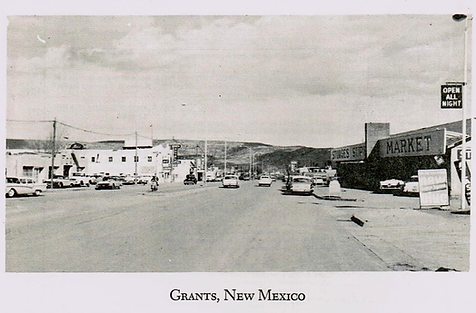

Yucca Hotel postcard, ca. 1927.
A late‑1920s view of the rebuilt Yucca Hotel, showing the barber shop and early automobile traffic during the first years of Route 66.
Artifact: Archival photographs of the 1941 Fourth of July Parade
Source: Cibola County History Museum
Retrieved from: Public post by the Cibola County History Museum on Facebook
Caption: Scenes from the 1941 Fourth of July Parade showing downtown Grants, including the Yucca Café, Cabot Drugs, and early Route 66 streetscape.
1940
Grants — Carrot Capital of the World
Grants Cut and Mt. Taylor
Locomotive 2926 heading west through
Grants Cut
Elevation: 6,460 ft | Population: 2,732

LUX Theatre
1937 - 1980
Owner: George Ades
Manager:
Phone # 84
1927 — Yucca Hotel Expands Services
By 1927, the Yucca Hotel had become one of Grants’ most reliable lodging houses, offering meals, rooms, and traveler accommodations during the early years of Route 66. Local directory listings from this period show the hotel advertising steady service and dependable management, reflecting its growing role as a community anchor before the major highway boom of the 1930s.
A 1927 directory entry highlights the Yucca Hotel’s early reputation for consistent service and traveler accommodations.
1940 — Street view of Route 66 and
the LUX Theatres Construction
Grants, New Mexico
Source: Photographs courtesy of the Kiva Cafe and Elkins Family

Grants High School "Pirates Ahoy"
1969 sponsor ad section for the
Lux Theatre
Artifact: Archival photographs of the 1941 Fourth of July Parade
Source: Cibola County History Museum
Retrieved from: Public post by the Cibola County History Museum on Facebook
Caption: Scenes from the 1941 Fourth of July Parade showing downtown Grants, including the Yucca Café, Cabot Drugs, and early Route 66 streetscape.
1946
Grants — Carrot Capital of the World
Grants Cut and Mt. Taylor
Locomotive 2926 heading west through
Grants Cut
Elevation: 6,460 ft | Population: 2,310
LUX Theatre
1937 - 1980
Owner: George Ades
Manager:
Phone # 1
1927 — Yucca Hotel Expands Services
By 1927, the Yucca Hotel had become one of Grants’ most reliable lodging houses, offering meals, rooms, and traveler accommodations during the early years of Route 66. Local directory listings from this period show the hotel advertising steady service and dependable management, reflecting its growing role as a community anchor before the major highway boom of the 1930s.
A 1927 directory entry highlights the Yucca Hotel’s early reputation for consistent service and traveler accommodations.
1946 — Street view of Route 66 and
the LUX Theatres Construction
Grants, New Mexico
Source: Photographs courtesy of the Kiva Cafe and Elkins Family

Grants High School "Pirates Ahoy"
1969 sponsor ad section for the
Lux Theatre
Artifact: Archival photographs of the 1941 Fourth of July Parade
Source: Cibola County History Museum
Retrieved from: Public post by the Cibola County History Museum on Facebook
Caption: Scenes from the 1941 Fourth of July Parade showing downtown Grants, including the Yucca Café, Cabot Drugs, and early Route 66 streetscape.
1947
Grants — Carrot Capital of the World
Grants Cut and Mt. Taylor
Locomotive 2926 heading west through
Grants Cut
Elevation: 6,460 ft | Population: 2,280
LUX Theatre
1937 - 1980
Owner: George Ades
Manager:
Phone # 1
1927 — Yucca Hotel Expands Services
By 1927, the Yucca Hotel had become one of Grants’ most reliable lodging houses, offering meals, rooms, and traveler accommodations during the early years of Route 66. Local directory listings from this period show the hotel advertising steady service and dependable management, reflecting its growing role as a community anchor before the major highway boom of the 1930s.
A 1927 directory entry highlights the Yucca Hotel’s early reputation for consistent service and traveler accommodations.
1947 — Street view of Route 66 and
the LUX Theatres Construction
Grants, New Mexico
Source: Photographs courtesy of the Kiva Cafe and Elkins Family

Grants High School "Pirates Ahoy"
1969 sponsor ad section for the
Lux Theatre
Artifact: Archival photographs of the 1941 Fourth of July Parade
Source: Cibola County History Museum
Retrieved from: Public post by the Cibola County History Museum on Facebook
Caption: Scenes from the 1941 Fourth of July Parade showing downtown Grants, including the Yucca Café, Cabot Drugs, and early Route 66 streetscape.
1948
Grants — Carrot Capital of the World
Grants Cut and Mt. Taylor
Locomotive 2926 heading west through
Grants Cut
Elevation: 6,460 ft | Population: 2,265
LUX Theatre
1937 - 1980
Owner: George Ades
Manager:
Phone # 1
1927 — Yucca Hotel Expands Services
By 1927, the Yucca Hotel had become one of Grants’ most reliable lodging houses, offering meals, rooms, and traveler accommodations during the early years of Route 66. Local directory listings from this period show the hotel advertising steady service and dependable management, reflecting its growing role as a community anchor before the major highway boom of the 1930s.
A 1927 directory entry highlights the Yucca Hotel’s early reputation for consistent service and traveler accommodations.
1948 — Street view of Route 66 and
the LUX Theatres Construction
Grants, New Mexico
Source: Photographs courtesy of the Kiva Cafe and Elkins Family
Grants High School "Pirates Ahoy"
1969 sponsor ad section for the
Lux Theatre
Artifact: Archival photographs of the 1941 Fourth of July Parade
Source: Cibola County History Museum
Retrieved from: Public post by the Cibola County History Museum on Facebook
Caption: Scenes from the 1941 Fourth of July Parade showing downtown Grants, including the Yucca Café, Cabot Drugs, and early Route 66 streetscape.
1950
Grants — Carrot Capital of the World
Grants Cut and Mt. Taylor
Locomotive 2926 heading west through
Grants Cut
Elevation: 6,460 ft | Population: 2,251
LUX Theatre
1937 - 1980
Owner: J.C. West
Manager:
Phone: 84
1927 — Yucca Hotel Expands Services
By 1927, the Yucca Hotel had become one of Grants’ most reliable lodging houses, offering meals, rooms, and traveler accommodations during the early years of Route 66. Local directory listings from this period show the hotel advertising steady service and dependable management, reflecting its growing role as a community anchor before the major highway boom of the 1930s.
A 1927 directory entry highlights the Yucca Hotel’s early reputation for consistent service and traveler accommodations.
1950— Mr. J.C. West purchased the LUX Theatre
Grants, New Mexico
Source: Photographs courtesy of the Kiva Cafe and Elkins Family
Grants High School "Pirates Ahoy"
1969 sponsor ad section for the
Lux Theatre
Artifact: 1955 Grants High School "Pirates Ahoy" Sponsor Ad for the LUX Theatre
Source: Shawn Barringer | https://www.facebook.com/share/p/1BESHbmqfu/
Caption:
1955
Grants — Carrot Capital of the World
Grants Cut and Mt. Taylor
Locomotive 2926 heading west through
Grants Cut
Elevation: 6,460 ft | Population: 6,400
LUX Theatre
1937 - 1980
Owner: J.C. West
Manager:
Phone: 84
1927 — Yucca Hotel Expands Services
By 1927, the Yucca Hotel had become one of Grants’ most reliable lodging houses, offering meals, rooms, and traveler accommodations during the early years of Route 66. Local directory listings from this period show the hotel advertising steady service and dependable management, reflecting its growing role as a community anchor before the major highway boom of the 1930s.
A 1927 directory entry highlights the Yucca Hotel’s early reputation for consistent service and traveler accommodations.
1955— Mr. J.C. West purchased the LUX Theatre
Grants, New Mexico
Source: Photographs courtesy of the Kiva Cafe and Elkins Family

Grants High School "Pirates Ahoy"
1969 sponsor ad section for the
Lux Theatre
Artifact: 1955 Grants High School "Pirates Ahoy" Sponsor Ad for the LUX Theatre
Source: Shawn Barringer | https://www.facebook.com/share/p/1BESHbmqfu/
Caption:
1956
Grants — Carrot Capital of the World
Grants Cut and Mt. Taylor
Locomotive 2926 heading west through
Grants Cut
Elevation: 6,460 ft | Population: 7,500
LUX Theatre
1937 - 1980
Owner: J.C. West
Manager:
Phone # AT 7-4971
1927 — Yucca Hotel Expands Services
By 1927, the Yucca Hotel had become one of Grants’ most reliable lodging houses, offering meals, rooms, and traveler accommodations during the early years of Route 66. Local directory listings from this period show the hotel advertising steady service and dependable management, reflecting its growing role as a community anchor before the major highway boom of the 1930s.
A 1927 directory entry highlights the Yucca Hotel’s early reputation for consistent service and traveler accommodations.
1956— Street view of Route 66 and
the LUX Theatres Construction
Grants, New Mexico
Source: Photographs courtesy of the Kiva Cafe and Elkins Family

Flyer advertisement for "Safari" and
"The First Texan" at the LUX Theatre 1956. Grants, New Mexico.
"Safari" Movie Poster
April 6,1956
Columbia Pictures
CinemaScope and TECHNICOLOR
"The First Texan" Movie Poster
June 29,1956
Allied Artists Pictures
CinemaScope & TECHNICOLOR

Grants High School
(formerly Grants Union High School) "Pirates Ahoy"
1956 sponsor ad page for
The Trails Drive - In and Lux Theatre

1956 LUX Theatre
with
Grants State Bank &
Caradine's Drug Store
"August 4,1956 "Seven Men from Now"
with Randolf Scott & Gail Russell
on the marquee

Mountain State Tel. & Tel. Co.
1956 White Page listing for
LUX Theatre
Artifact: 1. Bulk Mail Flyer Advertisement for the LUX Theatre in Grants, NM
2. 1956 Movie Poster for "SAFARI" Columbia Pictures
3. 1956 Movie Poster for "THE FIRST TEXAN" Allied Artists
4. 1956 Grants High School "Pirates Ahoy" Sponsor Ad for the LUX Theatre
5. 1956 Photo of the LUX Theatre, Grants State Bank and Caradine's Drug Store
"Seven Men From Now" August 4,1956 / John Wayne's Batjac Productions | Warner Bros. Pictures
(Paramount Pictures)
6. 1956 Mountain States Tel. & Tel. Co., Telephone Directory - Grants and Ambrosia Lake Community
Source: 1. Lux Theatre in Grants, NM - Cinema Treasures
https://www.facebook.com/groups/683574628383649/search?q=lux
2.
3.
4. Pirates ahoy : Grants High School (Grants, N.M.) : Free Download, Borrow, and Streaming : Internet Archive
5.
6. cibolacohistorymuseum.org
Caption: Scenes from the 1941 Fourth of July Parade showing downtown Grants, including the Yucca Café, Cabot Drugs, and early Route 66 streetscape.


1957
Grants — Uranium Capital of the World
Grants Cut and Mt. Taylor
Locomotive 2926 heading west through
Grants Cut
Elevation: 6,460 ft | Population: 8,600
LUX Theatre
1937 - 1980
Owner: J.C. West
Manager:
Phone # AT 7-4971
1927 — Yucca Hotel Expands Services
By 1927, the Yucca Hotel had become one of Grants’ most reliable lodging houses, offering meals, rooms, and traveler accommodations during the early years of Route 66. Local directory listings from this period show the hotel advertising steady service and dependable management, reflecting its growing role as a community anchor before the major highway boom of the 1930s.
A 1927 directory entry highlights the Yucca Hotel’s early reputation for consistent service and traveler accommodations.
1957— Street view of Route 66 and
the LUX Theatres Construction
Grants, New Mexico
Source: Photographs courtesy of the Kiva Cafe and Elkins Family

Grants High School "Pirates Ahoy"
1957 sponsor ad section for the
Lux Theatre
Artifact: 1956 Grants High School "Pirates Ahoy" Sponsor Ad for the LUX Theatre
Source: Cibola County History Museum
Caption: Scenes from the 1941 Fourth of July Parade showing downtown Grants, including the Yucca Café, Cabot Drugs, and early Route 66 streetscape.
1964 - 1967
Grants — Carrot Capital of the World
Grants Cut and Mt. Taylor
Locomotive 2926 heading west through
Grants Cut
Elevation: 6,460 ft | Population: 9,400
LUX Theatre
1937 - 1980
Owner: J.C. West
Manager:
Phone # AT 7-4971
1927 — Yucca Hotel Expands Services
From 1964 - 1967 the LUX Theatre closes for renovations to the auditorium, including the grade of incline while increasing the seating capacity from 450 to 518 seats in house.
A 1927 directory entry highlights the Yucca Hotel’s early reputation for consistent service and traveler accommodations.
1964-1967— LUX Theatre closes for remodel.
Grants, New Mexico
COMING SOON
No Artifact
Artifact:
Source:
Caption:
1967
Grants — Carrot Capital of the World
Grants Cut and Mt. Taylor
Locomotive 2926 heading west through
Grants Cut
Elevation: 6,460 ft | Population: 9,110
LUX Theatre
1937 - 1980
Owner: J.C. West
Manager:
Phone # AT 7-4971
1927 — Yucca Hotel Expands Services
By 1927, the Yucca Hotel had become one of Grants’ most reliable lodging houses, offering meals, rooms, and traveler accommodations during the early years of Route 66. Local directory listings from this period show the hotel advertising steady service and dependable management, reflecting its growing role as a community anchor before the major highway boom of the 1930s.
A 1927 directory entry highlights the Yucca Hotel’s early reputation for consistent service and traveler accommodations.
1967— Street view of Route 66 and
the LUX Theatres Construction
Grants, New Mexico
Source: Photographs courtesy of the Kiva Cafe and Elkins Family
_edited.jpg)
Grants High School "Pirates Ahoy"
1967 sponsor ad section for the
Lux Theatre
Artifact: 1967 Grants High School "Pirates Ahoy" Sponsor Ad for the LUX Theatre
Source: Grants High School - U.S. Yearbooks - MyHeritage
Caption: Scenes from the 1941 Fourth of July Parade showing downtown Grants, including the Yucca Café, Cabot Drugs, and early Route 66 streetscape.
1969
Grants — Carrot Capital of the World
Grants Cut and Mt. Taylor
Locomotive 2926 heading west through
Grants Cut
Elevation: 6,460 ft | Population: 8,930
LUX Theatre
1937 - 1980
Owner: George Ades
Manager:
Phone # 1
1927 — Yucca Hotel Expands Services
By 1927, the Yucca Hotel had become one of Grants’ most reliable lodging houses, offering meals, rooms, and traveler accommodations during the early years of Route 66. Local directory listings from this period show the hotel advertising steady service and dependable management, reflecting its growing role as a community anchor before the major highway boom of the 1930s.
A 1927 directory entry highlights the Yucca Hotel’s early reputation for consistent service and traveler accommodations.
1969— Street view of Route 66 and
the LUX Theatres Construction
Grants, New Mexico
Source: Photographs courtesy of the Kiva Cafe and Elkins Family

Grants High School "Pirates Ahoy"
1969 sponsor ad section for the
Lux Theatre
Artifact: 1967 Grants High School "Pirates Ahoy" Sponsor Ad for the LUX Theatre pg. 216
Source: Grants High School - U.S. Yearbooks - MyHeritage
Caption: Scenes from the 1941 Fourth of July Parade showing downtown Grants, including the Yucca Café, Cabot Drugs, and early Route 66 streetscape.
1971
Grants — Carrot Capital of the World
Grants Cut and Mt. Taylor
Locomotive 2926 heading west through
Grants Cut
Elevation: 6,460 ft | Population: 9,100
LUX Theatre
1937 - 1980
Owner: J.C. West
Manager:
Phone: 287-4971
Showtime Phone: 287-2083
1927 — Yucca Hotel Expands Services
By 1927, the Yucca Hotel had become one of Grants’ most reliable lodging houses, offering meals, rooms, and traveler accommodations during the early years of Route 66. Local directory listings from this period show the hotel advertising steady service and dependable management, reflecting its growing role as a community anchor before the major highway boom of the 1930s.
A 1927 directory entry highlights the Yucca Hotel’s early reputation for consistent service and traveler accommodations.
1971— Street view of Route 66 and
the LUX Theatres Construction
Grants, New Mexico
Source: Photographs courtesy of the Kiva Cafe and Elkins Family

Grants High School "Pirates Ahoy"
1971 sponsor ad section for the
Lux Theatre
Artifact: 1971 Grants High School "Pirates Ahoy" Sponsor Ad for the LUX Theatre pg. 206
Source: Grants High School - U.S. Yearbooks - MyHeritage
Caption: Scenes from the 1941 Fourth of July Parade showing downtown Grants, including the Yucca Café, Cabot Drugs, and early Route 66 streetscape.
1972
Grants — Carrot Capital of the World
Grants Cut and Mt. Taylor
Locomotive 2926 heading west through
Grants Cut
Elevation: 6,460 ft | Population: 9,350
LUX Theatre
1937 - 1980
Owner: J.C. West
Manager:
Phone: 287-4971
Showtime Phone: 287-2083
1927 — Yucca Hotel Expands Services
September 16, 1971, a fire in the furnice room caused the LUX Theatre to close for one night.
A 1927 directory entry highlights the Yucca Hotel’s early reputation for consistent service and traveler accommodations.
1972— Street view of Route 66 and
the LUX Theatres Construction
Grants, New Mexico
Source: Photographs courtesy of the Kiva Cafe and Elkins Family
_edited.jpg)
Grants High School "Pirates Ahoy"
1972 sponsor ad section for the
Lux Theatre
Artifact: 1972 Grants High School "Pirates Ahoy" Sponsor Ad for the LUX Theatre pg. 214
Source: Grants High School - U.S. Yearbooks - MyHeritage
Caption: Scenes from the 1941 Fourth of July Parade showing downtown Grants, including the Yucca Café, Cabot Drugs, and early Route 66 streetscape.
1973
Grants — Carrot Capital of the World
Grants Cut and Mt. Taylor
Locomotive 2926 heading west through
Grants Cut
Elevation: 6,460 ft | Population: 9,620
LUX Theatre
1937 - 1980
Owner: J.C. West
Manager:
Phone: 287-4971
Showtime Phone: 287-2083
1927 — Yucca Hotel Expands Services
By 1927, the Yucca Hotel had become one of Grants’ most reliable lodging houses, offering meals, rooms, and traveler accommodations during the early years of Route 66. Local directory listings from this period show the hotel advertising steady service and dependable management, reflecting its growing role as a community anchor before the major highway boom of the 1930s.
A 1927 directory entry highlights the Yucca Hotel’s early reputation for consistent service and traveler accommodations.
1973— Street view of Route 66 and
the LUX Theatres Construction
Grants, New Mexico
Source: Photographs courtesy of the Kiva Cafe and Elkins Family

Grants High School "Pirates Ahoy"
1973 sponsor ad section for the
Lux Theatre
Artifact: 1971 Grants High School "Pirates Ahoy" Sponsor Ad for the LUX Theatre pg. 206
Source: Grants High School - U.S. Yearbooks - MyHeritage
Caption: Scenes from the 1941 Fourth of July Parade showing downtown Grants, including the Yucca Café, Cabot Drugs, and early Route 66 streetscape.
1977
Grants — Carrot Capital of the World
Grants Cut and Mt. Taylor
Locomotive 2926 heading west through
Grants Cut
Elevation: 6,460 ft | Population: 10,830
LUX THEATRE
1937 - 1980
Owner: J.C. West
Leased By: Theatre Operators Inc., (Bozeman, MT)
Manager: Roy McDowell
Phone: 287-4971
Showtime Phone: 287-2083
1977 —Theatre Operators Inc., Leases theatres from J.C. West
On January 10, 1977, Theatre Operators Inc. from Bozeman, MT, has leased the WEST, LUX (Grants) and The TRAILS Drive-In (Milan) From J. C. West.
A 1927 directory entry highlights the Yucca Hotel’s early reputation for consistent service and traveler accommodations.
1977— LUX THEATRE
Source: Photographs courtesy of the Kiva Cafe and Elkins Family
COMING SOON
No Artifact
Artifact:
Source:
Caption:
1980
Grants — Carrot Capital of the World
Grants Cut and Mt. Taylor
Locomotive 2926 heading west through
Grants Cut
Elevation: 6,460 ft | Population: 11,415
LUX Theatre
1937 - 1980
Owner: George Ades
Manager:
Phone # 1
1927 — Yucca Hotel Expands Services
In 1980, Roy McDowell leases the WEST, Lux Theatres and The Trails Drive-In from Theater Operators (Bozeman, MT).
A 1927 directory entry highlights the Yucca Hotel’s early reputation for consistent service and traveler accommodations.
1980 — LUX THEATRE
Source: Photographs courtesy of the Kiva Cafe and Elkins Family
COMING SOON
No Artifact
Artifact:
Source:
Caption:
1981
Grants — Carrot Capital of the World
Grants Cut and Mt. Taylor
Locomotive 2926 heading west through
Grants Cut
Elevation: 6,460 ft | Population: 11,050
LUX Theatre
1937 - 1980
Owner: George Ades
Manager:
Phone # 1
1927 — Yucca Hotel Expands Services
In 1981 The WEST Theatre has a fire, (cause unknown). Causing immediate reopening of the Lux Theatre temporarily.
A 1927 directory entry highlights the Yucca Hotel’s early reputation for consistent service and traveler accommodations.
1981— LUX THEATRE
Source: Photographs courtesy of the Kiva Cafe and Elkins Family
COMING SOON
No Artifact
Artifact:
Source:
Caption:
1983
Grants — Carrot Capital of the World
Grants Cut and Mt. Taylor
Locomotive 2926 heading west through
Grants Cut
Elevation: 6,460 ft | Population: 11,050
LUX Theatre
1937 - 1980
Owner: Roy McDowell
Manager:
Phone:
1937–1983 — The LUX Theatre:
A Landmark Through Every Era of Grants’ Story
In September 1983 the LUX Theatre closed its doors after approximately 46 years of operation, serving Grants, Milan, and surrounding communities, as well as travelers passing through Grants on U.S. Route 66. Over its lifetime, it served as a major entertainment venue through multiple defining economic eras in the region, including the railroad period, logging and timber activity in the surrounding mountains, agricultural development, and the two uranium booms that transformed Grants into a major industrial and population center in the mid-20th century.
The LUX Theatre was the second movie house established in Grants, opening in 1937 after the earlier Grants Theatre burned in 1930, which left the community without a theatre for approximately seven years. The LUX was built on West Santa Fe Avenue as a 518-seat motion picture house and opened under the partnership name “Souris & Ade,” as recorded in contemporary motion picture trade reporting. The theatre’s construction and development are widely associated in local historical accounts with George Ades, who was also connected to ownership of the Yucca Hotel, and with Cyrus Souris as his business partner in the theatre’s formation. Italian stonemason Joseph “Joe” Cappelli is credited in local history with the physical construction and stonework of the building, giving the theatre its distinctive structure and long-standing presence in downtown Grants.
The earlier Grants Theatre fire in 1930 left the town without a motion picture venue until the LUX opened in 1937, restoring cinema to the community during a period of gradual regional development tied to rail and early highway travel. Ownership of the LUX later transitioned from its early operators to C.E. Means, and then to J.C. West, who purchased the theatre in 1950 and incorporated it into his broader regional theatre circuit in the Grants area, which included additional cinemas and drive-in theatres. Under these various ownership periods, the LUX remained the primary indoor theatre in downtown Grants and operated through changing management structures over several decades.
The LUX also functioned within a broader transportation and economic network that shaped Grants’ growth. The Atchison, Topeka & Santa Fe Railroad provided daily passenger service through Grants, bringing travelers, workers, and freight through a central depot system that supported commerce and regional movement. The Zuni Mountain Railroad contributed to local industry by transporting timber and workers between the surrounding mountains and the main rail line. Later, as Route 66 traffic increased, the theatre became part of a wider travel corridor that included downtown businesses and the Yucca Hotel district. Regional bus lines such as Santa Fe Trailways, Greyhound, Inter-City Transit, and the Zuni-Grants Stage also connected Grants to surrounding cities and helped sustain downtown activity.
Throughout its operational life, the LUX reflected the changing economic identity of Grants. During the agricultural expansion often referred to locally as the “Carrot Boom,” the theatre served farming families and rural communities. During the uranium mining booms, which brought rapid population growth and industrial expansion to the region, the LUX became a central social gathering place for miners, mill workers, railroad employees, ranching families, and new residents who arrived during the mining era. The theatre also maintained strong ties to local education and youth employment, with students from Grants Union High School and later Grants High School working at the theatre in roles such as ticket sales, concessions, cleaning, and assisting during screenings, making it a formative first workplace for many residents.
In February 1970 a boiler fire caused a temporary closure of the theatre, interrupting operations briefly before repairs allowed it to reopen. The LUX continued operating through the remainder of the 1970s and into the early 1980s, with historical records and community references placing it in operation around 1980 and into the early part of the decade. Its final closure occurred in September 1983, ending approximately 46 years of continuous service as one of the longest-running cultural institutions in Grants and surrounding communities
1983 — LUX THEATRE Ceases Operations
Source: Photographs courtesy of the Kiva Cafe and Elkins Family
COMING SOON
No Artifact
Artifact:
Source:
Caption:
A 1927 directory entry highlights the Yucca Hotel’s early reputation for consistent service and traveler accommodations.
1984
Grants — Carrot Capital of the World
Grants Cut and Mt. Taylor
Locomotive 2926 heading west through
Grants Cut
Elevation: 6,460 ft | Population: 11,050
LUX Theatre
1937 - 1980
Owner: George Ades
Manager:
Phone # 1
1927 — Yucca Hotel Expands Services
In 1981 The WEST Theatre has a fire, (cause unknown). Causing immediate reopening of the Lux Theatre temporarily.
A 1927 directory entry highlights the Yucca Hotel’s early reputation for consistent service and traveler accommodations.
1984 — LUX THEATRE
Source: Photographs courtesy of the Kiva Cafe and Elkins Family
COMING SOON
No Artifact
Artifact:
Source:
Caption:
1987
Grants — Carrot Capital of the World
Grants Cut and Mt. Taylor
Locomotive 2926 heading west through
Grants Cut
Elevation: 6,460 ft | Population: 8,720
LUX Theatre
1937 - 1980
Owner: George Ades
Manager:
Phone # 1
1927 — Yucca Hotel Expands Services
In 1981 The WEST Theatre has a fire, (cause unknown). Causing immediate reopening of the Lux Theatre temporarily.
A 1927 directory entry highlights the Yucca Hotel’s early reputation for consistent service and traveler accommodations.
1987 — LUX THEATRE
Source: Photographs courtesy of the Kiva Cafe and Elkins Family

LUX Theatre, Grants, NM
1987
Artifact: LUX Theatre, Grants, New Mexico
Source: https://lccn.loc.gov/2017708084 | John Margolies Roadside America photograph archive (1972-2008),
Library of Congress, Prints and Photographs Division.
Caption:

1996
Grants — Carrot Capital of the World
Grants Cut and Mt. Taylor
Locomotive 2926 heading west through
Grants Cut
Elevation: 6,460 ft | Population: 8,725

LUX Theatre
1937 - 1980
Owner: Roy McDowell
Manager:
Phone:
1927 — Yucca Hotel Expands Services
In 1980, Roy McDowell leases the WEST, Lux Theatres and The Trails Drive-In from Theater Operators (Bozeman, MT).
A 1927 directory entry highlights the Yucca Hotel’s early reputation for consistent service and traveler accommodations.
1996 — LUX THEATRE

Huxford's Dry Goods, The Small Bar, Violetta's Beauty Shop, The Ades Commerce Building, LUX Theatre, Grants State Bank and Caradine's Drug Store.
Downtown Grants - Historic US 66
ca. 1996
Artifact: Huxford's Dry Goods, The Small Bar, The Commerce Building, LUX Theatre, Grants State Bank, and Caradine's Drug Store
Source: https://www.facebook.com/groups/rememberbackingrantswhen/permalink/34823735767274098/
Photo Courtesy: (3) Jim Ursic | Facebook, ca. 1996
Caption:
2008
Grants — Carrot Capital of the World
Grants Cut and Mt. Taylor
Locomotive 2926 heading west through
Grants Cut
Elevation: 6,460 ft | Population: 9,134
LUX Theatre
1937 - 1980
Owner: Roy McDowell
Manager:
Phone:
1927 — Yucca Hotel Expands Services
In 1980, Roy McDowell leases the WEST, Lux Theatres and The Trails Drive-In from Theater Operators (Bozeman, MT).
A 1927 directory entry highlights the Yucca Hotel’s early reputation for consistent service and traveler accommodations.
2008 — LUX THEATRE

Caradine's, Grants State Bank and the Lux.
March 13, 2008
Artifact: Caradine's, Grants State Bank and the Lux on Historic US 66 Grants, NM
Source: https://www.facebook.com/share/p/1CS1Zqozni/
Photo Courtesy: LaJean Greeson, March 13, 2008
Caption:
2011
Grants — Carrot Capital of the World
Grants Cut and Mt. Taylor
Locomotive 2926 heading west through
Grants Cut
Elevation: 6,460 ft | Population: 9,215
LUX Theatre
1937 - 1980
Owner: Roy McDowell
Manager:
Phone:
1927 — Yucca Hotel Expands Services
In 1980, Roy McDowell leases the WEST, Lux Theatres and The Trails Drive-In from Theater Operators (Bozeman, MT).
A 1927 directory entry highlights the Yucca Hotel’s early reputation for consistent service and traveler accommodations.
2011 — LUX THEATRE

View of exterior and marquee from the west.
February 6, 2011
Artifact: View of exterior and marquee from the west. Grants, NM on Historic US 66
Source: Lux Theatre in Grants, NM - Cinema Treasures
Photo Courtesy: Photos from LastPictureShow - Cinema Treasures, February 6, 2011
Caption:
2015
Grants — Carrot Capital of the World
Grants Cut and Mt. Taylor
Locomotive 2926 heading west through
Grants Cut
Elevation: 6,460 ft | Population: 9,131

LUX Theatre
1937 - 1980
Owner: George Ades
Manager:
Phone # 1
1927 — Yucca Hotel Expands Services
In 1980, Roy McDowell leases the WEST, Lux Theatres and The Trails Drive-In from Theater Operators (Bozeman, MT).
A 1927 directory entry highlights the Yucca Hotel’s early reputation for consistent service and traveler accommodations.
2015 — LUX THEATRE

Grants State Bank, LUX Theatre and Bernie's 66 Motorcycles
March 14, 2015
Artifact: Grants State Bank, LUX Theatre and Bernie's 66 Motorcycles on Historic US 66 Grants, NM
Source: https://www.facebook.com/share/g/16xmJXVfHR/
Photo By: Lynn Raines Milner, March 14, 2015
Caption:
2017
Grants — Carrot Capital of the World
Grants Cut and Mt. Taylor
Locomotive 2926 heading west through
Grants Cut
Elevation: 6,460 ft | Population: 9,077
LUX Theatre
1937 - 1980
Owner: George Ades
Manager:
Phone # 1
1927 — Yucca Hotel Expands Services
In 1980, Roy McDowell leases the WEST, Lux Theatres and The Trails Drive-In from Theater Operators (Bozeman, MT).
A 1927 directory entry highlights the Yucca Hotel’s early reputation for consistent service and traveler accommodations.
2017 — LUX THEATRE
Source: Photographs courtesy of the Kiva Cafe and Elkins Family

Lux Theater, Historic US 66, Grants, NM
May 13, 2017
Artifact: Lux Theater, Historic US 66, Grants, NM
Source: Lux Theater, Historic US 66, Grants, NM | Grants, NM (Cibola… | Flickr
Photo By: Tim Stewart, May 13, 2017
Caption:
2023
Grants — Carrot Capital of the World
Grants Cut and Mt. Taylor
Locomotive 2926 heading west through
Grants Cut
Elevation: 6,460 ft | Population: 8,908
LUX Theatre
1937 - 1980
Owner: George Ades
Manager:
Phone # 1
1927 — Yucca Hotel Expands Services
In 1980, Roy McDowell leases the WEST, Lux Theatres and The Trails Drive-In from Theater Operators (Bozeman, MT).
A 1927 directory entry highlights the Yucca Hotel’s early reputation for consistent service and traveler accommodations.
2023 — LUX THEATRE
Source: Photographs courtesy of the Kiva Cafe and Elkins Family

Lux Theater, Historic US 66, Grants, NM
October 6, 2023
Artifact: Lux Theater, Historic US 66, Grants, NM
Source: https://www.facebook.com/share/p/1Lwnw55rJo/
Photo By: Matt Fletcher | Fletcher Aero Technologies, October 6, 2023
Caption:
2026
Grants — Carrot Capital of the World
Grants Cut and Mt. Taylor
Locomotive 2926 heading west through
Grants Cut
Elevation: 6,460 ft | Population: 8,908
LUX Theatre
1937 - 1980
Owner: George Ades
Manager:
Phone # 1
1927 — Yucca Hotel Expands Services
In 1980, Roy McDowell leases the WEST, Lux Theatres and The Trails Drive-In from Theater Operators (Bozeman, MT).
A 1927 directory entry highlights the Yucca Hotel’s early reputation for consistent service and traveler accommodations.
2026 — LUX THEATRE
Source: Photographs courtesy of the Kiva Cafe and Elkins Family
Lux Theater, Historic US 66, Grants, NM
October 6, 2023
Artifact: Lux Theater, Historic US 66, Grants, NM
Source: https://www.facebook.com/share/p/1Lwnw55rJo/
Photo By: Matt Fletcher | Fletcher Aero Technologies, October 6, 2023
Caption:
Downtown Grants
1020 W. Santa Fe Avenue
1912-1926
1912-1926
1926-1948
1948-1961
1961-1971
1971-1985
1912-1927
1927-Present
1972-Present
1988-Present
1951-Present
1985-Present
1985-Present
1985-Present
1991-Present
1998-Present
1998-Present
2010-Present
Grants State Bank Parcel
The building at 110 W. Santa Fe Avenue was constructed in the late 1960s on the west end of the former Tropical Lounge/California Bar parcel. This subdivision occurred before the bar was demolished, and the new structure appears in late‑1960s photographs of the California Bar.
The first documented tenant was Pacific Finance, which relocated here by 1973 after previously operating at 807 W. Santa Fe Avenue in 1966, 1967, and 1968. Over the next five decades, the building housed a sequence of small professional, retail, and service businesses that reflect the changing needs of Grants residents as Santa Fe Avenue transitioned from a Route 66 travel corridor into a locally focused business district.
The development of 110 W. Santa Fe reflects the final wave of mid‑century infill along the 100 block, providing new commercial space as Grants expanded and diversified.
GRANTS STATE BANK
1947 - 1960
President: George Ades
Manager:
The Yucca Hotel was developed beginning in 1909 through the partnership of George A. Ades and stonemason Joseph “Joe” Capelli, marking a major step in the transformation of the 1100 block of West Santa Fe Avenue into a structured commercial district. The project required the demolition of Latham’s Stockman’s Store, the original Latham location established on this site in 1882, which remained in operation here until 1910. The business later relocated within Grants before eventually returning to this original location in 1968.
Positioned directly across from the S. Bibo Brothers Mercantile (1105–1115 W), and within close proximity to the Atlantic & Pacific Railroad depot located behind the mercantile, the Yucca was strategically placed at the center of Grants’ early economic activity. This location allowed the hotel to serve railroad workers, traveling salesmen, and early automobile traffic moving through the corridor.
Working together, Ades and Capelli combined development and construction expertise to create a building that functioned as both a lodging establishment and a commercial hub. Their work reflects the shift from early settlement structures to more permanent business buildings, signaling the continued growth of Grants from its Los Alamitos origins into a functioning regional service center.
Building Spec List for the LUX Theater
● Designed by: ○ George Ades (owner/developer) ○ Joseph “Joe” Capelli (stonemason / craftsman / installer)
● Built by: ○ George Ades (owner/builder) ○ Joseph “Joe” Capelli (stonemason / construction and fabrication)
● Building / Sign Style: ○ Two‑story Spanish‑style exterior ○ Frame and stucco construction
● Built: ○ Construction began 1909 ○ Building completed 1910
● Opened: ○ 1910 (hotel begins operation) ○ 1911 — Charles Katzung becomes first confirmed manager
○ Earlier employment possible but undocumented
● Units / Rooms / Dimensions:
○ 13 upstairs guest rooms
○ 7 downstairs business rooms ○ 20 rooms total
● Amenities: ○ Pool: ○ None ○ Playground: ○ None
● Materials: ○ Wood framing ○ Stucco exterior ○ Early storefront façade elements
● Colors: ○ Period‑appropriate neutral stucco tones ○ Dark trim (per early photos)
● Mounting / Construction: ○ Traditional early‑20th‑century frame‑and‑stucco build
○ Street‑facing façade with early signage mount
Era Covered: ○ 1909–1912 (construction through early operation)
Operational Notes: ○ Lodging and dining operation ○ Served railroad workers, early auto travelers, and locals ○ Stable early operation under Katzung (from 1911)
● Identification Method: ○ Painted horizontal sign mounted at roof edge
● Period Context: ○ Territorial‑to‑statehood transition (NM statehood 1912) ○ Early automobile travel era
● Regional / Community Role: ○ Early anchor business in the Grants commercial core ○ Provided meals and lodging for local workforce
● Years in Service: ○ 56 years (1910–1966)
● Demolished / Fate:
○ Demolished 1966
Sign Spec List for the Yucca Hotel
● Designed by: ○ George Ades (owner/developer) ○ Joseph “Joe” Capelli (stonemason / craftsman / installer)
● Built by: ○ George Ades (owner/builder) ○ Joseph “Joe” Capelli (stonemason / construction and fabrication)
● Built: ○ Construction began 1909 ○ Installed by 1910 at hotel opening
● Installation: ○ In use by 1910
○ Still in use under Katzung by 1911
○ Earlier employment possible but undocumented
● Dimensions / Physical Characteristics:
○ Exact panel dimensions undocumented
○ Mounted above the roofline for visibility
○ Supported by metal frame and guy wires
○ Slightly offset from center
● Materials: ○ Painted wood sign face
○ Metal rear bracing
○ Metal support frame
○ Brackets, bolts, fasteners
○ Raw metal components
● Colors:
○ Case Color:
○ Forest Green
○ Lettering:
○ Cream White
○ Border:
○ Black
○ Metal components:
○ Raw/unpainted
Era Covered:
○ 1909–1912 (construction through early operation)
Mounting / Construction:
○ Lodging and dining operation ○ Served railroad workers, early auto travelers, and locals ○ Stable early operation under Katzung (from 1911)
● Identification Method: ○ Painted horizontal sign mounted at roof edge
● Period Context: ○ Territorial‑to‑statehood transition (NM statehood 1912) ○ Early automobile travel era
● Regional / Community Role: ○ Early anchor business in the Grants commercial core ○ Provided meals and lodging for local workforce
● Years in Service: ○ 56 years (1910–1966)
● Demolished / Fate:
○ Removed and lost during demolition 1966
Grants State Bank (Before and After)
COMING SOON
(No surviving pre‑Yucca block photo)
Earliest 1928–1929 horizontal sign photo
-
Same‑day bus photo
-
Horizontal sign installed
-
Pole removed
-
Lamp posts visible
-
Scaffold mount visible
YUCCA
1910–1927 Yucca Hotel Rooftop Sign (Recreation)
Artifact: Recreation of the 1910–1927 Yucca Hotel rooftop sign based on later photographic evidence
Source: Cibola County Historical Museum — earliest 1928–1929 Yucca Hotel horizontal sign photograph (lamp posts visible, pole removed, scaffold mount)
Retrieved from: Cibola County Historical Museum photo archives; 1928–1929 streetscape reference materials
Caption: Rooftop sign recreation informed by the 1928–1929 horizontal sign photo showing lamp posts, scaffold mount, and the earliest surviving evidence of the hotel’s signage evolution
Ades & Capelli Development Network
Santa Fe Avenue Commercial Corridor
The 100 block of West Santa Fe Avenue represents the earliest phase of commercial development in Grants, established following the 1912 relocation of the Atchison, Topeka & Santa Fe Railway depot to 101 W. Santa Fe Avenue. Early businesses, including the Woodard Hotel, Grants Drug, and the Whiteside Hotel & Café at 114 W., served railroad workers, travelers, and the growing local population from wood-frame structures typical of the period. Construction within this block was part of the early development activity involving George A. Ades and stonemason Joseph “Joe” Capelli, whose work contributed to the formation of the town’s initial commercial core. This early district was largely destroyed in the Great Fire of 1936, marking a turning point in the corridor’s development. In the years surrounding this transition, infrastructure improvements played a critical role, as Carroll Gunderson established electrical service while George A. Ades controlled the water system, together enabling the expansion of more permanent, masonry-built commercial structures westward along Santa Fe Avenue.
🔷 1100 BLOCK
📍 1100 W. Santa Fe Ave
Yucca Hotel (1909–1911 | Rebuild 1916)
-
Dev: George A. Ades
-
Build: Joseph Capelli
-
Lot: Block 11, Lot 1
-
Prev: Latham’s Store (1882–1910)
-
Features: 2-story, stucco, basalt foundation
-
Systems: well, water tower, steam boiler
Interior / Ground Floor:
-
Yucca Café (Ades)
-
Cocktail Lounge
-
Western Union
-
Blue Bell Telephone
-
Grants Barber Shop (Art Baca)
-
Western Auto
-
City Bakery (Masons)
-
Graham’s Jewelers
-
Grants Review (J.M. Chapman)
-
Brown’s Shoes & Repair
-
Grants State Bank (temporary office)
-
Ticket Stand / Depot Counter
Second Floor — Professional Offices
Occupants:
-
Physician (Doctor’s Office)
-
Dentist Office
📍 1112 W
Grants Theater (1910 | c.1915–1920 structure phase)
-
Dev: Ades
📍 1114 W
White Arrow Garage (1913)
-
Dev: Ades
-
Masonry: Capelli
📍 1116 W
Ades Commercial Building (c.1920)
-
Tenants: Laundromat (Garcias), Radio Repair
📍 1120 W
Ades Liquor Store (1940s)
📍 1100 Block (Rear)
Service / Utility Structures (c.1912–1915)
-
Dev: Ades
-
Build: Capelli
🔷 1000 BLOCK
📍 1000 W. Santa Fe Avenue
Abe’s Liquor Store
-
Dev: George A. Ades
-
Build: Joesph "Joe" Capelli
📍 1001 W
Huxford's Dry Goods (1937)
-
Dev: George A. Ades
-
Owner: George A. Ades and Cyrus Souris
-
Build: Joseph "Joe" Capelli
-
Partner: Cyrus Souris
📍 1012 W
Huxford's Dry Goods (1937)
-
Dev: George A. Ades
-
Owner: George A. Ades and Cyrus Souris
-
Build: Joseph "Joe" Capelli
-
Partner: Cyrus Souris
📍 1012 W
Huxford's Dry Goods (1937)
-
Dev: George A. Ades
-
Owner: George A. Ades and Cyrus Souris
-
Build: Joseph "Joe" Capelli
-
Partner: Cyrus Souris
📍 1014 W. Santa Fe Avenue
Violetta's Beauty Shop
-
Dev: Ades
-
Build: Capelli
📍 1016 W
The Commerce Building (1937)
-
Dev: George A. Ades
-
Owner: George A. Ades and Cyrus Souris
-
Build: Joseph "Joe" Capelli
-
Partner: Cyrus Souris
📍 1017 W
Lux Theatre (1937)
-
Dev: George A. Ades
-
Owner: George A. Ades and Cyrus Souris
-
Build: Joseph "Joe" Capelli
-
Partner: Cyrus Souris
📍 1018 W
Lux Theatre (1937)
-
Dev: George A. Ades
-
Owner: George A. Ades and Cyrus Souris
-
Build: Joseph "Joe" Capelli
-
Partner: Cyrus Souris
📍 1020 W. Santa Fe Avenue
Grants State Bank (1947)
-
Dev: Ades
📍 1022 W. Santa Fe Avenue at Central Avenue
Carridine’s Drug Store (1944)
-
Dev: Ades
-
Owner: W.E. Carridine
-
Build: Capelli
-
Structure: masonry + frame
-
Facade: stucco + brick
🔷 900 BLOCK
📍 915 W
Ades Professional Building (c.1930s)
🔷 800 BLOCK
📍 800–810 W
Utility Annex / Rental Units (c.1930s)
🔷 700 BLOCK
📍 712 W
Variety Store Building (c.1928–1932)
🔷 600 BLOCK
📍 600–610 W. Santa Fe Ave
Structure: Commercial Building
Built: c.1925–1930
Developed By:
-
George A. Ades
Constructed By:
-
Joseph Capelli
Use:
-
Retail / commercial storefronts
🔷 500 BLOCK
📍 500 W. Santa Fe Ave
Structure: Chamber of Commerce Building
Built: 1940s
Developed By:
-
George A. Ades
📍 501 W. Santa Fe Ave
Structure: Modern Cleaners
Built: c.1935
Developed By:
-
George A. Ades
📍 508 W. Santa Fe Ave
Structure: Grants Hardware
Developed By:
-
George A. Ades
Constructed By:
-
Joseph Capelli
Operated By:
-
Walker Family
📍 512 W. Santa Fe Ave
Structure: Westerner Shop
Built: 1940s
Developed By:
-
George A. Ades
📍 515 W. Santa Fe Ave
Structure: Multi-Unit Retail Building
Built: 1940s
Developed By:
-
George A. Ades
🔷 400 BLOCK
📍 400 W. Santa Fe Ave
Structure: Grants Lumber & Sun Valley
Developed By:
-
George A. Ades
📍 408 W. Santa Fe Ave
Structure: Trade Shop Building
Built: 1940s
Developed By:
-
George A. Ades
Use:
-
Shoe repair
-
trade services
📍 421 W. Santa Fe Ave
Structure: Utility Warehouse
Built: 1940s
Developed By:
-
George A. Ades
🔷 300 BLOCK
📍 300–310 W. Santa Fe Ave
Structure: City Hall / Jail / Fire Department
Associated With:
-
George A. Ades
📍 312 W. Santa Fe Ave
Structure: Retail Units
Developed By:
-
George A. Ades
Use:
-
Tailor
-
Cobbler
📍 320 W. Santa Fe Ave
Structure: Post Office Lot
🔷 200 BLOCK
📍 200 W. Santa Fe Ave
Structure: Grants Garage / Chevrolet Garage
Built: c.1910 | Expanded 1918
Developed By:
-
George A. Ades
📍 204 W. Santa Fe Ave
Structure: Grants Mercantile
Built: c.1910
Developed By:
-
George A. Ades
📍 210 W. Santa Fe Ave
Structure: Orange Front Soda Shop
Built: c.1920
Developed By:
-
George A. Ades
Manager:
-
Claude Bowlin
📍 212–214 W. Santa Fe Ave
Structure: Grants Hall (formerly Valencia Hall)
Built: 1929
Developed By:
-
George A. Ades
Constructed By:
-
Joseph Capelli
📍 218 W. Santa Fe Ave
Structure: Red Ball Garage
Built: c.1930
Developed By:
-
George A. Ades
🔷 100 BLOCK
📍 100 Block W. Santa Fe Ave
Context:
-
Earliest commercial core of Grants
-
Developed following 1912 depot relocation to 101 W
-
Comprised of wood-frame structures prior to later masonry development
📍 c.1916 — Hotel Woodard
-
Wood-frame hotel
-
Railroad-era lodging
📍 c.1917 — Grants Drug
-
Pharmacy / retail
-
Served hotel corridor
📍 114 W. Santa Fe Ave — Whiteside Hotel & Café
Built: 1918
Owner / Operator:
-
Whiteside
Structure:
-
Wood-frame
Function:
-
Hotel + café
Construction Context:
-
Part of early builder/trade network preceding Ades–Capelli system
🔥 📍 1936 — THE GREAT FIRE OF 1936
Destroyed:
-
Woodard Hotel
-
Whiteside Hotel & Café
-
Grants Drug
-
Surrounding early commercial structures
🔍 IMPACT
-
Removed original downtown core
-
Transition to masonry + planned development
⚡💧 INFRASTRUCTURE (PLACE AT BOTTOM OR FULL WIDTH)
📍 1928 — POWER & WATER SYSTEMS
Power Provided By:
-
Carroll Gunderson
Water System Developed By:
-
George A. Ades
🔧 FUNCTION
-
Enabled modern commercial expansion
-
Supported theaters, hotels, utilities, and retail
🧠 SIGNIFICANCE
-
Marks transition to modern Grants infrastructure
-
Foundation for full corridor development
🪨 MALPAIS BASALT QUARRY
Owned By:
-
George A. Ades
-
Joseph Capelli
Purpose:
-
Structural material for corridor buildings
Founders & Builders (1909-1910)
George A. Ades
1845 - 1922
🏗 George A. Ades George A. Ades, a Greek immigrant active in Grants by 1908, emerged as one of the most influential commercial and civic figures in the early development of the Grants–Milan region. Unlike many early settlers whose livelihoods were tied directly to the railroad, ranching, or mining industries, Ades established himself as a builder, merchant, and commercial strategist. Through property acquisition, construction, and infrastructure control, he positioned himself at the center of the town’s evolving business corridor along Santa Fe Avenue. His influence was not limited to a single structure or enterprise. Instead, Ades operated across multiple levels of development — land ownership, building construction, tenant placement, and utility control — forming what can best be understood as an interconnected commercial network spanning several blocks of the town. 🔷 Early Foundations & The Latham Connection Before the Yucca Hotel defined the corner of 1100 W. Santa Fe Avenue, the site was occupied by the Latham family’s Stockman’s Store, one of the earliest known commercial establishments in Grants. This establishes a direct and traceable lineage of development: Latham → Stockman’s Store → Parcel Transfer → Ades → Yucca Hotel The transfer of this property to Ades represents more than a simple land transaction. It reflects a shift in the structure of the local economy — from early, small-scale frontier commerce to more organized and strategically developed commercial space. Through this acquisition, Ades became directly tied to the earliest established business footprint on the block, anchoring his later developments in the town’s foundational history. 🔷 Construction of the Yucca Hotel (1909–1911) In 1909, Ades began construction of the Yucca Hotel, completing and opening it in 1910. At a time when much of Grants was still characterized by temporary wood-frame structures, the Yucca represented one of the first substantial and permanent commercial buildings in the town. By 1911, the first confirmed manager, Katzung, appears in the historical record — correcting a long-standing gap in documentation surrounding the hotel’s early operation. The Yucca was not simply a place of lodging. It functioned as a central hub of activity, combining hospitality, commerce, transportation services, and professional offices within a single structure. This type of multi-use design would become a defining characteristic of the corridor as it developed. 🔷 Effie Ades & The Yucca Café A critical yet often overlooked figure in the operation of the Yucca was Effie Ades, George’s wife, who managed the Yucca Café. Under her direction, the café became a central gathering place within the building and the broader community. The café served railroad workers, miners, travelers, and local residents, reinforcing the Yucca’s role as both a commercial and social center. Effie’s presence highlights the importance of family-operated enterprise in early Grants and places her at the core of the building’s daily life and identity. 🔷 The Yucca as a Multi-Use Structure The Yucca Hotel exemplified a fully integrated commercial building. Its ground floor housed a range of businesses and services, including retail shops, communication offices, and transportation functions such as ticketing and baggage handling. Above, the second floor contained professional offices, including a physician and dentist. This vertical integration of services reflects a practical and efficient use of space, allowing a single building to meet multiple needs within the growing town. It also demonstrates how early commercial structures in Grants were designed not just for occupancy, but for functionality within a larger system. 🔷 White Arrow Garage (1913) In 1913, Ades expanded his influence into the emerging automobile economy with the construction of the White Arrow Garage. As one of the earliest automobile service facilities in the region, it marked a clear transition from wagon-based transportation to motor vehicle use. This development demonstrates Ades’s ability to recognize and respond to technological and economic shifts. By investing in infrastructure that supported automobiles, he positioned his properties and businesses to remain relevant as transportation patterns changed. 🔷 Infrastructure & Civic Leadership Ades’s role in Grants extended beyond buildings into essential infrastructure. By 1928, he controlled the water system that supplied many of his properties and other buildings along Santa Fe Avenue. At the same time, Carroll Gunderson established electrical service within the town. Together, these privately controlled systems provided the foundation for modern commercial operations. Reliable water and electrical service made it possible to support theaters, hotels, retail businesses, and professional services at a scale that had not previously been possible. In addition to his commercial and infrastructural influence, Ades served as mayor, participating directly in the town’s early civic organization and development. 🔷 The Ades Commercial Network (1000–1100 W. Santa Fe) Ades’s developments along Santa Fe Avenue formed an interconnected network rather than a series of independent buildings. Concentrated primarily between the 1000 and 1100 blocks, this network included: Yucca Hotel (1909–1944) White Arrow Garage (1913) Grants Theater Lux Theatre (opened 1937) Carridine’s Drug Store Grants State Bank These properties functioned collectively as a commercial ecosystem, supporting one another through proximity, shared infrastructure, and overlapping clientele. This pattern of development represents one of the earliest examples of coordinated, multi-business planning in Grants. 🔷 Sale of the Yucca & Final Years In 1944, Ades sold the Yucca Hotel to Paul Drake, marking the end of his direct involvement with the building that had defined much of his early work. Two years later, on May 1, 1946, George A. Ades passed away. By the time of his death, the commercial corridor he helped establish had become a central feature of Grants, influencing both its economic activity and physical layout. 🔷 Demolition of the Yucca (1966) The Yucca Hotel was demolished in 1966 during a period when redevelopment trends often favored modernization over preservation. The removal of the building erased a key architectural anchor of the corridor, though its historical significance remains central to understanding the development of the area. 🔷 Legacy George A. Ades stands as a foundational figure in the development of modern Grants. His influence extends across multiple areas: Architectural development Commercial planning and business placement Civic leadership Infrastructure control (water systems) Multi-block commercial expansion More importantly, his work illustrates how the town developed not through isolated efforts, but through a network of interconnected people, properties, and services. This biography restores that network — a layered history that connects individuals, buildings, and infrastructure into a single, continuous story. Early Foundations & The Latham Connection Before the Yucca Hotel existed, the corner lot at 1100 W. Santa Fe Avenue was home to the Latham family’s Stockman’s Store. This establishes a direct lineage: Latham → Stockman’s Store → Parcel Transfer → Ades → Yucca Hotel Ades’s acquisition of Latham property represents a transfer of early commercial power and ties him to the earliest documented business footprint on the block. Construction of the Yucca Hotel (1909–1911) Ades began construction of the Yucca Hotel in 1909, completing and opening it in 1910. This was one of the first substantial, permanent commercial structures in Grants. The first confirmed manager, Katzung, appears in records by 1911, correcting decades of missing or misattributed history. The Yucca was not just a hotel — it was the first major architectural statement in downtown Grants, signaling a shift from frontier commerce to structured urban development. Effie Ades & The Yucca Café A nearly forgotten but critical fact: Effie Ades, George’s wife, managed the Yucca Café. Her work made the hotel a social hub for locals, travelers, railroad workers, and miners. This places Effie at the heart of the Yucca’s daily life and community identity. White Arrow Garage (1913) In 1913, Ades built the White Arrow Garage, one of the earliest automobile‑era service centers in the region. This marks Grants’ transition from wagon‑era commerce to the motor age and establishes Ades as a forward‑thinking builder aligned with technological change. Infrastructure & Civic Leadership Ades played a role in the 1928 power connection, helping bring modern electrical infrastructure to Grants. He also served as mayor, guiding the town through a period of early municipal development. The Ades Commercial Ecosystem (1000–1100 W. Santa Fe) Ades’s influence extended across multiple properties and businesses, forming a corridor‑wide commercial ecosystem that included: White Arrow Garage (1913) Carridine’s Drug Store Grants State Bank Grants Theater Lux Theatre (opened 1937) Yucca Hotel (1909–1944) This interconnected block represents one of the earliest multi‑business commercial clusters in Grants — and Ades was at its center. Sale of the Yucca & Final Years Ades sold the Yucca Hotel to Paul Drake in 1944. He passed away on May 1, 1946, leaving behind a legacy that shaped the architectural, commercial, and civic identity of Grants. Demolition of the Yucca (1966) The Yucca Hotel was demolished in 1966, a casualty of mid‑century redevelopment trends that favored parking lots and low‑rise structures over historic preservation. Its loss erased the physical anchor of the block — but not the history. Legacy George A. Ades stands as a founder of the modern commercial identity of Grants, with influence spanning: architecture business development civic leadership infrastructure modernization multi‑block commercial lineage This biography restores the full, interconnected story — much of which was never documented, never taught, and nearly lost.
Joesph "Joe" Capelli
1880 - 1973
Joseph “Joe” Cappelli was an Italian‑born stonemason and contractor who helped shape early Grants during its first major boom. Best known for building the Yucca Hotel for George Ade on the former site of Latham’s Stockman’s Store, Cappelli lived only a few blocks from downtown and worked during the years when Grants transformed from a railroad siding into a true town. His craftsmanship produced one of the earliest and most important commercial buildings in Grants — a structure that later became a featured landmark on early Route 66 and the Will Rogers Highway. Early Life & Immigration Simon Bibo was born in 1845 in Prussia (modern‑day Germany), part of a Jewish family that would become one of the most influential mercantile dynasties in New Mexico. Simon and his brothers — including Solomon, Nathan, and Louis — immigrated to the United States in the mid‑19th century during a period of widespread European migration. Drawn by opportunity and the expanding frontier economy, the Bibo brothers made their way west, eventually settling in the New Mexico Territory. Arrival in New Mexico & Early Mercantile Work By the 1860s and 1870s, the Bibo brothers had established trading posts throughout the region, including at Laguna Pueblo, Acoma Pueblo, and other key points along early transportation routes. Their operations were known for fairness, reliability, and strong relationships with Native communities — a rarity in the era. Simon, like his brothers, became fluent in local languages and customs, earning trust and building long‑term partnerships. Role in Laguna, Acoma, and Regional Trade The Bibo family became deeply integrated into the cultural and economic life of the pueblos. Their trading posts supplied: food tools cloth livestock building materials credit and financial services Simon’s work helped establish a stable commercial network that connected remote communities to the broader territorial economy. Expansion Toward Grants & the Railroad Era When the Atlantic & Pacific Railroad pushed through the region in the 1880s, the Bibo family expanded their operations westward. Simon became involved in land transactions, supply contracts, and commercial development tied to the new rail corridor. By the early 1900s, as Grants began to form around the railroad siding, Simon’s influence extended into: land leasing supply chains early commercial partnerships support for new businesses His presence helped shape the economic foundation of the emerging town. Ties to Early Grants Businesses Although Simon did not own the Yucca or Lux, his mercantile network supplied many early businesses in the region. His connections linked him to: early hotel operators ranching families railroad crews construction contractors territorial‑era merchants The Bibo family’s reach meant that nearly every early business in Grants had some connection — direct or indirect — to their trade network. Political & Civic Influence The Bibo family held numerous civic roles across New Mexico, including: postmasters mayors county officials community negotiators advocates for Native communities Simon himself was known for diplomacy, fairness, and long‑standing relationships with tribal leaders. Later Life & Legacy Simon Bibo died in 1922, leaving behind a legacy that stretched far beyond any single town. His family’s mercantile empire shaped the economic development of western New Mexico for decades, and their influence is still recognized in historical records, community memory, and regional heritage. In Grants, Simon’s legacy is tied to the earliest commercial foundations of the town — a reminder that the community was shaped not only by local builders and business owners, but by regional figures whose work connected the area to the wider world.
Cyrus Souris
1845 - 1922
🏗 George A. Ades George A. Ades, a Greek immigrant active in Grants by 1908, emerged as one of the most influential commercial and civic figures in the early development of the Grants–Milan region. Unlike many early settlers whose livelihoods were tied directly to the railroad, ranching, or mining industries, Ades established himself as a builder, merchant, and commercial strategist. Through property acquisition, construction, and infrastructure control, he positioned himself at the center of the town’s evolving business corridor along Santa Fe Avenue. His influence was not limited to a single structure or enterprise. Instead, Ades operated across multiple levels of development — land ownership, building construction, tenant placement, and utility control — forming what can best be understood as an interconnected commercial network spanning several blocks of the town. 🔷 Early Foundations & The Latham Connection Before the Yucca Hotel defined the corner of 1100 W. Santa Fe Avenue, the site was occupied by the Latham family’s Stockman’s Store, one of the earliest known commercial establishments in Grants. This establishes a direct and traceable lineage of development: Latham → Stockman’s Store → Parcel Transfer → Ades → Yucca Hotel The transfer of this property to Ades represents more than a simple land transaction. It reflects a shift in the structure of the local economy — from early, small-scale frontier commerce to more organized and strategically developed commercial space. Through this acquisition, Ades became directly tied to the earliest established business footprint on the block, anchoring his later developments in the town’s foundational history. 🔷 Construction of the Yucca Hotel (1909–1911) In 1909, Ades began construction of the Yucca Hotel, completing and opening it in 1910. At a time when much of Grants was still characterized by temporary wood-frame structures, the Yucca represented one of the first substantial and permanent commercial buildings in the town. By 1911, the first confirmed manager, Katzung, appears in the historical record — correcting a long-standing gap in documentation surrounding the hotel’s early operation. The Yucca was not simply a place of lodging. It functioned as a central hub of activity, combining hospitality, commerce, transportation services, and professional offices within a single structure. This type of multi-use design would become a defining characteristic of the corridor as it developed. 🔷 Effie Ades & The Yucca Café A critical yet often overlooked figure in the operation of the Yucca was Effie Ades, George’s wife, who managed the Yucca Café. Under her direction, the café became a central gathering place within the building and the broader community. The café served railroad workers, miners, travelers, and local residents, reinforcing the Yucca’s role as both a commercial and social center. Effie’s presence highlights the importance of family-operated enterprise in early Grants and places her at the core of the building’s daily life and identity. 🔷 The Yucca as a Multi-Use Structure The Yucca Hotel exemplified a fully integrated commercial building. Its ground floor housed a range of businesses and services, including retail shops, communication offices, and transportation functions such as ticketing and baggage handling. Above, the second floor contained professional offices, including a physician and dentist. This vertical integration of services reflects a practical and efficient use of space, allowing a single building to meet multiple needs within the growing town. It also demonstrates how early commercial structures in Grants were designed not just for occupancy, but for functionality within a larger system. 🔷 White Arrow Garage (1913) In 1913, Ades expanded his influence into the emerging automobile economy with the construction of the White Arrow Garage. As one of the earliest automobile service facilities in the region, it marked a clear transition from wagon-based transportation to motor vehicle use. This development demonstrates Ades’s ability to recognize and respond to technological and economic shifts. By investing in infrastructure that supported automobiles, he positioned his properties and businesses to remain relevant as transportation patterns changed. 🔷 Infrastructure & Civic Leadership Ades’s role in Grants extended beyond buildings into essential infrastructure. By 1928, he controlled the water system that supplied many of his properties and other buildings along Santa Fe Avenue. At the same time, Carroll Gunderson established electrical service within the town. Together, these privately controlled systems provided the foundation for modern commercial operations. Reliable water and electrical service made it possible to support theaters, hotels, retail businesses, and professional services at a scale that had not previously been possible. In addition to his commercial and infrastructural influence, Ades served as mayor, participating directly in the town’s early civic organization and development. 🔷 The Ades Commercial Network (1000–1100 W. Santa Fe) Ades’s developments along Santa Fe Avenue formed an interconnected network rather than a series of independent buildings. Concentrated primarily between the 1000 and 1100 blocks, this network included: Yucca Hotel (1909–1944) White Arrow Garage (1913) Grants Theater Lux Theatre (opened 1937) Carridine’s Drug Store Grants State Bank These properties functioned collectively as a commercial ecosystem, supporting one another through proximity, shared infrastructure, and overlapping clientele. This pattern of development represents one of the earliest examples of coordinated, multi-business planning in Grants. 🔷 Sale of the Yucca & Final Years In 1944, Ades sold the Yucca Hotel to Paul Drake, marking the end of his direct involvement with the building that had defined much of his early work. Two years later, on May 1, 1946, George A. Ades passed away. By the time of his death, the commercial corridor he helped establish had become a central feature of Grants, influencing both its economic activity and physical layout. 🔷 Demolition of the Yucca (1966) The Yucca Hotel was demolished in 1966 during a period when redevelopment trends often favored modernization over preservation. The removal of the building erased a key architectural anchor of the corridor, though its historical significance remains central to understanding the development of the area. 🔷 Legacy George A. Ades stands as a foundational figure in the development of modern Grants. His influence extends across multiple areas: Architectural development Commercial planning and business placement Civic leadership Infrastructure control (water systems) Multi-block commercial expansion More importantly, his work illustrates how the town developed not through isolated efforts, but through a network of interconnected people, properties, and services. This biography restores that network — a layered history that connects individuals, buildings, and infrastructure into a single, continuous story. Early Foundations & The Latham Connection Before the Yucca Hotel existed, the corner lot at 1100 W. Santa Fe Avenue was home to the Latham family’s Stockman’s Store. This establishes a direct lineage: Latham → Stockman’s Store → Parcel Transfer → Ades → Yucca Hotel Ades’s acquisition of Latham property represents a transfer of early commercial power and ties him to the earliest documented business footprint on the block. Construction of the Yucca Hotel (1909–1911) Ades began construction of the Yucca Hotel in 1909, completing and opening it in 1910. This was one of the first substantial, permanent commercial structures in Grants. The first confirmed manager, Katzung, appears in records by 1911, correcting decades of missing or misattributed history. The Yucca was not just a hotel — it was the first major architectural statement in downtown Grants, signaling a shift from frontier commerce to structured urban development. Effie Ades & The Yucca Café A nearly forgotten but critical fact: Effie Ades, George’s wife, managed the Yucca Café. Her work made the hotel a social hub for locals, travelers, railroad workers, and miners. This places Effie at the heart of the Yucca’s daily life and community identity. White Arrow Garage (1913) In 1913, Ades built the White Arrow Garage, one of the earliest automobile‑era service centers in the region. This marks Grants’ transition from wagon‑era commerce to the motor age and establishes Ades as a forward‑thinking builder aligned with technological change. Infrastructure & Civic Leadership Ades played a role in the 1928 power connection, helping bring modern electrical infrastructure to Grants. He also served as mayor, guiding the town through a period of early municipal development. The Ades Commercial Ecosystem (1000–1100 W. Santa Fe) Ades’s influence extended across multiple properties and businesses, forming a corridor‑wide commercial ecosystem that included: White Arrow Garage (1913) Carridine’s Drug Store Grants State Bank Grants Theater Lux Theatre (opened 1937) Yucca Hotel (1909–1944) This interconnected block represents one of the earliest multi‑business commercial clusters in Grants — and Ades was at its center. Sale of the Yucca & Final Years Ades sold the Yucca Hotel to Paul Drake in 1944. He passed away on May 1, 1946, leaving behind a legacy that shaped the architectural, commercial, and civic identity of Grants. Demolition of the Yucca (1966) The Yucca Hotel was demolished in 1966, a casualty of mid‑century redevelopment trends that favored parking lots and low‑rise structures over historic preservation. Its loss erased the physical anchor of the block — but not the history. Legacy George A. Ades stands as a founder of the modern commercial identity of Grants, with influence spanning: architecture business development civic leadership infrastructure modernization multi‑block commercial lineage This biography restores the full, interconnected story — much of which was never documented, never taught, and nearly lost.
C. E. Means
1845 - 1922
🏗 George A. Ades George A. Ades, a Greek immigrant active in Grants by 1908, emerged as one of the most influential commercial and civic figures in the early development of the Grants–Milan region. Unlike many early settlers whose livelihoods were tied directly to the railroad, ranching, or mining industries, Ades established himself as a builder, merchant, and commercial strategist. Through property acquisition, construction, and infrastructure control, he positioned himself at the center of the town’s evolving business corridor along Santa Fe Avenue. His influence was not limited to a single structure or enterprise. Instead, Ades operated across multiple levels of development — land ownership, building construction, tenant placement, and utility control — forming what can best be understood as an interconnected commercial network spanning several blocks of the town. 🔷 Early Foundations & The Latham Connection Before the Yucca Hotel defined the corner of 1100 W. Santa Fe Avenue, the site was occupied by the Latham family’s Stockman’s Store, one of the earliest known commercial establishments in Grants. This establishes a direct and traceable lineage of development: Latham → Stockman’s Store → Parcel Transfer → Ades → Yucca Hotel The transfer of this property to Ades represents more than a simple land transaction. It reflects a shift in the structure of the local economy — from early, small-scale frontier commerce to more organized and strategically developed commercial space. Through this acquisition, Ades became directly tied to the earliest established business footprint on the block, anchoring his later developments in the town’s foundational history. 🔷 Construction of the Yucca Hotel (1909–1911) In 1909, Ades began construction of the Yucca Hotel, completing and opening it in 1910. At a time when much of Grants was still characterized by temporary wood-frame structures, the Yucca represented one of the first substantial and permanent commercial buildings in the town. By 1911, the first confirmed manager, Katzung, appears in the historical record — correcting a long-standing gap in documentation surrounding the hotel’s early operation. The Yucca was not simply a place of lodging. It functioned as a central hub of activity, combining hospitality, commerce, transportation services, and professional offices within a single structure. This type of multi-use design would become a defining characteristic of the corridor as it developed. 🔷 Effie Ades & The Yucca Café A critical yet often overlooked figure in the operation of the Yucca was Effie Ades, George’s wife, who managed the Yucca Café. Under her direction, the café became a central gathering place within the building and the broader community. The café served railroad workers, miners, travelers, and local residents, reinforcing the Yucca’s role as both a commercial and social center. Effie’s presence highlights the importance of family-operated enterprise in early Grants and places her at the core of the building’s daily life and identity. 🔷 The Yucca as a Multi-Use Structure The Yucca Hotel exemplified a fully integrated commercial building. Its ground floor housed a range of businesses and services, including retail shops, communication offices, and transportation functions such as ticketing and baggage handling. Above, the second floor contained professional offices, including a physician and dentist. This vertical integration of services reflects a practical and efficient use of space, allowing a single building to meet multiple needs within the growing town. It also demonstrates how early commercial structures in Grants were designed not just for occupancy, but for functionality within a larger system. 🔷 White Arrow Garage (1913) In 1913, Ades expanded his influence into the emerging automobile economy with the construction of the White Arrow Garage. As one of the earliest automobile service facilities in the region, it marked a clear transition from wagon-based transportation to motor vehicle use. This development demonstrates Ades’s ability to recognize and respond to technological and economic shifts. By investing in infrastructure that supported automobiles, he positioned his properties and businesses to remain relevant as transportation patterns changed. 🔷 Infrastructure & Civic Leadership Ades’s role in Grants extended beyond buildings into essential infrastructure. By 1928, he controlled the water system that supplied many of his properties and other buildings along Santa Fe Avenue. At the same time, Carroll Gunderson established electrical service within the town. Together, these privately controlled systems provided the foundation for modern commercial operations. Reliable water and electrical service made it possible to support theaters, hotels, retail businesses, and professional services at a scale that had not previously been possible. In addition to his commercial and infrastructural influence, Ades served as mayor, participating directly in the town’s early civic organization and development. 🔷 The Ades Commercial Network (1000–1100 W. Santa Fe) Ades’s developments along Santa Fe Avenue formed an interconnected network rather than a series of independent buildings. Concentrated primarily between the 1000 and 1100 blocks, this network included: Yucca Hotel (1909–1944) White Arrow Garage (1913) Grants Theater Lux Theatre (opened 1937) Carridine’s Drug Store Grants State Bank These properties functioned collectively as a commercial ecosystem, supporting one another through proximity, shared infrastructure, and overlapping clientele. This pattern of development represents one of the earliest examples of coordinated, multi-business planning in Grants. 🔷 Sale of the Yucca & Final Years In 1944, Ades sold the Yucca Hotel to Paul Drake, marking the end of his direct involvement with the building that had defined much of his early work. Two years later, on May 1, 1946, George A. Ades passed away. By the time of his death, the commercial corridor he helped establish had become a central feature of Grants, influencing both its economic activity and physical layout. 🔷 Demolition of the Yucca (1966) The Yucca Hotel was demolished in 1966 during a period when redevelopment trends often favored modernization over preservation. The removal of the building erased a key architectural anchor of the corridor, though its historical significance remains central to understanding the development of the area. 🔷 Legacy George A. Ades stands as a foundational figure in the development of modern Grants. His influence extends across multiple areas: Architectural development Commercial planning and business placement Civic leadership Infrastructure control (water systems) Multi-block commercial expansion More importantly, his work illustrates how the town developed not through isolated efforts, but through a network of interconnected people, properties, and services. This biography restores that network — a layered history that connects individuals, buildings, and infrastructure into a single, continuous story. Early Foundations & The Latham Connection Before the Yucca Hotel existed, the corner lot at 1100 W. Santa Fe Avenue was home to the Latham family’s Stockman’s Store. This establishes a direct lineage: Latham → Stockman’s Store → Parcel Transfer → Ades → Yucca Hotel Ades’s acquisition of Latham property represents a transfer of early commercial power and ties him to the earliest documented business footprint on the block. Construction of the Yucca Hotel (1909–1911) Ades began construction of the Yucca Hotel in 1909, completing and opening it in 1910. This was one of the first substantial, permanent commercial structures in Grants. The first confirmed manager, Katzung, appears in records by 1911, correcting decades of missing or misattributed history. The Yucca was not just a hotel — it was the first major architectural statement in downtown Grants, signaling a shift from frontier commerce to structured urban development. Effie Ades & The Yucca Café A nearly forgotten but critical fact: Effie Ades, George’s wife, managed the Yucca Café. Her work made the hotel a social hub for locals, travelers, railroad workers, and miners. This places Effie at the heart of the Yucca’s daily life and community identity. White Arrow Garage (1913) In 1913, Ades built the White Arrow Garage, one of the earliest automobile‑era service centers in the region. This marks Grants’ transition from wagon‑era commerce to the motor age and establishes Ades as a forward‑thinking builder aligned with technological change. Infrastructure & Civic Leadership Ades played a role in the 1928 power connection, helping bring modern electrical infrastructure to Grants. He also served as mayor, guiding the town through a period of early municipal development. The Ades Commercial Ecosystem (1000–1100 W. Santa Fe) Ades’s influence extended across multiple properties and businesses, forming a corridor‑wide commercial ecosystem that included: White Arrow Garage (1913) Carridine’s Drug Store Grants State Bank Grants Theater Lux Theatre (opened 1937) Yucca Hotel (1909–1944) This interconnected block represents one of the earliest multi‑business commercial clusters in Grants — and Ades was at its center. Sale of the Yucca & Final Years Ades sold the Yucca Hotel to Paul Drake in 1944. He passed away on May 1, 1946, leaving behind a legacy that shaped the architectural, commercial, and civic identity of Grants. Demolition of the Yucca (1966) The Yucca Hotel was demolished in 1966, a casualty of mid‑century redevelopment trends that favored parking lots and low‑rise structures over historic preservation. Its loss erased the physical anchor of the block — but not the history. Legacy George A. Ades stands as a founder of the modern commercial identity of Grants, with influence spanning: architecture business development civic leadership infrastructure modernization multi‑block commercial lineage This biography restores the full, interconnected story — much of which was never documented, never taught, and nearly lost.
1946
Grants — Carrot Capital of the World
Grants Cut and Mt. Taylor
Locomotive 2926 heading west through
Grants Cut
Elevation: 6,460 ft | Population: 2,265
GRANTS STATE BANK 1


Owner: George Ades
Manager:
Phone # 1
1927 — Yucca Hotel Expands Services
By 1927, the Yucca Hotel had become one of Grants’ most reliable lodging houses, offering meals, rooms, and traveler accommodations during the early years of Route 66. Local directory listings from this period show the hotel advertising steady service and dependable management, reflecting its growing role as a community anchor before the major highway boom of the 1930s.
A 1927 directory entry highlights the Yucca Hotel’s early reputation for consistent service and traveler accommodations.
1946 — Grants State Bank Charter
application submitted new articles.
Grants, New Mexico
Source: Photographs courtesy of the Cibola County History Museum.
JANUARY 9, 1946

COMING SOON
No Artifact
Artifact:
Source:
Caption:
1947
Grants — Carrot Capital of the World
Grants Cut and Mt. Taylor
Locomotive 2926 heading west through
Grants Cut
Elevation: 6,460 ft | Population: 2,265
GRANTS STATE BANK 1
1946 - 1974
Owner: George Ades
Manager:
Phone: # 100
1927 — Yucca Hotel Expands Services
By 1927, the Yucca Hotel had become one of Grants’ most reliable lodging houses, offering meals, rooms, and traveler accommodations during the early years of Route 66. Local directory listings from this period show the hotel advertising steady service and dependable management, reflecting its growing role as a community anchor before the major highway boom of the 1930s.
A 1927 directory entry highlights the Yucca Hotel’s early reputation for consistent service and traveler accommodations.
1947 — Street view of Route 66 and
the Yucca Hotel & Conley Motor Co.
Grants, New Mexico
Source: Photographs courtesy of the Cibola County History Museum.
APRIL 5, 1947

COMING SOON
No Artifact

COMING SOON
No Artifact


COMING SOON
No Artifact
Artifact:
Source:
Caption:
1963
Grants — Carrot Capital of the World
Grants Cut and Mt. Taylor
Locomotive 2926 heading west through
Grants Cut
Elevation: 6,460 ft | Population: 9,110
GRANTS STATE BANK 1
1946 - 1974
Owner: George Ades
Manager:
Phone # 1
1927 — Yucca Hotel Expands Services
By 1927, the Yucca Hotel had become one of Grants’ most reliable lodging houses, offering meals, rooms, and traveler accommodations during the early years of Route 66. Local directory listings from this period show the hotel advertising steady service and dependable management, reflecting its growing role as a community anchor before the major highway boom of the 1930s.
A 1927 directory entry highlights the Yucca Hotel’s early reputation for consistent service and traveler accommodations.
1963 — Street view of Route 66 and
the Yucca Hotel & Conley Motor Co.
Grants, New Mexico
Source: Photographs courtesy of the Cibola County History Museum.

COMING SOON
No Artifact
Artifact:
Source:
Caption:
1964
Grants — Carrot Capital of the World
Grants Cut and Mt. Taylor
Locomotive 2926 heading west through
Grants Cut
Elevation: 6,460 ft | Population: 9,110
GRANTS STATE BANK 1
1946 - 1974
Owner: George Ades
Manager:
Phone # 1
1927 — Yucca Hotel Expands Services
By 1927, the Yucca Hotel had become one of Grants’ most reliable lodging houses, offering meals, rooms, and traveler accommodations during the early years of Route 66. Local directory listings from this period show the hotel advertising steady service and dependable management, reflecting its growing role as a community anchor before the major highway boom of the 1930s.
A 1927 directory entry highlights the Yucca Hotel’s early reputation for consistent service and traveler accommodations.
1964 — Street view of Route 66 and
the Yucca Hotel & Conley Motor Co.
Grants, New Mexico
Source: Photographs courtesy of the Cibola County History Museum.

COMING SOON
No Artifact
Artifact:
Source:
Caption:
1967
Grants — Carrot Capital of the World
Grants Cut and Mt. Taylor
Locomotive 2926 heading west through
Grants Cut
Elevation: 6,460 ft | Population: 9,110
GRANTS STATE BANK 1
1946 - 1974
Owner: J.C. West
Manager:
Phone # AT 7-4971
1927 — Yucca Hotel Expands Services
By 1927, the Yucca Hotel had become one of Grants’ most reliable lodging houses, offering meals, rooms, and traveler accommodations during the early years of Route 66. Local directory listings from this period show the hotel advertising steady service and dependable management, reflecting its growing role as a community anchor before the major highway boom of the 1930s.
1967— Grants State Bank
Source: Photographs courtesy of the Kiva Cafe and Elkins Family

Grants High School "Pirates Ahoy"
1967 sponsor ad section for
Grants State Bank
Artifact: 1947 Grants High School "Pirates Ahoy" Sponsor Ad for Grants State Bank
Source: Grants High School - U.S. Yearbooks - MyHeritage
Caption: Scenes from the 1941 Fourth of July Parade showing downtown Grants, including the Yucca Café, Cabot Drugs, and early Route 66 streetscape.
A 1927 directory entry highlights the Yucca Hotel’s early reputation for consistent service and traveler accommodations.
1971
Grants — Carrot Capital of the World
Grants Cut and Mt. Taylor
Locomotive 2926 heading west through
Grants Cut
Elevation: 6,460 ft | Population: 9,100
LATHAM'S STOCKMAN STORE
19xx - 1974
Owner: George Ades
Manager:
Phone # 1
1927 — Yucca Hotel Expands Services
By 1927, the Yucca Hotel had become one of Grants’ most reliable lodging houses, offering meals, rooms, and traveler accommodations during the early years of Route 66. Local directory listings from this period show the hotel advertising steady service and dependable management, reflecting its growing role as a community anchor before the major highway boom of the 1930s.
A 1927 directory entry highlights the Yucca Hotel’s early reputation for consistent service and traveler accommodations.
1971 — Street view of Route 66 and
the Yucca Hotel & Conley Motor Co.
Grants, New Mexico
Source: Photographs courtesy of the Cibola County History Museum.

COMING SOON
No Artifact
Artifact:
Source:
Caption:
1973
Grants — Carrot Capital of the World
Grants Cut and Mt. Taylor
Locomotive 2926 heading west through
Grants Cut
Elevation: 6,460 ft | Population: 9,620
LATHAM'S STOCKMAN STORE
1947 - 1974
Owner: George Ades
Manager:
Phone # 1
1927 — Yucca Hotel Expands Services
By 1927, the Yucca Hotel had become one of Grants’ most reliable lodging houses, offering meals, rooms, and traveler accommodations during the early years of Route 66. Local directory listings from this period show the hotel advertising steady service and dependable management, reflecting its growing role as a community anchor before the major highway boom of the 1930s.
A 1927 directory entry highlights the Yucca Hotel’s early reputation for consistent service and traveler accommodations.
1971 — Street view of Route 66 and
the Yucca Hotel & Conley Motor Co.
Grants, New Mexico
Source: Photographs courtesy of the Cibola County History Museum.

COMING SOON
No Artifact
Artifact:
Source:
Caption:
1976
Grants — Carrot Capital of the World
Grants Cut and Mt. Taylor
Locomotive 2926 heading west through
Grants Cut
Elevation: 6,460 ft | Population: 10,830
ELKINS ALL-INDIAN JEWELRY
19XX - 1974
Owner: Henry, Sue and Larry Elkins
Manager:
Phone: 287-3961
287-2446
1927 — Yucca Hotel Expands Services
By 1927, the Yucca Hotel had become one of Grants’ most reliable lodging houses, offering meals, rooms, and traveler accommodations during the early years of Route 66. Local directory listings from this period show the hotel advertising steady service and dependable management, reflecting its growing role as a community anchor before the major highway boom of the 1930s.
A 1927 directory entry highlights the Yucca Hotel’s early reputation for consistent service and traveler accommodations.
1976 — Street view of Route 66 and
the Yucca Hotel & Conley Motor Co.
Grants, New Mexico
Source: Photographs courtesy of the Cibola County History Museum.

COMING SOON
No Artifact
Artifact:
Source:
Caption:
1977
Grants — Carrot Capital of the World
Grants Cut and Mt. Taylor
Locomotive 2926 heading west through
Grants Cut
Elevation: 6,460 ft | Population: 10,830
ELKINS ALL-INDIAN JEWELRY
19XX - 1974
Owner: George Ades
Manager:
Phone # 1
1927 — Yucca Hotel Expands Services
By 1927, the Yucca Hotel had become one of Grants’ most reliable lodging houses, offering meals, rooms, and traveler accommodations during the early years of Route 66. Local directory listings from this period show the hotel advertising steady service and dependable management, reflecting its growing role as a community anchor before the major highway boom of the 1930s.
A 1927 directory entry highlights the Yucca Hotel’s early reputation for consistent service and traveler accommodations.
1977 — Street view of Route 66 and
the Yucca Hotel & Conley Motor Co.
Grants, New Mexico
Source: Photographs courtesy of the Cibola County History Museum.
COMING SOON
No Artifact
Artifact:
Source:
Caption:
Downtown Grants
1022 W. Santa Fe Avenue
at Central Avenue (Railroad Ave)
1912-1926
1912-1926
1926-1948
1948-1961
1961-1971
1971-1985
1912-1927
1927-Present
1972-Present
1985-Present
1985-Present
1985-Present
1985-Present
1985-Present
1991-Present
1998-Present
1998-Present
2010-Present
Carradine's Drug Store Parcel
The building at 110 W. Santa Fe Avenue was constructed in the late 1960s on the west end of the former Tropical Lounge/California Bar parcel. This subdivision occurred before the bar was demolished, and the new structure appears in late‑1960s photographs of the California Bar.
The first documented tenant was Pacific Finance, which relocated here by 1973 after previously operating at 807 W. Santa Fe Avenue in 1966, 1967, and 1968. Over the next five decades, the building housed a sequence of small professional, retail, and service businesses that reflect the changing needs of Grants residents as Santa Fe Avenue transitioned from a Route 66 travel corridor into a locally focused business district.
The development of 110 W. Santa Fe reflects the final wave of mid‑century infill along the 100 block, providing new commercial space as Grants expanded and diversified.
CARADINE DRUG CO.
1941 - 19xx
Owner: Duke & Nellie Caradine
The Yucca Hotel was developed beginning in 1909 through the partnership of George A. Ades and stonemason Joseph “Joe” Capelli, marking a major step in the transformation of the 1100 block of West Santa Fe Avenue into a structured commercial district. The project required the demolition of Latham’s Stockman’s Store, the original Latham location established on this site in 1882, which remained in operation here until 1910. The business later relocated within Grants before eventually returning to this original location in 1968.
Positioned directly across from the S. Bibo Brothers Mercantile (1105–1115 W), and within close proximity to the Atlantic & Pacific Railroad depot located behind the mercantile, the Yucca was strategically placed at the center of Grants’ early economic activity. This location allowed the hotel to serve railroad workers, traveling salesmen, and early automobile traffic moving through the corridor.
Working together, Ades and Capelli combined development and construction expertise to create a building that functioned as both a lodging establishment and a commercial hub. Their work reflects the shift from early settlement structures to more permanent business buildings, signaling the continued growth of Grants from its Los Alamitos origins into a functioning regional service center.
Building Spec List for the LUX Theater
● Designed by: ○ George Ades (owner/developer) ○ Joseph “Joe” Capelli (stonemason / craftsman / installer)
● Built by: ○ George Ades (owner/builder) ○ Joseph “Joe” Capelli (stonemason / construction and fabrication)
● Building / Sign Style: ○ Two‑story Spanish‑style exterior ○ Frame and stucco construction
● Built: ○ Construction began 1909 ○ Building completed 1910
● Opened: ○ 1910 (hotel begins operation) ○ 1911 — Charles Katzung becomes first confirmed manager
○ Earlier employment possible but undocumented
● Units / Rooms / Dimensions:
○ 13 upstairs guest rooms
○ 7 downstairs business rooms ○ 20 rooms total
● Amenities: ○ Pool: ○ None ○ Playground: ○ None
● Materials: ○ Wood framing ○ Stucco exterior ○ Early storefront façade elements
● Colors: ○ Period‑appropriate neutral stucco tones ○ Dark trim (per early photos)
● Mounting / Construction: ○ Traditional early‑20th‑century frame‑and‑stucco build
○ Street‑facing façade with early signage mount
Era Covered: ○ 1909–1912 (construction through early operation)
Operational Notes: ○ Lodging and dining operation ○ Served railroad workers, early auto travelers, and locals ○ Stable early operation under Katzung (from 1911)
● Identification Method: ○ Painted horizontal sign mounted at roof edge
● Period Context: ○ Territorial‑to‑statehood transition (NM statehood 1912) ○ Early automobile travel era
● Regional / Community Role: ○ Early anchor business in the Grants commercial core ○ Provided meals and lodging for local workforce
● Years in Service: ○ 56 years (1910–1966)
● Demolished / Fate:
○ Demolished 1966
Sign Spec List for the Yucca Hotel
● Designed by: ○ George Ades (owner/developer) ○ Joseph “Joe” Capelli (stonemason / craftsman / installer)
● Built by: ○ George Ades (owner/builder) ○ Joseph “Joe” Capelli (stonemason / construction and fabrication)
● Built: ○ Construction began 1909 ○ Installed by 1910 at hotel opening
● Installation: ○ In use by 1910
○ Still in use under Katzung by 1911
○ Earlier employment possible but undocumented
● Dimensions / Physical Characteristics:
○ Exact panel dimensions undocumented
○ Mounted above the roofline for visibility
○ Supported by metal frame and guy wires
○ Slightly offset from center
● Materials: ○ Painted wood sign face
○ Metal rear bracing
○ Metal support frame
○ Brackets, bolts, fasteners
○ Raw metal components
● Colors:
○ Case Color:
○ Forest Green
○ Lettering:
○ Cream White
○ Border:
○ Black
○ Metal components:
○ Raw/unpainted
Era Covered:
○ 1909–1912 (construction through early operation)
Mounting / Construction:
○ Lodging and dining operation ○ Served railroad workers, early auto travelers, and locals ○ Stable early operation under Katzung (from 1911)
● Identification Method: ○ Painted horizontal sign mounted at roof edge
● Period Context: ○ Territorial‑to‑statehood transition (NM statehood 1912) ○ Early automobile travel era
● Regional / Community Role: ○ Early anchor business in the Grants commercial core ○ Provided meals and lodging for local workforce
● Years in Service: ○ 56 years (1910–1966)
● Demolished / Fate:
○ Removed and lost during demolition 1966
Carridine's Drug Store (Before and After)
COMING SOON
(No surviving pre‑Yucca block photo)
Earliest 1928–1929 horizontal sign photo
-
Same‑day bus photo
-
Horizontal sign installed
-
Pole removed
-
Lamp posts visible
-
Scaffold mount visible
YUCCA
1910–1927 Yucca Hotel Rooftop Sign (Recreation)
Artifact: Recreation of the 1910–1927 Yucca Hotel rooftop sign based on later photographic evidence
Source: Cibola County Historical Museum — earliest 1928–1929 Yucca Hotel horizontal sign photograph (lamp posts visible, pole removed, scaffold mount)
Retrieved from: Cibola County Historical Museum photo archives; 1928–1929 streetscape reference materials
Caption: Rooftop sign recreation informed by the 1928–1929 horizontal sign photo showing lamp posts, scaffold mount, and the earliest surviving evidence of the hotel’s signage evolution
Ades & Capelli Development Network
Santa Fe Avenue Commercial Corridor
The 100 block of West Santa Fe Avenue represents the earliest phase of commercial development in Grants, established following the 1912 relocation of the Atchison, Topeka & Santa Fe Railway depot to 101 W. Santa Fe Avenue. Early businesses, including the Woodard Hotel, Grants Drug, and the Whiteside Hotel & Café at 114 W., served railroad workers, travelers, and the growing local population from wood-frame structures typical of the period. Construction within this block was part of the early development activity involving George A. Ades and stonemason Joseph “Joe” Capelli, whose work contributed to the formation of the town’s initial commercial core. This early district was largely destroyed in the Great Fire of 1936, marking a turning point in the corridor’s development. In the years surrounding this transition, infrastructure improvements played a critical role, as Carroll Gunderson established electrical service while George A. Ades controlled the water system, together enabling the expansion of more permanent, masonry-built commercial structures westward along Santa Fe Avenue.
🔷 1100 BLOCK
📍 1100 W. Santa Fe Ave
Yucca Hotel (1909–1911 | Rebuild 1916)
-
Dev: George A. Ades
-
Build: Joseph Capelli
-
Lot: Block 11, Lot 1
-
Prev: Latham’s Store (1882–1910)
-
Features: 2-story, stucco, basalt foundation
-
Systems: well, water tower, steam boiler
Interior / Ground Floor:
-
Yucca Café (Ades)
-
Cocktail Lounge
-
Western Union
-
Blue Bell Telephone
-
Grants Barber Shop (Art Baca)
-
Western Auto
-
City Bakery (Masons)
-
Graham’s Jewelers
-
Grants Review (J.M. Chapman)
-
Brown’s Shoes & Repair
-
Grants State Bank (temporary office)
-
Ticket Stand / Depot Counter
Second Floor — Professional Offices
Occupants:
-
Physician (Doctor’s Office)
-
Dentist Office
📍 1112 W
Grants Theater (1910 | c.1915–1920 structure phase)
-
Dev: Ades
📍 1114 W
White Arrow Garage (1913)
-
Dev: Ades
-
Masonry: Capelli
📍 1116 W
Ades Commercial Building (c.1920)
-
Tenants: Laundromat (Garcias), Radio Repair
📍 1120 W
Ades Liquor Store (1940s)
📍 1100 Block (Rear)
Service / Utility Structures (c.1912–1915)
-
Dev: Ades
-
Build: Capelli
🔷 1000 BLOCK
📍 1000 W. Santa Fe Avenue
Abe’s Liquor Store
-
Dev: George A. Ades
-
Build: Joesph "Joe" Capelli
📍 1001 W
Huxford's Dry Goods (1937)
-
Dev: George A. Ades
-
Owner: George A. Ades and Cyrus Souris
-
Build: Joseph "Joe" Capelli
-
Partner: Cyrus Souris
📍 1012 W
Huxford's Dry Goods (1937)
-
Dev: George A. Ades
-
Owner: George A. Ades and Cyrus Souris
-
Build: Joseph "Joe" Capelli
-
Partner: Cyrus Souris
📍 1012 W
Huxford's Dry Goods (1937)
-
Dev: George A. Ades
-
Owner: George A. Ades and Cyrus Souris
-
Build: Joseph "Joe" Capelli
-
Partner: Cyrus Souris
📍 1014 W. Santa Fe Avenue
Violetta's Beauty Shop
-
Dev: Ades
-
Build: Capelli
📍 1016 W
The Commerce Building (1937)
-
Dev: George A. Ades
-
Owner: George A. Ades and Cyrus Souris
-
Build: Joseph "Joe" Capelli
-
Partner: Cyrus Souris
📍 1017 W
Lux Theatre (1937)
-
Dev: George A. Ades
-
Owner: George A. Ades and Cyrus Souris
-
Build: Joseph "Joe" Capelli
-
Partner: Cyrus Souris
📍 1018 W
Lux Theatre (1937)
-
Dev: George A. Ades
-
Owner: George A. Ades and Cyrus Souris
-
Build: Joseph "Joe" Capelli
-
Partner: Cyrus Souris
📍 1020 W
Grants State Bank (1947)
-
Dev: Ades
📍 1022 W. Santa Fe Avenue at Central Avenue
Carridine’s Drug Store (1944)
-
Dev: Ades
-
Owner: W.E. Carridine
-
Build: Capelli
-
Structure: masonry + frame
-
Facade: stucco + brick
🔷 900 BLOCK
📍 915 W
Ades Professional Building (c.1930s)
🔷 800 BLOCK
📍 800–810 W
Utility Annex / Rental Units (c.1930s)
🔷 700 BLOCK
📍 712 W
Variety Store Building (c.1928–1932)
🔷 600 BLOCK
📍 600–610 W. Santa Fe Ave
Structure: Commercial Building
Built: c.1925–1930
Developed By:
-
George A. Ades
Constructed By:
-
Joseph Capelli
Use:
-
Retail / commercial storefronts
🔷 500 BLOCK
📍 500 W. Santa Fe Ave
Structure: Chamber of Commerce Building
Built: 1940s
Developed By:
-
George A. Ades
📍 501 W. Santa Fe Ave
Structure: Modern Cleaners
Built: c.1935
Developed By:
-
George A. Ades
📍 508 W. Santa Fe Ave
Structure: Grants Hardware
Developed By:
-
George A. Ades
Constructed By:
-
Joseph Capelli
Operated By:
-
Walker Family
📍 512 W. Santa Fe Ave
Structure: Westerner Shop
Built: 1940s
Developed By:
-
George A. Ades
📍 515 W. Santa Fe Ave
Structure: Multi-Unit Retail Building
Built: 1940s
Developed By:
-
George A. Ades
🔷 400 BLOCK
📍 400 W. Santa Fe Ave
Structure: Grants Lumber & Sun Valley
Developed By:
-
George A. Ades
📍 408 W. Santa Fe Ave
Structure: Trade Shop Building
Built: 1940s
Developed By:
-
George A. Ades
Use:
-
Shoe repair
-
trade services
📍 421 W. Santa Fe Ave
Structure: Utility Warehouse
Built: 1940s
Developed By:
-
George A. Ades
🔷 300 BLOCK
📍 300–310 W. Santa Fe Ave
Structure: City Hall / Jail / Fire Department
Associated With:
-
George A. Ades
📍 312 W. Santa Fe Ave
Structure: Retail Units
Developed By:
-
George A. Ades
Use:
-
Tailor
-
Cobbler
📍 320 W. Santa Fe Ave
Structure: Post Office Lot
🔷 200 BLOCK
📍 200 W. Santa Fe Ave
Structure: Grants Garage / Chevrolet Garage
Built: c.1910 | Expanded 1918
Developed By:
-
George A. Ades
📍 204 W. Santa Fe Ave
Structure: Grants Mercantile
Built: c.1910
Developed By:
-
George A. Ades
📍 210 W. Santa Fe Ave
Structure: Orange Front Soda Shop
Built: c.1920
Developed By:
-
George A. Ades
Manager:
-
Claude Bowlin
📍 212–214 W. Santa Fe Ave
Structure: Grants Hall (formerly Valencia Hall)
Built: 1929
Developed By:
-
George A. Ades
Constructed By:
-
Joseph Capelli
📍 218 W. Santa Fe Ave
Structure: Red Ball Garage
Built: c.1930
Developed By:
-
George A. Ades
🔷 100 BLOCK
📍 100 Block W. Santa Fe Ave
Context:
-
Earliest commercial core of Grants
-
Developed following 1912 depot relocation to 101 W
-
Comprised of wood-frame structures prior to later masonry development
📍 c.1916 — Hotel Woodard
-
Wood-frame hotel
-
Railroad-era lodging
📍 c.1917 — Grants Drug
-
Pharmacy / retail
-
Served hotel corridor
📍 114 W. Santa Fe Ave — Whiteside Hotel & Café
Built: 1918
Owner / Operator:
-
Whiteside
Structure:
-
Wood-frame
Function:
-
Hotel + café
Construction Context:
-
Part of early builder/trade network preceding Ades–Capelli system
🔥 📍 1936 — THE GREAT FIRE OF 1936
Destroyed:
-
Woodard Hotel
-
Whiteside Hotel & Café
-
Grants Drug
-
Surrounding early commercial structures
🔍 IMPACT
-
Removed original downtown core
-
Transition to masonry + planned development
⚡💧 INFRASTRUCTURE (PLACE AT BOTTOM OR FULL WIDTH)
📍 1928 — POWER & WATER SYSTEMS
Power Provided By:
-
Carroll Gunderson
Water System Developed By:
-
George A. Ades
🔧 FUNCTION
-
Enabled modern commercial expansion
-
Supported theaters, hotels, utilities, and retail
🧠 SIGNIFICANCE
-
Marks transition to modern Grants infrastructure
-
Foundation for full corridor development
🪨 MALPAIS BASALT QUARRY
Owned By:
-
George A. Ades
-
Joseph Capelli
Purpose:
-
Structural material for corridor buildings
Founders & Builders (1909-1910)
George A. Ades
1845 - 1922
🏗 George A. Ades George A. Ades, a Greek immigrant active in Grants by 1908, emerged as one of the most influential commercial and civic figures in the early development of the Grants–Milan region. Unlike many early settlers whose livelihoods were tied directly to the railroad, ranching, or mining industries, Ades established himself as a builder, merchant, and commercial strategist. Through property acquisition, construction, and infrastructure control, he positioned himself at the center of the town’s evolving business corridor along Santa Fe Avenue. His influence was not limited to a single structure or enterprise. Instead, Ades operated across multiple levels of development — land ownership, building construction, tenant placement, and utility control — forming what can best be understood as an interconnected commercial network spanning several blocks of the town. 🔷 Early Foundations & The Latham Connection Before the Yucca Hotel defined the corner of 1100 W. Santa Fe Avenue, the site was occupied by the Latham family’s Stockman’s Store, one of the earliest known commercial establishments in Grants. This establishes a direct and traceable lineage of development: Latham → Stockman’s Store → Parcel Transfer → Ades → Yucca Hotel The transfer of this property to Ades represents more than a simple land transaction. It reflects a shift in the structure of the local economy — from early, small-scale frontier commerce to more organized and strategically developed commercial space. Through this acquisition, Ades became directly tied to the earliest established business footprint on the block, anchoring his later developments in the town’s foundational history. 🔷 Construction of the Yucca Hotel (1909–1911) In 1909, Ades began construction of the Yucca Hotel, completing and opening it in 1910. At a time when much of Grants was still characterized by temporary wood-frame structures, the Yucca represented one of the first substantial and permanent commercial buildings in the town. By 1911, the first confirmed manager, Katzung, appears in the historical record — correcting a long-standing gap in documentation surrounding the hotel’s early operation. The Yucca was not simply a place of lodging. It functioned as a central hub of activity, combining hospitality, commerce, transportation services, and professional offices within a single structure. This type of multi-use design would become a defining characteristic of the corridor as it developed. 🔷 Effie Ades & The Yucca Café A critical yet often overlooked figure in the operation of the Yucca was Effie Ades, George’s wife, who managed the Yucca Café. Under her direction, the café became a central gathering place within the building and the broader community. The café served railroad workers, miners, travelers, and local residents, reinforcing the Yucca’s role as both a commercial and social center. Effie’s presence highlights the importance of family-operated enterprise in early Grants and places her at the core of the building’s daily life and identity. 🔷 The Yucca as a Multi-Use Structure The Yucca Hotel exemplified a fully integrated commercial building. Its ground floor housed a range of businesses and services, including retail shops, communication offices, and transportation functions such as ticketing and baggage handling. Above, the second floor contained professional offices, including a physician and dentist. This vertical integration of services reflects a practical and efficient use of space, allowing a single building to meet multiple needs within the growing town. It also demonstrates how early commercial structures in Grants were designed not just for occupancy, but for functionality within a larger system. 🔷 White Arrow Garage (1913) In 1913, Ades expanded his influence into the emerging automobile economy with the construction of the White Arrow Garage. As one of the earliest automobile service facilities in the region, it marked a clear transition from wagon-based transportation to motor vehicle use. This development demonstrates Ades’s ability to recognize and respond to technological and economic shifts. By investing in infrastructure that supported automobiles, he positioned his properties and businesses to remain relevant as transportation patterns changed. 🔷 Infrastructure & Civic Leadership Ades’s role in Grants extended beyond buildings into essential infrastructure. By 1928, he controlled the water system that supplied many of his properties and other buildings along Santa Fe Avenue. At the same time, Carroll Gunderson established electrical service within the town. Together, these privately controlled systems provided the foundation for modern commercial operations. Reliable water and electrical service made it possible to support theaters, hotels, retail businesses, and professional services at a scale that had not previously been possible. In addition to his commercial and infrastructural influence, Ades served as mayor, participating directly in the town’s early civic organization and development. 🔷 The Ades Commercial Network (1000–1100 W. Santa Fe) Ades’s developments along Santa Fe Avenue formed an interconnected network rather than a series of independent buildings. Concentrated primarily between the 1000 and 1100 blocks, this network included: Yucca Hotel (1909–1944) White Arrow Garage (1913) Grants Theater Lux Theatre (opened 1937) Carridine’s Drug Store Grants State Bank These properties functioned collectively as a commercial ecosystem, supporting one another through proximity, shared infrastructure, and overlapping clientele. This pattern of development represents one of the earliest examples of coordinated, multi-business planning in Grants. 🔷 Sale of the Yucca & Final Years In 1944, Ades sold the Yucca Hotel to Paul Drake, marking the end of his direct involvement with the building that had defined much of his early work. Two years later, on May 1, 1946, George A. Ades passed away. By the time of his death, the commercial corridor he helped establish had become a central feature of Grants, influencing both its economic activity and physical layout. 🔷 Demolition of the Yucca (1966) The Yucca Hotel was demolished in 1966 during a period when redevelopment trends often favored modernization over preservation. The removal of the building erased a key architectural anchor of the corridor, though its historical significance remains central to understanding the development of the area. 🔷 Legacy George A. Ades stands as a foundational figure in the development of modern Grants. His influence extends across multiple areas: Architectural development Commercial planning and business placement Civic leadership Infrastructure control (water systems) Multi-block commercial expansion More importantly, his work illustrates how the town developed not through isolated efforts, but through a network of interconnected people, properties, and services. This biography restores that network — a layered history that connects individuals, buildings, and infrastructure into a single, continuous story. Early Foundations & The Latham Connection Before the Yucca Hotel existed, the corner lot at 1100 W. Santa Fe Avenue was home to the Latham family’s Stockman’s Store. This establishes a direct lineage: Latham → Stockman’s Store → Parcel Transfer → Ades → Yucca Hotel Ades’s acquisition of Latham property represents a transfer of early commercial power and ties him to the earliest documented business footprint on the block. Construction of the Yucca Hotel (1909–1911) Ades began construction of the Yucca Hotel in 1909, completing and opening it in 1910. This was one of the first substantial, permanent commercial structures in Grants. The first confirmed manager, Katzung, appears in records by 1911, correcting decades of missing or misattributed history. The Yucca was not just a hotel — it was the first major architectural statement in downtown Grants, signaling a shift from frontier commerce to structured urban development. Effie Ades & The Yucca Café A nearly forgotten but critical fact: Effie Ades, George’s wife, managed the Yucca Café. Her work made the hotel a social hub for locals, travelers, railroad workers, and miners. This places Effie at the heart of the Yucca’s daily life and community identity. White Arrow Garage (1913) In 1913, Ades built the White Arrow Garage, one of the earliest automobile‑era service centers in the region. This marks Grants’ transition from wagon‑era commerce to the motor age and establishes Ades as a forward‑thinking builder aligned with technological change. Infrastructure & Civic Leadership Ades played a role in the 1928 power connection, helping bring modern electrical infrastructure to Grants. He also served as mayor, guiding the town through a period of early municipal development. The Ades Commercial Ecosystem (1000–1100 W. Santa Fe) Ades’s influence extended across multiple properties and businesses, forming a corridor‑wide commercial ecosystem that included: White Arrow Garage (1913) Carridine’s Drug Store Grants State Bank Grants Theater Lux Theatre (opened 1937) Yucca Hotel (1909–1944) This interconnected block represents one of the earliest multi‑business commercial clusters in Grants — and Ades was at its center. Sale of the Yucca & Final Years Ades sold the Yucca Hotel to Paul Drake in 1944. He passed away on May 1, 1946, leaving behind a legacy that shaped the architectural, commercial, and civic identity of Grants. Demolition of the Yucca (1966) The Yucca Hotel was demolished in 1966, a casualty of mid‑century redevelopment trends that favored parking lots and low‑rise structures over historic preservation. Its loss erased the physical anchor of the block — but not the history. Legacy George A. Ades stands as a founder of the modern commercial identity of Grants, with influence spanning: architecture business development civic leadership infrastructure modernization multi‑block commercial lineage This biography restores the full, interconnected story — much of which was never documented, never taught, and nearly lost.
Joesph "Joe" Capelli
1880 - 1973
Joseph “Joe” Cappelli was an Italian‑born stonemason and contractor who helped shape early Grants during its first major boom. Best known for building the Yucca Hotel for George Ade on the former site of Latham’s Stockman’s Store, Cappelli lived only a few blocks from downtown and worked during the years when Grants transformed from a railroad siding into a true town. His craftsmanship produced one of the earliest and most important commercial buildings in Grants — a structure that later became a featured landmark on early Route 66 and the Will Rogers Highway. Early Life & Immigration Simon Bibo was born in 1845 in Prussia (modern‑day Germany), part of a Jewish family that would become one of the most influential mercantile dynasties in New Mexico. Simon and his brothers — including Solomon, Nathan, and Louis — immigrated to the United States in the mid‑19th century during a period of widespread European migration. Drawn by opportunity and the expanding frontier economy, the Bibo brothers made their way west, eventually settling in the New Mexico Territory. Arrival in New Mexico & Early Mercantile Work By the 1860s and 1870s, the Bibo brothers had established trading posts throughout the region, including at Laguna Pueblo, Acoma Pueblo, and other key points along early transportation routes. Their operations were known for fairness, reliability, and strong relationships with Native communities — a rarity in the era. Simon, like his brothers, became fluent in local languages and customs, earning trust and building long‑term partnerships. Role in Laguna, Acoma, and Regional Trade The Bibo family became deeply integrated into the cultural and economic life of the pueblos. Their trading posts supplied: food tools cloth livestock building materials credit and financial services Simon’s work helped establish a stable commercial network that connected remote communities to the broader territorial economy. Expansion Toward Grants & the Railroad Era When the Atlantic & Pacific Railroad pushed through the region in the 1880s, the Bibo family expanded their operations westward. Simon became involved in land transactions, supply contracts, and commercial development tied to the new rail corridor. By the early 1900s, as Grants began to form around the railroad siding, Simon’s influence extended into: land leasing supply chains early commercial partnerships support for new businesses His presence helped shape the economic foundation of the emerging town. Ties to Early Grants Businesses Although Simon did not own the Yucca or Lux, his mercantile network supplied many early businesses in the region. His connections linked him to: early hotel operators ranching families railroad crews construction contractors territorial‑era merchants The Bibo family’s reach meant that nearly every early business in Grants had some connection — direct or indirect — to their trade network. Political & Civic Influence The Bibo family held numerous civic roles across New Mexico, including: postmasters mayors county officials community negotiators advocates for Native communities Simon himself was known for diplomacy, fairness, and long‑standing relationships with tribal leaders. Later Life & Legacy Simon Bibo died in 1922, leaving behind a legacy that stretched far beyond any single town. His family’s mercantile empire shaped the economic development of western New Mexico for decades, and their influence is still recognized in historical records, community memory, and regional heritage. In Grants, Simon’s legacy is tied to the earliest commercial foundations of the town — a reminder that the community was shaped not only by local builders and business owners, but by regional figures whose work connected the area to the wider world.
Duke Carridine
1845 - 1922
🏗 George A. Ades George A. Ades, a Greek immigrant active in Grants by 1908, emerged as one of the most influential commercial and civic figures in the early development of the Grants–Milan region. Unlike many early settlers whose livelihoods were tied directly to the railroad, ranching, or mining industries, Ades established himself as a builder, merchant, and commercial strategist. Through property acquisition, construction, and infrastructure control, he positioned himself at the center of the town’s evolving business corridor along Santa Fe Avenue. His influence was not limited to a single structure or enterprise. Instead, Ades operated across multiple levels of development — land ownership, building construction, tenant placement, and utility control — forming what can best be understood as an interconnected commercial network spanning several blocks of the town. 🔷 Early Foundations & The Latham Connection Before the Yucca Hotel defined the corner of 1100 W. Santa Fe Avenue, the site was occupied by the Latham family’s Stockman’s Store, one of the earliest known commercial establishments in Grants. This establishes a direct and traceable lineage of development: Latham → Stockman’s Store → Parcel Transfer → Ades → Yucca Hotel The transfer of this property to Ades represents more than a simple land transaction. It reflects a shift in the structure of the local economy — from early, small-scale frontier commerce to more organized and strategically developed commercial space. Through this acquisition, Ades became directly tied to the earliest established business footprint on the block, anchoring his later developments in the town’s foundational history. 🔷 Construction of the Yucca Hotel (1909–1911) In 1909, Ades began construction of the Yucca Hotel, completing and opening it in 1910. At a time when much of Grants was still characterized by temporary wood-frame structures, the Yucca represented one of the first substantial and permanent commercial buildings in the town. By 1911, the first confirmed manager, Katzung, appears in the historical record — correcting a long-standing gap in documentation surrounding the hotel’s early operation. The Yucca was not simply a place of lodging. It functioned as a central hub of activity, combining hospitality, commerce, transportation services, and professional offices within a single structure. This type of multi-use design would become a defining characteristic of the corridor as it developed. 🔷 Effie Ades & The Yucca Café A critical yet often overlooked figure in the operation of the Yucca was Effie Ades, George’s wife, who managed the Yucca Café. Under her direction, the café became a central gathering place within the building and the broader community. The café served railroad workers, miners, travelers, and local residents, reinforcing the Yucca’s role as both a commercial and social center. Effie’s presence highlights the importance of family-operated enterprise in early Grants and places her at the core of the building’s daily life and identity. 🔷 The Yucca as a Multi-Use Structure The Yucca Hotel exemplified a fully integrated commercial building. Its ground floor housed a range of businesses and services, including retail shops, communication offices, and transportation functions such as ticketing and baggage handling. Above, the second floor contained professional offices, including a physician and dentist. This vertical integration of services reflects a practical and efficient use of space, allowing a single building to meet multiple needs within the growing town. It also demonstrates how early commercial structures in Grants were designed not just for occupancy, but for functionality within a larger system. 🔷 White Arrow Garage (1913) In 1913, Ades expanded his influence into the emerging automobile economy with the construction of the White Arrow Garage. As one of the earliest automobile service facilities in the region, it marked a clear transition from wagon-based transportation to motor vehicle use. This development demonstrates Ades’s ability to recognize and respond to technological and economic shifts. By investing in infrastructure that supported automobiles, he positioned his properties and businesses to remain relevant as transportation patterns changed. 🔷 Infrastructure & Civic Leadership Ades’s role in Grants extended beyond buildings into essential infrastructure. By 1928, he controlled the water system that supplied many of his properties and other buildings along Santa Fe Avenue. At the same time, Carroll Gunderson established electrical service within the town. Together, these privately controlled systems provided the foundation for modern commercial operations. Reliable water and electrical service made it possible to support theaters, hotels, retail businesses, and professional services at a scale that had not previously been possible. In addition to his commercial and infrastructural influence, Ades served as mayor, participating directly in the town’s early civic organization and development. 🔷 The Ades Commercial Network (1000–1100 W. Santa Fe) Ades’s developments along Santa Fe Avenue formed an interconnected network rather than a series of independent buildings. Concentrated primarily between the 1000 and 1100 blocks, this network included: Yucca Hotel (1909–1944) White Arrow Garage (1913) Grants Theater Lux Theatre (opened 1937) Carridine’s Drug Store Grants State Bank These properties functioned collectively as a commercial ecosystem, supporting one another through proximity, shared infrastructure, and overlapping clientele. This pattern of development represents one of the earliest examples of coordinated, multi-business planning in Grants. 🔷 Sale of the Yucca & Final Years In 1944, Ades sold the Yucca Hotel to Paul Drake, marking the end of his direct involvement with the building that had defined much of his early work. Two years later, on May 1, 1946, George A. Ades passed away. By the time of his death, the commercial corridor he helped establish had become a central feature of Grants, influencing both its economic activity and physical layout. 🔷 Demolition of the Yucca (1966) The Yucca Hotel was demolished in 1966 during a period when redevelopment trends often favored modernization over preservation. The removal of the building erased a key architectural anchor of the corridor, though its historical significance remains central to understanding the development of the area. 🔷 Legacy George A. Ades stands as a foundational figure in the development of modern Grants. His influence extends across multiple areas: Architectural development Commercial planning and business placement Civic leadership Infrastructure control (water systems) Multi-block commercial expansion More importantly, his work illustrates how the town developed not through isolated efforts, but through a network of interconnected people, properties, and services. This biography restores that network — a layered history that connects individuals, buildings, and infrastructure into a single, continuous story. Early Foundations & The Latham Connection Before the Yucca Hotel existed, the corner lot at 1100 W. Santa Fe Avenue was home to the Latham family’s Stockman’s Store. This establishes a direct lineage: Latham → Stockman’s Store → Parcel Transfer → Ades → Yucca Hotel Ades’s acquisition of Latham property represents a transfer of early commercial power and ties him to the earliest documented business footprint on the block. Construction of the Yucca Hotel (1909–1911) Ades began construction of the Yucca Hotel in 1909, completing and opening it in 1910. This was one of the first substantial, permanent commercial structures in Grants. The first confirmed manager, Katzung, appears in records by 1911, correcting decades of missing or misattributed history. The Yucca was not just a hotel — it was the first major architectural statement in downtown Grants, signaling a shift from frontier commerce to structured urban development. Effie Ades & The Yucca Café A nearly forgotten but critical fact: Effie Ades, George’s wife, managed the Yucca Café. Her work made the hotel a social hub for locals, travelers, railroad workers, and miners. This places Effie at the heart of the Yucca’s daily life and community identity. White Arrow Garage (1913) In 1913, Ades built the White Arrow Garage, one of the earliest automobile‑era service centers in the region. This marks Grants’ transition from wagon‑era commerce to the motor age and establishes Ades as a forward‑thinking builder aligned with technological change. Infrastructure & Civic Leadership Ades played a role in the 1928 power connection, helping bring modern electrical infrastructure to Grants. He also served as mayor, guiding the town through a period of early municipal development. The Ades Commercial Ecosystem (1000–1100 W. Santa Fe) Ades’s influence extended across multiple properties and businesses, forming a corridor‑wide commercial ecosystem that included: White Arrow Garage (1913) Carridine’s Drug Store Grants State Bank Grants Theater Lux Theatre (opened 1937) Yucca Hotel (1909–1944) This interconnected block represents one of the earliest multi‑business commercial clusters in Grants — and Ades was at its center. Sale of the Yucca & Final Years Ades sold the Yucca Hotel to Paul Drake in 1944. He passed away on May 1, 1946, leaving behind a legacy that shaped the architectural, commercial, and civic identity of Grants. Demolition of the Yucca (1966) The Yucca Hotel was demolished in 1966, a casualty of mid‑century redevelopment trends that favored parking lots and low‑rise structures over historic preservation. Its loss erased the physical anchor of the block — but not the history. Legacy George A. Ades stands as a founder of the modern commercial identity of Grants, with influence spanning: architecture business development civic leadership infrastructure modernization multi‑block commercial lineage This biography restores the full, interconnected story — much of which was never documented, never taught, and nearly lost.
1941
Grants — Carrot Capital of the World
Grants Cut and Mt. Taylor
Locomotive 2926 heading west through
Grants Cut
Elevation: 6,460 ft | Population: 2,265
CARADINE DRUG CO.
1941 - 2000s
Proprietors: Duke & Nellie Caradine
Manager:
Phone: #52W
#137W
1927 — Yucca Hotel Expands Services
By 1927, the Yucca Hotel had become one of Grants’ most reliable lodging houses, offering meals, rooms, and traveler accommodations during the early years of Route 66. Local directory listings from this period show the hotel advertising steady service and dependable management, reflecting its growing role as a community anchor before the major highway boom of the 1930s.
1941 — Street view of Route 66 and
the Yucca Hotel & Conley Motor Co.
Grants, New Mexico
Source: Photographs courtesy of the Cibola County History Museum.

COMING SOON
No Artifact
Artifact:
Source:
Caption:
A 1927 directory entry highlights the Yucca Hotel’s early reputation for consistent service and traveler accommodations.
1947
Grants — Carrot Capital of the World
Grants Cut and Mt. Taylor
Locomotive 2926 heading west through
Grants Cut
Elevation: 6,460 ft | Population: 2,265
CARADINE DRUG CO.
1941 - 2000s
Proprietors: Duke & Nellie Caradine
Manager:
Phone: #52W
#137W
1927 — Yucca Hotel Expands Services
By 1927, the Yucca Hotel had become one of Grants’ most reliable lodging houses, offering meals, rooms, and traveler accommodations during the early years of Route 66. Local directory listings from this period show the hotel advertising steady service and dependable management, reflecting its growing role as a community anchor before the major highway boom of the 1930s.
A 1927 directory entry highlights the Yucca Hotel’s early reputation for consistent service and traveler accommodations.
1947 — Street view of Route 66 and
the Yucca Hotel & Conley Motor Co.
Grants, New Mexico
Source: Photographs courtesy of the Cibola County History Museum.

COMING SOON
No Artifact
Artifact:
Source:
Caption:
1948
Grants — Carrot Capital of the World
Grants Cut and Mt. Taylor
Locomotive 2926 heading west through
Grants Cut
Elevation: 6,460 ft | Population: 2,265
CARADINE DRUG CO.
1941 - 2000s
Proprietors: Duke & Nellie Caradine
Manager:
Phone: #52W
#137W
1927 — Yucca Hotel Expands Services
By 1927, the Yucca Hotel had become one of Grants’ most reliable lodging houses, offering meals, rooms, and traveler accommodations during the early years of Route 66. Local directory listings from this period show the hotel advertising steady service and dependable management, reflecting its growing role as a community anchor before the major highway boom of the 1930s.
1948 — Street view of Route 66 and
the Yucca Hotel & Conley Motor Co.
Grants, New Mexico
Source: Photographs courtesy of the Cibola County History Museum.

COMING SOON
No Artifact
Artifact:
Source:
Caption:
A 1927 directory entry highlights the Yucca Hotel’s early reputation for consistent service and traveler accommodations.
1956
Grants — Uranium Capital of the World
1927 — Yucca Hotel Expands Services
By 1927, the Yucca Hotel had become one of Grants’ most reliable lodging houses, offering meals, rooms, and traveler accommodations during the early years of Route 66. Local directory listings from this period show the hotel advertising steady service and dependable management, reflecting its growing role as a community anchor before the major highway boom of the 1930s.
A 1927 directory entry highlights the Yucca Hotel’s early reputation for consistent service and traveler accommodations.
1956 — Street view of Route 66 and
the Yucca Hotel & Conley Motor Co.
Grants, New Mexico
Source: Photographs courtesy of the Cibola County History Museum.

COMING SOON
No Artifact
Artifact:
Source:
Caption:
CARADINE DRUG CO.
1941 - 2000s
Proprietors: Duke & Nellie Caradine
Manager:
Phone: AT 7-3020


1957
Grants — Uranium Capital of the World
CARADINE DRUG CO.
1941 - 2000s
Proprietors: Duke & Nellie Caradine
Manager:
Phone: AT 7-3020


1927 — Yucca Hotel Expands Services
By 1927, the Yucca Hotel had become one of Grants’ most reliable lodging houses, offering meals, rooms, and traveler accommodations during the early years of Route 66. Local directory listings from this period show the hotel advertising steady service and dependable management, reflecting its growing role as a community anchor before the major highway boom of the 1930s.
A 1927 directory entry highlights the Yucca Hotel’s early reputation for consistent service and traveler accommodations.
1957 — Caradine Drug Co.
Artifacts and Visuals
Source: Photographs courtesy of the Cibola County History Museum.

COMING SOON
No Artifact
Artifact:
Source:
Caption:

Carradine's Drug Store
1947 - 2000s
Owner: George Ades
Manager:
Phone # 1
1927 — Yucca Hotel Expands Services
By 1927, the Yucca Hotel had become one of Grants’ most reliable lodging houses, offering meals, rooms, and traveler accommodations during the early years of Route 66. Local directory listings from this period show the hotel advertising steady service and dependable management, reflecting its growing role as a community anchor before the major highway boom of the 1930s.
A 1927 directory entry highlights the Yucca Hotel’s early reputation for consistent service and traveler accommodations.
1937 — Street view of Route 66 and
the Yucca Hotel & Conley Motor Co.
Grants, New Mexico
Source: Photographs courtesy of the Cibola County History Museum.
Yucca Hotel postcard, ca. 1927.
A late‑1920s view of the rebuilt Yucca Hotel, showing the barber shop and early automobile traffic during the first years of Route 66.
Artifact: Archival photographs of the 1941 Fourth of July Parade
Source: Cibola County History Museum
Retrieved from: Public post by the Cibola County History Museum on Facebook
Caption: Scenes from the 1941 Fourth of July Parade showing downtown Grants, including the Yucca Café, Cabot Drugs, and early Route 66 streetscape.
1958
Grants — Uranium Capital of the World
Carradine's Drug Store
1947 - 1966
Owner: George Ades
Manager:
Phone # 1
1927 — Yucca Hotel Expands Services
By 1927, the Yucca Hotel had become one of Grants’ most reliable lodging houses, offering meals, rooms, and traveler accommodations during the early years of Route 66. Local directory listings from this period show the hotel advertising steady service and dependable management, reflecting its growing role as a community anchor before the major highway boom of the 1930s.
A 1927 directory entry highlights the Yucca Hotel’s early reputation for consistent service and traveler accommodations.
1937 — Street view of Route 66 and
the Yucca Hotel & Conley Motor Co.
Grants, New Mexico
Source: Photographs courtesy of the Cibola County History Museum.
Yucca Hotel postcard, ca. 1927.
A late‑1920s view of the rebuilt Yucca Hotel, showing the barber shop and early automobile traffic during the first years of Route 66.
Artifact: Archival photographs of the 1941 Fourth of July Parade
Source: Cibola County History Museum
Retrieved from: Public post by the Cibola County History Museum on Facebook
Caption: Scenes from the 1941 Fourth of July Parade showing downtown Grants, including the Yucca Café, Cabot Drugs, and early Route 66 streetscape.
1966
Grants — Uranium Capital of the World
GRANTS NEWSTAND AND RECORD SHOP
1966 - 2000s
Proprietors:
Manager:
Phone: AT 7-3020
1937 — Street view of Route 66 and
the Yucca Hotel & Conley Motor Co.
Grants, New Mexico
Source: Photographs courtesy of the Cibola County History Museum.
1927 — Yucca Hotel Expands Services
By 1927, the Yucca Hotel had become one of Grants’ most reliable lodging houses, offering meals, rooms, and traveler accommodations during the early years of Route 66. Local directory listings from this period show the hotel advertising steady service and dependable management, reflecting its growing role as a community anchor before the major highway boom of the 1930s.
A 1927 directory entry highlights the Yucca Hotel’s early reputation for consistent service and traveler accommodations.
Yucca Hotel postcard, ca. 1927.
A late‑1920s view of the rebuilt Yucca Hotel, showing the barber shop and early automobile traffic during the first years of Route 66.
Artifact: Archival photographs of the 1941 Fourth of July Parade
Source: Cibola County History Museum
Retrieved from: Public post by the Cibola County History Museum on Facebook
Caption: Scenes from the 1941 Fourth of July Parade showing downtown Grants, including the Yucca Café, Cabot Drugs, and early Route 66 streetscape.
1968
Grants — Uranium Capital of the World
SERENADE MUSIC CO.
1968 - 2000s
Proprietors: Delpha Dean Martin
Manager:
Phone: 287-3820
1937 — Street view of Route 66 and
the Yucca Hotel & Conley Motor Co.
Grants, New Mexico
Source: Photographs courtesy of the Cibola County History Museum.
1927 — Yucca Hotel Expands Services
By 1927, the Yucca Hotel had become one of Grants’ most reliable lodging houses, offering meals, rooms, and traveler accommodations during the early years of Route 66. Local directory listings from this period show the hotel advertising steady service and dependable management, reflecting its growing role as a community anchor before the major highway boom of the 1930s.
A 1927 directory entry highlights the Yucca Hotel’s early reputation for consistent service and traveler accommodations.
Yucca Hotel postcard, ca. 1927.
A late‑1920s view of the rebuilt Yucca Hotel, showing the barber shop and early automobile traffic during the first years of Route 66.
Artifact: Archival photographs of the 1941 Fourth of July Parade
Source: Cibola County History Museum
Retrieved from: Public post by the Cibola County History Museum on Facebook
Caption: Scenes from the 1941 Fourth of July Parade showing downtown Grants, including the Yucca Café, Cabot Drugs, and early Route 66 streetscape.
1971
Grants — Uranium Capital of the World
SERENADE MUSIC CO.
1968 - 2000s
Owner: George Ades
Manager:
Phone # 1
1927 — Yucca Hotel Expands Services
By 1927, the Yucca Hotel had become one of Grants’ most reliable lodging houses, offering meals, rooms, and traveler accommodations during the early years of Route 66. Local directory listings from this period show the hotel advertising steady service and dependable management, reflecting its growing role as a community anchor before the major highway boom of the 1930s.
A 1927 directory entry highlights the Yucca Hotel’s early reputation for consistent service and traveler accommodations.
1937 — Street view of Route 66 and
the Yucca Hotel & Conley Motor Co.
Grants, New Mexico
Source: Photographs courtesy of the Cibola County History Museum.
Yucca Hotel postcard, ca. 1927.
A late‑1920s view of the rebuilt Yucca Hotel, showing the barber shop and early automobile traffic during the first years of Route 66.
Artifact: Archival photographs of the 1941 Fourth of July Parade
Source: Cibola County History Museum
Retrieved from: Public post by the Cibola County History Museum on Facebook
Caption: Scenes from the 1941 Fourth of July Parade showing downtown Grants, including the Yucca Café, Cabot Drugs, and early Route 66 streetscape.
1123 W. Santa Fe Avenue
Downtown Grants
Hollywood Diner Parcel
The building at 110 W. Santa Fe Avenue was constructed in the late 1960s on the west end of the former Tropical Lounge/California Bar parcel. This subdivision occurred before the bar was demolished, and the new structure appears in late‑1960s photographs of the California Bar.
The first documented tenant was Pacific Finance, which relocated here by 1973 after previously operating at 807 W. Santa Fe Avenue in 1966, 1967, and 1968. Over the next five decades, the building housed a sequence of small professional, retail, and service businesses that reflect the changing needs of Grants residents as Santa Fe Avenue transitioned from a Route 66 travel corridor into a locally focused business district.
1912-1926
1912-1926
1926-1948
1948-1961
1961-1971
1971-1985
1912-1927
1927-Present
1972-Present
1985-Present
1985-Present
1985-Present
1985-Present
1985-Present
1991-Present
1998-Present
1998-Present
2010-Present
The development of 110 W. Santa Fe reflects the final wave of mid‑century infill along the 100 block, providing new commercial space as Grants expanded and diversified.
Hollywood Diner
1955 - 1980
Owner: George Coleman
Manager: Dean Coleman
The Yucca Hotel was developed beginning in 1909 through the partnership of George A. Ades and stonemason Joseph “Joe” Capelli, marking a major step in the transformation of the 1100 block of West Santa Fe Avenue into a structured commercial district. The project required the demolition of Latham’s Stockman’s Store, the original Latham location established on this site in 1882, which remained in operation here until 1910. The business later relocated within Grants before eventually returning to this original location in 1968.
Positioned directly across from the S. Bibo Brothers Mercantile (1105–1115 W), and within close proximity to the Atlantic & Pacific Railroad depot located behind the mercantile, the Yucca was strategically placed at the center of Grants’ early economic activity. This location allowed the hotel to serve railroad workers, traveling salesmen, and early automobile traffic moving through the corridor.
Working together, Ades and Capelli combined development and construction expertise to create a building that functioned as both a lodging establishment and a commercial hub. Their work reflects the shift from early settlement structures to more permanent business buildings, signaling the continued growth of Grants from its Los Alamitos origins into a functioning regional service center.
Building Spec List for the Yucca Hotel
● Designed by: ○ George Ades (owner/developer) ○ Joseph “Joe” Capelli (stonemason / craftsman / installer)
● Built by: ○ George Ades (owner/builder) ○ Joseph “Joe” Capelli (stonemason / construction and fabrication)
● Building / Sign Style: ○ Two‑story Spanish‑style exterior ○ Frame and stucco construction
● Built: ○ Construction began 1909 ○ Building completed 1910
● Opened: ○ 1910 (hotel begins operation) ○ 1911 — Charles Katzung becomes first confirmed manager
○ Earlier employment possible but undocumented
● Units / Rooms / Dimensions:
○ 13 upstairs guest rooms
○ 7 downstairs business rooms ○ 20 rooms total
● Amenities: ○ Pool: ○ None ○ Playground: ○ None
● Materials: ○ Wood framing ○ Stucco exterior ○ Early storefront façade elements
● Colors: ○ Period‑appropriate neutral stucco tones ○ Dark trim (per early photos)
● Mounting / Construction: ○ Traditional early‑20th‑century frame‑and‑stucco build
○ Street‑facing façade with early signage mount
Era Covered: ○ 1909–1912 (construction through early operation)
Operational Notes: ○ Lodging and dining operation ○ Served railroad workers, early auto travelers, and locals ○ Stable early operation under Katzung (from 1911)
● Identification Method: ○ Painted horizontal sign mounted at roof edge
● Period Context: ○ Territorial‑to‑statehood transition (NM statehood 1912) ○ Early automobile travel era
● Regional / Community Role: ○ Early anchor business in the Grants commercial core ○ Provided meals and lodging for local workforce
● Years in Service: ○ 56 years (1910–1966)
● Demolished / Fate:
○ Demolished 1966
Sign Spec List for the Yucca Hotel
● Designed by: ○ George Ades (owner/developer) ○ Joseph “Joe” Capelli (stonemason / craftsman / installer)
● Built by: ○ George Ades (owner/builder) ○ Joseph “Joe” Capelli (stonemason / construction and fabrication)
● Built: ○ Construction began 1909 ○ Installed by 1910 at hotel opening
● Installation: ○ In use by 1910
○ Still in use under Katzung by 1911
○ Earlier employment possible but undocumented
● Dimensions / Physical Characteristics:
○ Exact panel dimensions undocumented
○ Mounted above the roofline for visibility
○ Supported by metal frame and guy wires
○ Slightly offset from center
● Materials: ○ Painted wood sign face
○ Metal rear bracing
○ Metal support frame
○ Brackets, bolts, fasteners
○ Raw metal components
● Colors:
○ Case Color:
○ Forest Green
○ Lettering:
○ Cream White
○ Border:
○ Black
○ Metal components:
○ Raw/unpainted
Era Covered:
○ 1909–1912 (construction through early operation)
Mounting / Construction:
○ Lodging and dining operation ○ Served railroad workers, early auto travelers, and locals ○ Stable early operation under Katzung (from 1911)
● Identification Method: ○ Painted horizontal sign mounted at roof edge
● Period Context: ○ Territorial‑to‑statehood transition (NM statehood 1912) ○ Early automobile travel era
● Regional / Community Role: ○ Early anchor business in the Grants commercial core ○ Provided meals and lodging for local workforce
● Years in Service: ○ 56 years (1910–1966)
● Demolished / Fate:
○ Removed and lost during demolition 1966
The 100 block of West Santa Fe Avenue represents the earliest phase of commercial development in Grants, established following the 1912 relocation of the Atchison, Topeka & Santa Fe Railway depot to 101 W. Santa Fe Avenue. Early businesses, including the Woodard Hotel, Grants Drug, and the Whiteside Hotel & Café at 114 W., served railroad workers, travelers, and the growing local population from wood-frame structures typical of the period. Construction within this block was part of the early development activity involving George A. Ades and stonemason Joseph “Joe” Capelli, whose work contributed to the formation of the town’s initial commercial core. This early district was largely destroyed in the Great Fire of 1936, marking a turning point in the corridor’s development. In the years surrounding this transition, infrastructure improvements played a critical role, as Carroll Gunderson established electrical service while George A. Ades controlled the water system, together enabling the expansion of more permanent, masonry-built commercial structures westward along Santa Fe Avenue.
Hollywood Diner (Before and After)

The Coleman Family in front of the
Hollywood Diner ca.1956

Photo of the Hollywood Diner from Jenny's
March 24, 2026 11:29 A.M.
(Photo Courtesy: Justin Zamora)

The Coleman Family in front of the
Hollywood Diner ca.1956
(Colorized by Justin Zamora)

1910–1927 Yucca Hotel Rooftop Sign (Recreation)

Drawing of the interior layout for the
Deluxe Double Valentine Diner
(Valentine Manufacturing Co., Inc. Cataloge)

Dining Room, Service and Kitchen areas of the
Deluxe Double Valentine Diner
Valentine Manufacturing Co., Inc, Catalogue
Artifact: Recreation of the 1910–1927 Yucca Hotel rooftop sign based on later photographic evidence
Source: Cibola County Historical Museum — earliest 1928–1929 Yucca Hotel horizontal sign photograph (lamp posts visible, pole removed, scaffold mount)
Retrieved from: Cibola County Historical Museum photo archives; 1928–1929 streetscape reference materials
Caption: Rooftop sign recreation informed by the 1928–1929 horizontal sign photo showing lamp posts, scaffold mount, and the earliest surviving evidence of the hotel’s signage evolution
Ades & Capelli Development Network
Santa Fe Avenue Commercial Corridor
🔷 1100 BLOCK
📍 1100 W. Santa Fe Ave
Yucca Hotel (1909–1911 | Rebuild 1916)
-
Dev: George A. Ades
-
Build: Joseph Capelli
-
Lot: Block 11, Lot 1
-
Prev: Latham’s Store (1882–1910)
-
Features: 2-story, stucco, basalt foundation
-
Systems: well, water tower, steam boiler
Interior / Ground Floor:
-
Yucca Café (Ades)
-
Cocktail Lounge
-
Western Union
-
Blue Bell Telephone
-
Grants Barber Shop (Art Baca)
-
Western Auto
-
City Bakery (Masons)
-
Graham’s Jewelers
-
Grants Review (J.M. Chapman)
-
Brown’s Shoes & Repair
-
Grants State Bank (temporary office)
-
Ticket Stand / Depot Counter
Second Floor — Professional Offices
Occupants:
-
Physician (Doctor’s Office)
-
Dentist Office
📍 1112 W
Grants Theater (1910 | c.1915–1920 structure phase)
-
Dev: Ades
📍 1114 W
White Arrow Garage (1913)
-
Dev: Ades
-
Masonry: Capelli
📍 1116 W
Ades Commercial Building (c.1920)
-
Tenants: Laundromat (Garcias), Radio Repair
📍 1120 W
Ades Liquor Store (1940s)
📍 1100 Block (Rear)
Service / Utility Structures (c.1912–1915)
-
Dev: Ades
-
Build: Capelli
🔷 1000 BLOCK
📍 1018 W
Lux Theatre (1937)
-
Dev: Ades
-
Build: Capelli
-
Partner: Souris
📍 1020 W
Grants State Bank (1947)
-
Dev: Ades
📍 1022 W
Carridine’s Drug Store (1944)
-
Dev: Ades
-
Owner: W.E. Carridine
-
Build: Capelli
-
Structure: masonry + frame
-
Facade: stucco + brick
📍 1000 Block
Abe’s Liquor Store
-
Dev: Ades
🔷 900 BLOCK
📍 915 W
Ades Professional Building (c.1930s)
🔷 800 BLOCK
📍 800–810 W
Utility Annex / Rental Units (c.1930s)
🔷 700 BLOCK
📍 712 W
Variety Store Building (c.1928–1932)
🔷 600 BLOCK
📍 600–610 W. Santa Fe Ave
Structure: Commercial Building
Built: c.1925–1930
Developed By:
-
George A. Ades
Constructed By:
-
Joseph Capelli
Use:
-
Retail / commercial storefronts
🔷 500 BLOCK
📍 500 W. Santa Fe Ave
Structure: Chamber of Commerce Building
Built: 1940s
Developed By:
-
George A. Ades
📍 501 W. Santa Fe Ave
Structure: Modern Cleaners
Built: c.1935
Developed By:
-
George A. Ades
📍 508 W. Santa Fe Ave
Structure: Grants Hardware
Developed By:
-
George A. Ades
Constructed By:
-
Joseph Capelli
Operated By:
-
Walker Family
📍 512 W. Santa Fe Ave
Structure: Westerner Shop
Built: 1940s
Developed By:
-
George A. Ades
📍 515 W. Santa Fe Ave
Structure: Multi-Unit Retail Building
Built: 1940s
Developed By:
-
George A. Ades
🔷 400 BLOCK
📍 400 W. Santa Fe Ave
Structure: Grants Lumber & Sun Valley
Developed By:
-
George A. Ades
📍 408 W. Santa Fe Ave
Structure: Trade Shop Building
Built: 1940s
Developed By:
-
George A. Ades
Use:
-
Shoe repair
-
trade services
📍 421 W. Santa Fe Ave
Structure: Utility Warehouse
Built: 1940s
Developed By:
-
George A. Ades
🔷 300 BLOCK
📍 300–310 W. Santa Fe Ave
Structure: City Hall / Jail / Fire Department
Associated With:
-
George A. Ades
📍 312 W. Santa Fe Ave
Structure: Retail Units
Developed By:
-
George A. Ades
Use:
-
Tailor
-
Cobbler
📍 320 W. Santa Fe Ave
Structure: Post Office Lot
🔷 200 BLOCK
📍 200 W. Santa Fe Ave
Structure: Grants Garage / Chevrolet Garage
Built: c.1910 | Expanded 1918
Developed By:
-
George A. Ades
📍 204 W. Santa Fe Ave
Structure: Grants Mercantile
Built: c.1910
Developed By:
-
George A. Ades
📍 210 W. Santa Fe Ave
Structure: Orange Front Soda Shop
Built: c.1920
Developed By:
-
George A. Ades
Manager:
-
Claude Bowlin
📍 212–214 W. Santa Fe Ave
Structure: Grants Hall (formerly Valencia Hall)
Built: 1929
Developed By:
-
George A. Ades
Constructed By:
-
Joseph Capelli
📍 218 W. Santa Fe Ave
Structure: Red Ball Garage
Built: c.1930
Developed By:
-
George A. Ades
🔷 100 BLOCK
📍 100 Block W. Santa Fe Ave
Context:
-
Earliest commercial core of Grants
-
Developed following 1912 depot relocation to 101 W
-
Comprised of wood-frame structures prior to later masonry development
📍 c.1916 — Hotel Woodard
-
Wood-frame hotel
-
Railroad-era lodging
📍 c.1917 — Grants Drug
-
Pharmacy / retail
-
Served hotel corridor
📍 114 W. Santa Fe Ave — Whiteside Hotel & Café
Built: 1918
Owner / Operator:
-
Whiteside
Structure:
-
Wood-frame
Function:
-
Hotel + café
Construction Context:
-
Part of early builder/trade network preceding Ades–Capelli system
🔥 📍 1936 — THE GREAT FIRE OF 1936
Destroyed:
-
Woodard Hotel
-
Whiteside Hotel & Café
-
Grants Drug
-
Surrounding early commercial structures
🔍 IMPACT
-
Removed original downtown core
-
Transition to masonry + planned development
⚡💧 INFRASTRUCTURE (PLACE AT BOTTOM OR FULL WIDTH)
📍 1928 — POWER & WATER SYSTEMS
Power Provided By:
-
Carroll Gunderson
Water System Developed By:
-
George A. Ades
🔧 FUNCTION
-
Enabled modern commercial expansion
-
Supported theaters, hotels, utilities, and retail
🧠 SIGNIFICANCE
-
Marks transition to modern Grants infrastructure
-
Foundation for full corridor development
🪨 MALPAIS BASALT QUARRY
Owned By:
-
George A. Ades
-
Joseph Capelli
Purpose:
-
Structural material for corridor buildings
Founders & Builders (1909-1910)
George Coleman
1928-2012
🏗 George A. Ades George A. Ades, a Greek immigrant active in Grants by 1908, emerged as one of the most influential commercial and civic figures in the early development of the Grants–Milan region. Unlike many early settlers whose livelihoods were tied directly to the railroad, ranching, or mining industries, Ades established himself as a builder, merchant, and commercial strategist. Through property acquisition, construction, and infrastructure control, he positioned himself at the center of the town’s evolving business corridor along Santa Fe Avenue. His influence was not limited to a single structure or enterprise. Instead, Ades operated across multiple levels of development — land ownership, building construction, tenant placement, and utility control — forming what can best be understood as an interconnected commercial network spanning several blocks of the town. 🔷 Early Foundations & The Latham Connection Before the Yucca Hotel defined the corner of 1100 W. Santa Fe Avenue, the site was occupied by the Latham family’s Stockman’s Store, one of the earliest known commercial establishments in Grants. This establishes a direct and traceable lineage of development: Latham → Stockman’s Store → Parcel Transfer → Ades → Yucca Hotel The transfer of this property to Ades represents more than a simple land transaction. It reflects a shift in the structure of the local economy — from early, small-scale frontier commerce to more organized and strategically developed commercial space. Through this acquisition, Ades became directly tied to the earliest established business footprint on the block, anchoring his later developments in the town’s foundational history. 🔷 Construction of the Yucca Hotel (1909–1911) In 1909, Ades began construction of the Yucca Hotel, completing and opening it in 1910. At a time when much of Grants was still characterized by temporary wood-frame structures, the Yucca represented one of the first substantial and permanent commercial buildings in the town. By 1911, the first confirmed manager, Katzung, appears in the historical record — correcting a long-standing gap in documentation surrounding the hotel’s early operation. The Yucca was not simply a place of lodging. It functioned as a central hub of activity, combining hospitality, commerce, transportation services, and professional offices within a single structure. This type of multi-use design would become a defining characteristic of the corridor as it developed. 🔷 Effie Ades & The Yucca Café A critical yet often overlooked figure in the operation of the Yucca was Effie Ades, George’s wife, who managed the Yucca Café. Under her direction, the café became a central gathering place within the building and the broader community. The café served railroad workers, miners, travelers, and local residents, reinforcing the Yucca’s role as both a commercial and social center. Effie’s presence highlights the importance of family-operated enterprise in early Grants and places her at the core of the building’s daily life and identity. 🔷 The Yucca as a Multi-Use Structure The Yucca Hotel exemplified a fully integrated commercial building. Its ground floor housed a range of businesses and services, including retail shops, communication offices, and transportation functions such as ticketing and baggage handling. Above, the second floor contained professional offices, including a physician and dentist. This vertical integration of services reflects a practical and efficient use of space, allowing a single building to meet multiple needs within the growing town. It also demonstrates how early commercial structures in Grants were designed not just for occupancy, but for functionality within a larger system. 🔷 White Arrow Garage (1913) In 1913, Ades expanded his influence into the emerging automobile economy with the construction of the White Arrow Garage. As one of the earliest automobile service facilities in the region, it marked a clear transition from wagon-based transportation to motor vehicle use. This development demonstrates Ades’s ability to recognize and respond to technological and economic shifts. By investing in infrastructure that supported automobiles, he positioned his properties and businesses to remain relevant as transportation patterns changed. 🔷 Infrastructure & Civic Leadership Ades’s role in Grants extended beyond buildings into essential infrastructure. By 1928, he controlled the water system that supplied many of his properties and other buildings along Santa Fe Avenue. At the same time, Carroll Gunderson established electrical service within the town. Together, these privately controlled systems provided the foundation for modern commercial operations. Reliable water and electrical service made it possible to support theaters, hotels, retail businesses, and professional services at a scale that had not previously been possible. In addition to his commercial and infrastructural influence, Ades served as mayor, participating directly in the town’s early civic organization and development. 🔷 The Ades Commercial Network (1000–1100 W. Santa Fe) Ades’s developments along Santa Fe Avenue formed an interconnected network rather than a series of independent buildings. Concentrated primarily between the 1000 and 1100 blocks, this network included: Yucca Hotel (1909–1944) White Arrow Garage (1913) Grants Theater Lux Theatre (opened 1937) Carridine’s Drug Store Grants State Bank These properties functioned collectively as a commercial ecosystem, supporting one another through proximity, shared infrastructure, and overlapping clientele. This pattern of development represents one of the earliest examples of coordinated, multi-business planning in Grants. 🔷 Sale of the Yucca & Final Years In 1944, Ades sold the Yucca Hotel to Paul Drake, marking the end of his direct involvement with the building that had defined much of his early work. Two years later, on May 1, 1946, George A. Ades passed away. By the time of his death, the commercial corridor he helped establish had become a central feature of Grants, influencing both its economic activity and physical layout. 🔷 Demolition of the Yucca (1966) The Yucca Hotel was demolished in 1966 during a period when redevelopment trends often favored modernization over preservation. The removal of the building erased a key architectural anchor of the corridor, though its historical significance remains central to understanding the development of the area. 🔷 Legacy George A. Ades stands as a foundational figure in the development of modern Grants. His influence extends across multiple areas: Architectural development Commercial planning and business placement Civic leadership Infrastructure control (water systems) Multi-block commercial expansion More importantly, his work illustrates how the town developed not through isolated efforts, but through a network of interconnected people, properties, and services. This biography restores that network — a layered history that connects individuals, buildings, and infrastructure into a single, continuous story. Early Foundations & The Latham Connection Before the Yucca Hotel existed, the corner lot at 1100 W. Santa Fe Avenue was home to the Latham family’s Stockman’s Store. This establishes a direct lineage: Latham → Stockman’s Store → Parcel Transfer → Ades → Yucca Hotel Ades’s acquisition of Latham property represents a transfer of early commercial power and ties him to the earliest documented business footprint on the block. Construction of the Yucca Hotel (1909–1911) Ades began construction of the Yucca Hotel in 1909, completing and opening it in 1910. This was one of the first substantial, permanent commercial structures in Grants. The first confirmed manager, Katzung, appears in records by 1911, correcting decades of missing or misattributed history. The Yucca was not just a hotel — it was the first major architectural statement in downtown Grants, signaling a shift from frontier commerce to structured urban development. Effie Ades & The Yucca Café A nearly forgotten but critical fact: Effie Ades, George’s wife, managed the Yucca Café. Her work made the hotel a social hub for locals, travelers, railroad workers, and miners. This places Effie at the heart of the Yucca’s daily life and community identity. White Arrow Garage (1913) In 1913, Ades built the White Arrow Garage, one of the earliest automobile‑era service centers in the region. This marks Grants’ transition from wagon‑era commerce to the motor age and establishes Ades as a forward‑thinking builder aligned with technological change. Infrastructure & Civic Leadership Ades played a role in the 1928 power connection, helping bring modern electrical infrastructure to Grants. He also served as mayor, guiding the town through a period of early municipal development. The Ades Commercial Ecosystem (1000–1100 W. Santa Fe) Ades’s influence extended across multiple properties and businesses, forming a corridor‑wide commercial ecosystem that included: White Arrow Garage (1913) Carridine’s Drug Store Grants State Bank Grants Theater Lux Theatre (opened 1937) Yucca Hotel (1909–1944) This interconnected block represents one of the earliest multi‑business commercial clusters in Grants — and Ades was at its center. Sale of the Yucca & Final Years Ades sold the Yucca Hotel to Paul Drake in 1944. He passed away on May 1, 1946, leaving behind a legacy that shaped the architectural, commercial, and civic identity of Grants. Demolition of the Yucca (1966) The Yucca Hotel was demolished in 1966, a casualty of mid‑century redevelopment trends that favored parking lots and low‑rise structures over historic preservation. Its loss erased the physical anchor of the block — but not the history. Legacy George A. Ades stands as a founder of the modern commercial identity of Grants, with influence spanning: architecture business development civic leadership infrastructure modernization multi‑block commercial lineage This biography restores the full, interconnected story — much of which was never documented, never taught, and nearly lost.
Dean Coleman
1930-2021
Joseph “Joe” Cappelli was an Italian‑born stonemason and contractor who helped shape early Grants during its first major boom. Best known for building the Yucca Hotel for George Ade on the former site of Latham’s Stockman’s Store, Cappelli lived only a few blocks from downtown and worked during the years when Grants transformed from a railroad siding into a true town. His craftsmanship produced one of the earliest and most important commercial buildings in Grants — a structure that later became a featured landmark on early Route 66 and the Will Rogers Highway. Early Life & Immigration Simon Bibo was born in 1845 in Prussia (modern‑day Germany), part of a Jewish family that would become one of the most influential mercantile dynasties in New Mexico. Simon and his brothers — including Solomon, Nathan, and Louis — immigrated to the United States in the mid‑19th century during a period of widespread European migration. Drawn by opportunity and the expanding frontier economy, the Bibo brothers made their way west, eventually settling in the New Mexico Territory. Arrival in New Mexico & Early Mercantile Work By the 1860s and 1870s, the Bibo brothers had established trading posts throughout the region, including at Laguna Pueblo, Acoma Pueblo, and other key points along early transportation routes. Their operations were known for fairness, reliability, and strong relationships with Native communities — a rarity in the era. Simon, like his brothers, became fluent in local languages and customs, earning trust and building long‑term partnerships. Role in Laguna, Acoma, and Regional Trade The Bibo family became deeply integrated into the cultural and economic life of the pueblos. Their trading posts supplied: food tools cloth livestock building materials credit and financial services Simon’s work helped establish a stable commercial network that connected remote communities to the broader territorial economy. Expansion Toward Grants & the Railroad Era When the Atlantic & Pacific Railroad pushed through the region in the 1880s, the Bibo family expanded their operations westward. Simon became involved in land transactions, supply contracts, and commercial development tied to the new rail corridor. By the early 1900s, as Grants began to form around the railroad siding, Simon’s influence extended into: land leasing supply chains early commercial partnerships support for new businesses His presence helped shape the economic foundation of the emerging town. Ties to Early Grants Businesses Although Simon did not own the Yucca or Lux, his mercantile network supplied many early businesses in the region. His connections linked him to: early hotel operators ranching families railroad crews construction contractors territorial‑era merchants The Bibo family’s reach meant that nearly every early business in Grants had some connection — direct or indirect — to their trade network. Political & Civic Influence The Bibo family held numerous civic roles across New Mexico, including: postmasters mayors county officials community negotiators advocates for Native communities Simon himself was known for diplomacy, fairness, and long‑standing relationships with tribal leaders. Later Life & Legacy Simon Bibo died in 1922, leaving behind a legacy that stretched far beyond any single town. His family’s mercantile empire shaped the economic development of western New Mexico for decades, and their influence is still recognized in historical records, community memory, and regional heritage. In Grants, Simon’s legacy is tied to the earliest commercial foundations of the town — a reminder that the community was shaped not only by local builders and business owners, but by regional figures whose work connected the area to the wider world.
Valentine Manufactoring Co.
1930-2021
Joseph “Joe” Cappelli was an Italian‑born stonemason and contractor who helped shape early Grants during its first major boom. Best known for building the Yucca Hotel for George Ade on the former site of Latham’s Stockman’s Store, Cappelli lived only a few blocks from downtown and worked during the years when Grants transformed from a railroad siding into a true town. His craftsmanship produced one of the earliest and most important commercial buildings in Grants — a structure that later became a featured landmark on early Route 66 and the Will Rogers Highway. Early Life & Immigration Simon Bibo was born in 1845 in Prussia (modern‑day Germany), part of a Jewish family that would become one of the most influential mercantile dynasties in New Mexico. Simon and his brothers — including Solomon, Nathan, and Louis — immigrated to the United States in the mid‑19th century during a period of widespread European migration. Drawn by opportunity and the expanding frontier economy, the Bibo brothers made their way west, eventually settling in the New Mexico Territory. Arrival in New Mexico & Early Mercantile Work By the 1860s and 1870s, the Bibo brothers had established trading posts throughout the region, including at Laguna Pueblo, Acoma Pueblo, and other key points along early transportation routes. Their operations were known for fairness, reliability, and strong relationships with Native communities — a rarity in the era. Simon, like his brothers, became fluent in local languages and customs, earning trust and building long‑term partnerships. Role in Laguna, Acoma, and Regional Trade The Bibo family became deeply integrated into the cultural and economic life of the pueblos. Their trading posts supplied: food tools cloth livestock building materials credit and financial services Simon’s work helped establish a stable commercial network that connected remote communities to the broader territorial economy. Expansion Toward Grants & the Railroad Era When the Atlantic & Pacific Railroad pushed through the region in the 1880s, the Bibo family expanded their operations westward. Simon became involved in land transactions, supply contracts, and commercial development tied to the new rail corridor. By the early 1900s, as Grants began to form around the railroad siding, Simon’s influence extended into: land leasing supply chains early commercial partnerships support for new businesses His presence helped shape the economic foundation of the emerging town. Ties to Early Grants Businesses Although Simon did not own the Yucca or Lux, his mercantile network supplied many early businesses in the region. His connections linked him to: early hotel operators ranching families railroad crews construction contractors territorial‑era merchants The Bibo family’s reach meant that nearly every early business in Grants had some connection — direct or indirect — to their trade network. Political & Civic Influence The Bibo family held numerous civic roles across New Mexico, including: postmasters mayors county officials community negotiators advocates for Native communities Simon himself was known for diplomacy, fairness, and long‑standing relationships with tribal leaders. Later Life & Legacy Simon Bibo died in 1922, leaving behind a legacy that stretched far beyond any single town. His family’s mercantile empire shaped the economic development of western New Mexico for decades, and their influence is still recognized in historical records, community memory, and regional heritage. In Grants, Simon’s legacy is tied to the earliest commercial foundations of the town — a reminder that the community was shaped not only by local builders and business owners, but by regional figures whose work connected the area to the wider world.
1955
Grants — Uranium Capital of the World
HOLLYWOOD DINER
1955 - 1980s
Owner: George Ades
Manager:
Phone # 1
1927 — Yucca Hotel Expands Services
By 1927, the Yucca Hotel had become one of Grants’ most reliable lodging houses, offering meals, rooms, and traveler accommodations during the early years of Route 66. Local directory listings from this period show the hotel advertising steady service and dependable management, reflecting its growing role as a community anchor before the major highway boom of the 1930s.
A 1927 directory entry highlights the Yucca Hotel’s early reputation for consistent service and traveler accommodations.
1958 — This Is Grants brochure ad for
Hollywood Diner
Grants, New Mexico
Source: Photographs courtesy of Patricia McClure


Yucca Hotel postcard, ca. 1927.
A late‑1920s view of the rebuilt Yucca Hotel, showing the barber shop and early automobile traffic during the first years of Route 66.
Artifact: Archival photographs of the 1941 Fourth of July Parade
Source: Cibola County History Museum
Retrieved from: Public post by the Cibola County History Museum on Facebook
Caption: Scenes from the 1941 Fourth of July Parade showing downtown Grants, including the Yucca Café, Cabot Drugs, and early Route 66 streetscape.
1956
Grants — Uranium Capital of the World
HOLLYWOOD DINER
1955 - 1980s
Owner: George Ades
Manager:
Phone # 1
1927 — Yucca Hotel Expands Services
By 1927, the Yucca Hotel had become one of Grants’ most reliable lodging houses, offering meals, rooms, and traveler accommodations during the early years of Route 66. Local directory listings from this period show the hotel advertising steady service and dependable management, reflecting its growing role as a community anchor before the major highway boom of the 1930s.
A 1927 directory entry highlights the Yucca Hotel’s early reputation for consistent service and traveler accommodations.
1958 — This Is Grants brochure ad for
Hollywood Diner
Grants, New Mexico
Source: Photographs courtesy of Patricia McClure
Yucca Hotel postcard, ca. 1927.
A late‑1920s view of the rebuilt Yucca Hotel, showing the barber shop and early automobile traffic during the first years of Route 66.
Artifact: Archival photographs of the 1941 Fourth of July Parade
Source: Cibola County History Museum
Retrieved from: Public post by the Cibola County History Museum on Facebook
Caption: Scenes from the 1941 Fourth of July Parade showing downtown Grants, including the Yucca Café, Cabot Drugs, and early Route 66 streetscape.
1958
Grants — Uranium Capital of the World
HOLLYWOOD DINER
1956 - 1980s
Owner: George Ades
Manager:
Phone # 1
1927 — Yucca Hotel Expands Services
By 1927, the Yucca Hotel had become one of Grants’ most reliable lodging houses, offering meals, rooms, and traveler accommodations during the early years of Route 66. Local directory listings from this period show the hotel advertising steady service and dependable management, reflecting its growing role as a community anchor before the major highway boom of the 1930s.
A 1927 directory entry highlights the Yucca Hotel’s early reputation for consistent service and traveler accommodations.
1958 — This Is Grants brochure ad for
Hollywood Diner
Grants, New Mexico
Source: Photographs courtesy of Patricia McClure